

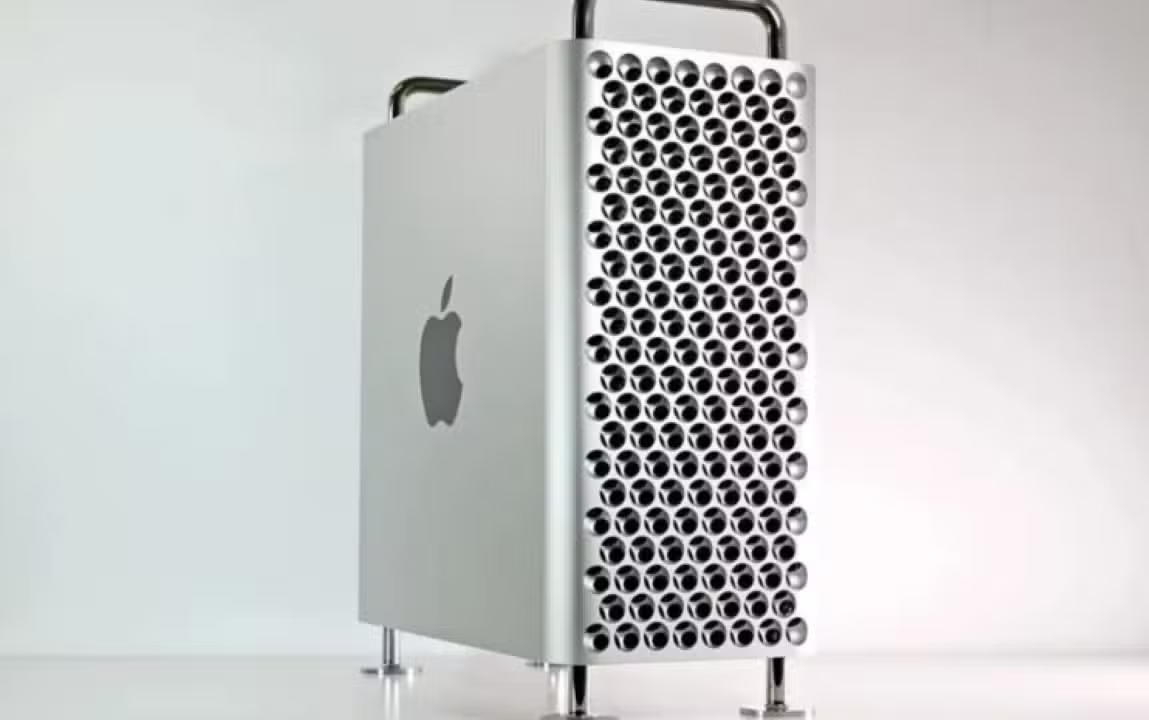
Apple confirmed the definitive interruption of production of the Mac Pro, marking the end of the era of the brand’s modular desktop computers. The strategic decision aims to concentrate development and engineering efforts on the Mac Studio line, which becomes the main equipment aimed at the corporate market and high-performance professionals. The change occurs amid the consolidation of the Apple Silicon architecture, which prioritizes the integration of components on a single chip to the detriment of traditional internal expansion. With this transition, the company restructures its hardware portfolio to focus on energy efficiency, unified processing and reducing the physical space occupied by equipment at workstations.
The movement to discontinue the tower format reflects a profound change in the manufacturer’s hardware design philosophy. Durante decades, the professional line of desktop computers depended on the user’s ability to open the case and replace parts as technological advancement required. Agora, the standardization of internal components dictates a new dynamic of consumption and technological updating for studios and producers. The transition eliminates the need for large, heavy cabinets, replacing them with compact solutions that deliver equivalent or greater processing power, changing the physical configuration of modern offices.

End of modular architecture and component integration
The closure of the Mac Pro is directly linked to the physical and technical limitations imposed by the transition to M-series processors. From previous systems based on third-party processors, the new architecture unifies the central processing unit, graphics processor and random access memory into a single encapsulated component. Essa integration eliminates latency in communication between parts, resulting in superior performance and lower power consumption, but makes it impossible to add external video cards or additional memory sticks after purchasing the equipment. The system operates as a single data processing block.
For the manufacturer’s engineers, maintaining a bulky tower chassis just to house a system that does not allow internal expansion became unfeasible from a design and production cost point of view. The previous tower model was specifically designed to offer maximum modularity, with multiple expansion bays and storage areas. However, the adoption of the Ultra line chip made this internal space obsolete, since the motherboard required to operate the integrated system occupies a minimal fraction of the original case. Maintaining this format would represent a waste of physical space and manufacturing materials, contradicting the company’s current industrial optimization guidelines.
Direct changes to professional workflows
Video editing, three-dimensional modeling and visual effects rendering professionals face a significant change in their equipment upgrade routines. Historicamente, production studios purchased the base machine and added graphic components from other brands as demand for audiovisual projects increased over the years.
With the new hardware guideline, this practice of fragmented updates no longer exists in the brand’s ecosystem. Graphics processing power now depends exclusively on the cores integrated into the Ultra line of processors, requiring publishers and software developers to adapt their workflows to extract maximum performance from the factory-supplied unified memory architecture.
The impossibility of replacing defective components individually alters the life cycle of machines in creative studios. Caso If there is a severe failure in the memory or internal storage soldered to the board, the entire equipment needs to be replaced or sent for full specialized repair, which requires adaptations in the financial planning and information technology logistics of companies in the sector.
Consolidation of Mac Studio as primary workstation
The Mac Studio takes the top-of-the-line position in the brand’s desktop computer catalog, replacing the old tower. The equipment was designed from the ground up to maximize the thermal efficiency of the company’s most powerful processors, using an optimized internal cooling system that occupies the majority of its compact aluminum chassis.
The absence of expansion areas allowed designers to drastically reduce the size of the computer compared to previous generations. The small format can be positioned directly on the user’s desk, eliminating the need to allocate space on the office floor or in server racks to accommodate a large machine.
In terms of connectivity, the device makes up for the lack of internal expansion with a wide range of external communication ports. The presence of multiple high-speed connections allows data transfer to networked storage systems and external solid-state drives, essential for handling heavy media files.
The sales strategy now focuses on offering different factory-closed configurations to the corporate consumer. The buyer needs to anticipate their exact processing and storage needs for the next few years at the time of purchase, as the chosen hardware will be final until the next complete computer change.
Transition in the high-fidelity monitor market
Following the change in desktop computers, the company also redirects its focus on the monitor segment aimed at professional use. The previous very high fidelity monitor loses space in production lines to the Studio Display, a device that is more integrated into the current ecosystem and with specifications aimed at the modern workflow.
The new standard monitor offers built-in features aimed at everyday office use, such as an integrated camera and advanced sound system. Essa standardization seeks to create a complete and uniform package for companies that are updating their technology parks, simplifying the choice of technology managers when equipping new workstations.
Technical specifications and the new hardware paradigm
The unified memory architecture, although restrictive from a physical customization perspective, delivers bandwidths that vastly outperform traditional systems based on removable memory sticks. By placing memory on the same substrate as the main processor, data does not need to travel along long tracks on the motherboard, which dramatically reduces the processing bottleneck in intensive tasks such as compiling complex software code and processing advanced algorithms. Essa gross data transfer efficiency is the manufacturer’s main technical argument to justify the definitive abandonment of modularity. The Ultra series chips function, in practice, as two high-performance processors fused by a very high-density silicon bridge, doubling processing capacity without requiring complex software rewriting by third-party developers. Essa engineering approach ensures that applications optimized for the new architecture run at maximum performance immediately, consolidating a closed ecosystem, yet highly optimized for the rigorous computing demands of today’s corporate market.
The future of desktop chip development
The development of future generations of desktop processors will focus exclusively on increasing transistor density and power efficiency within the established compact form factor. The company’s hardware engineering will no longer need to allocate financial and research resources to ensure compatibility with legacy expansion bus standards, accelerating the innovation cycle of proprietary internal components.
Major changes to hardware infrastructure
The restructuring of the desktop portfolio brings immediate practical changes to the corporate technology market and equipment suppliers. Product line simplification changes the way companies plan their long-term technology infrastructures and budgets.
The most relevant modifications to the hardware ecosystem include the following operational points:
- Complete elimination of official support for dedicated graphics cards from third-party manufacturers in the main ecosystem.
- End of commercialization and compatibility of separate memory modules for professional desktop computers.
- Exclusive dependence on external high-speed connections for data storage expansion.
- Reduction in electrical energy consumption and heat dissipation in editing stations and production studios.
- Operating system unification to handle a standardized hardware architecture, facilitating software updates.