
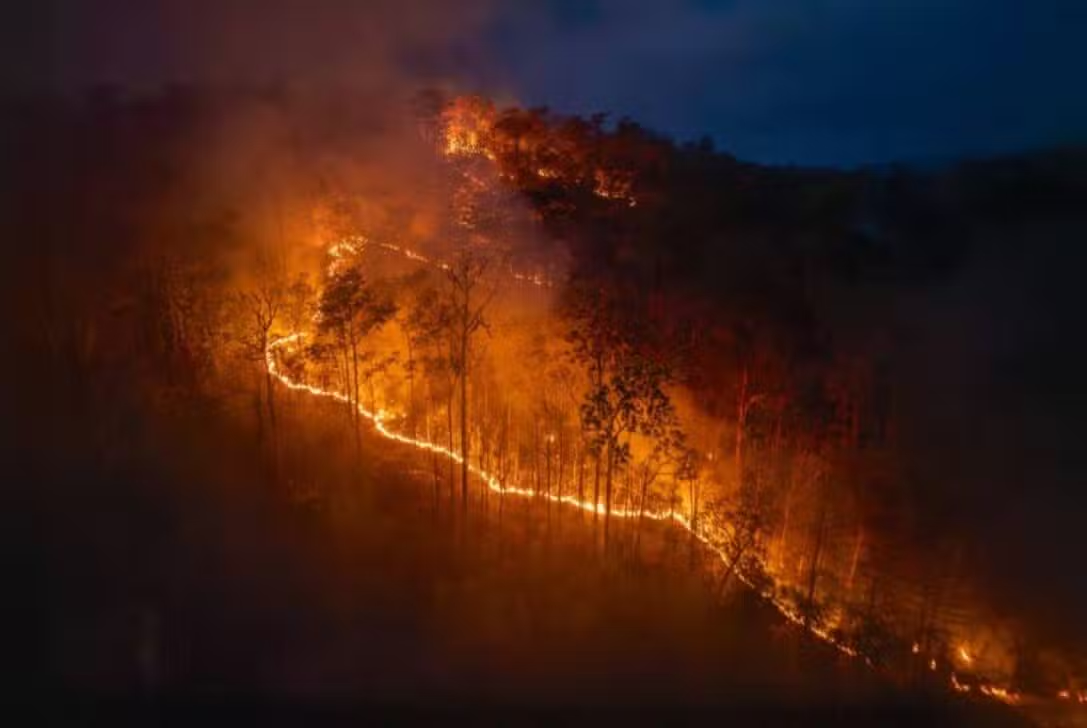
The Estados Unidos face growing concern about the forest fire season, which is increasingly severe and prolonged in several regions of the country. Condições Unfavorable climate conditions, characterized by long periods of drought, high temperatures and strong winds, create a favorable scenario for the rapid spread of flames, placing entire communities on high alert. Autoridades weather forecasters have issued frequent “First Alert Weather Day” warnings for high-risk areas, indicating the need for increased vigilance and the immediate implementation of safety protocols. Each year, millions of hectares are consumed, resulting in incalculable losses to the environment, the economy and, tragically, human lives.
The complexity of the phenomenon requires a multifaceted approach, ranging from public education to the use of advanced detection and combat technologies. A coordinated response among federal, state, and local agencies is crucial to mitigating the devastating effects of these events. The population, in turn, plays a fundamental role in prevention, adopting safe practices and being prepared to act in the event of an emergency.
Causes and risk factors
Forest fires are triggered by a combination of natural factors and human activities, the latter being responsible for the vast majority of incidents. Raios can start outbreaks in remote areas, but accidents with equipment, poorly extinguished fires, improper disposal of cigarettes and even acts of vandalism or negligence are common causes that could be avoided. Urban expansion into wilderness areas, known as the urban-wildland interface, also increases vulnerability, putting more homes and infrastructure at direct risk.
Dry, accumulated vegetation, the result of years of natural fire suppression in some regions, serves as abundant fuel for the flames. Mudanças global climate conditions have exacerbated this scenario, with more intense droughts and more frequent and longer-lasting heat waves, altering soil and vegetation moisture patterns. The combination of low humidity, high temperatures and strong winds creates what is known as the “fire triangle” in its most dangerous form, turning small flames into uncontrollable infernos in a matter of hours.
Furthermore, the topography of the land also significantly influences the speed and direction of a fire. Encostas steeps and valleys act as chimneys, accelerating the rise of the fire and making combat more challenging for teams in the field. Vegetation density and type vary regionally, with coniferous forests in the western US, for example, posing a greater risk due to their flammability.
The lack of adequate forest management in some areas, which could include the controlled removal of biomass, also contributes to the accumulation of combustible material. Este accumulation turns low-intensity fires into catastrophic events, releasing large amounts of energy and smoke into the atmosphere. Understanding these factors is the first step to developing effective prevention and response strategies.
Devastating impacts and challenges
The impacts of wildfires extend far beyond visible flames, affecting the environment, economy and public health in profound and lasting ways. Whole Ecossistemas are altered, with the loss of biodiversity and the destruction of natural habitats, forcing animal species to migrate or face local extinction. The soil, exposed and without vegetation, becomes susceptible to erosion, which can lead to landslides and floods in burned areas.
Economically, the costs are astronomical. The destruction of properties, critical infrastructure such as power lines and roads, and the interruption of economic activities such as agriculture and tourism, generate losses totaling billions of dollars annually. The resources allocated to combat, which involve thousands of firefighters, aircraft and specialized equipment, also represent a significant financial burden on public budgets. Post-fire reconstruction can take years and requires massive investment.
Human health is seriously compromised by smoke from fires, which transports fine particles and toxic gases over long distances. Exposure to this smoke can cause acute respiratory problems, worsen chronic conditions such as asthma and heart disease, and even lead to premature deaths. Crianças, the elderly and people with pre-existing health problems are particularly vulnerable. Air quality in cities far from hotspots can be drastically reduced, impacting the daily lives of millions of people.
In addition to the direct impacts, there are also social and psychological consequences. Entire Comunidades can be displaced, families lose their homes and livelihoods, and the trauma of experiencing a wildfire can have lasting psychological effects on survivors and rescuers alike. Restoring the landscape and social life is a slow and painful process, which requires resilience and continuous support.
Prevention and combat actions
Prevention is the first line of defense against wildfires, and several strategies are employed to reduce the risk of ignition and spread. Campanhas public awareness is essential to educate the population about the dangers of fire and safe practices, such as the correct disposal of flammable materials and the prohibition of open fires during dry periods. Regulamentações on the use of forest areas and the supervision of risky activities are equally important.
Active forest management plays a crucial role in reducing combustible material. Isso includes controlled thinning, which removes excess vegetation, and prescribed burning, carried out under specific and controlled climate conditions, to reduce accumulated biomass and restore the health of ecosystems. Essas practices, when well executed, can reduce the intensity of future fires and protect valuable areas.
In terms of combat, forest fire teams, often with the support of forest rangers and volunteers, act on the front line. Eles use a variety of techniques, from using hand tools to create firebreaks to using heavy machinery to open roads and contain the spread of flames. Team safety is a priority, given the extreme and dangerous conditions in which they operate.
Air support is critical in large fires, with planes and helicopters dropping water and fire retardants on the flames, especially in hard-to-reach areas. Coordination between ground and air teams is vital to effective operations. Além Furthermore, fire mapping and forecasting technology allows incident commanders to make strategic decisions about where to focus resources and how to protect the most vulnerable areas.
Technological monitoring and response
Technology has significantly transformed the way forest fires are monitored and fought, offering increasingly sophisticated tools for early detection and crisis management. Satélites equipped with infrared sensors can identify hot spots in real time, even in remote areas, providing early warnings that are crucial for a quick response. Esses data is complemented by high-resolution cameras installed on watchtowers and drones, which offer a detailed view of the terrain.
Computational modeling systems use meteorological, topographic and vegetation data to predict fire behavior, including its direction, propagation speed and intensity. Essas predictions are invaluable to combat teams, allowing them to plan containment strategies, identify safe escape routes, and determine which communities may be at imminent risk. The integration of this information into crisis management platforms facilitates communication and decision-making between the various agencies involved.
Immediate response is a pillar of wildfire fighting. Quando an outbreak is detected, rapid response teams are called to assess the situation and initiate containment actions. Speed is essential, as a small outbreak can quickly turn into a large fire if not controlled within the first few hours. The ability to efficiently mobilize human and material resources is a constant challenge, especially during particularly active fire seasons.
The evolution of personal protective equipment for firefighters, as well as the development of new combat techniques, also contribute to a safer and more effective response. Veículos Specialized vehicles, such as high-capacity tankers and off-road equipment, are designed to operate in challenging environments. Continued research and development is key to further improving these technologies and strategies.
Community preparedness and evacuation
Community preparedness is a vital component in mitigating wildfire risks, and awareness of evacuation routes and meeting points is paramount. Residents of risk areas must have a well-defined family emergency plan, which includes a kit of essential supplies, important documents and medicines. Saber what to do before, during and after a fire can save lives and property by minimizing panic and ensuring an orderly response in times of crisis.
The creation of “defense zones” around homes is a practical and effective measure. Isso involves the removal of dry vegetation, brush and other flammable materials within a radius of at least 10 to 30 meters from the house. Keeping roofs and gutters clear of leaves and debris, and using fire-resistant building materials, also increase the resiliency of structures. Pequenas individual actions, when added together, make a big difference in protecting an entire community.
Local and state authorities play a crucial role in developing and communicating evacuation plans. Sistemas warnings, such as sirens, text messages and emergency radios, are used to inform residents of the need to evacuate and the safe routes to follow. Exercícios Regular evacuation procedures help to familiarize the population with procedures and test the effectiveness of plans in different scenarios. Obeying evacuation orders is essential for everyone’s safety.
Aftermath and recovery
After controlling the flames, the aftermath and recovery represent a long and complex phase, which involves assessing the damage, stabilizing the affected areas and supporting communities. Equipes of experts carry out surveys to determine the extent of the destruction, identify geological risks such as landslides and plan environmental restoration actions. The recovery of wildlife and vegetation is a natural process, but it often requires human interventions.
Psychological and social support for victims is essential, helping people deal with the trauma of losing their homes and possessions. Organizações Humanitarian aid and government agencies work together to provide temporary shelter, food and financial assistance. Physically rebuilding communities is a monumental challenge that can take years and requires a coordinated effort from all levels of government and civil society.