

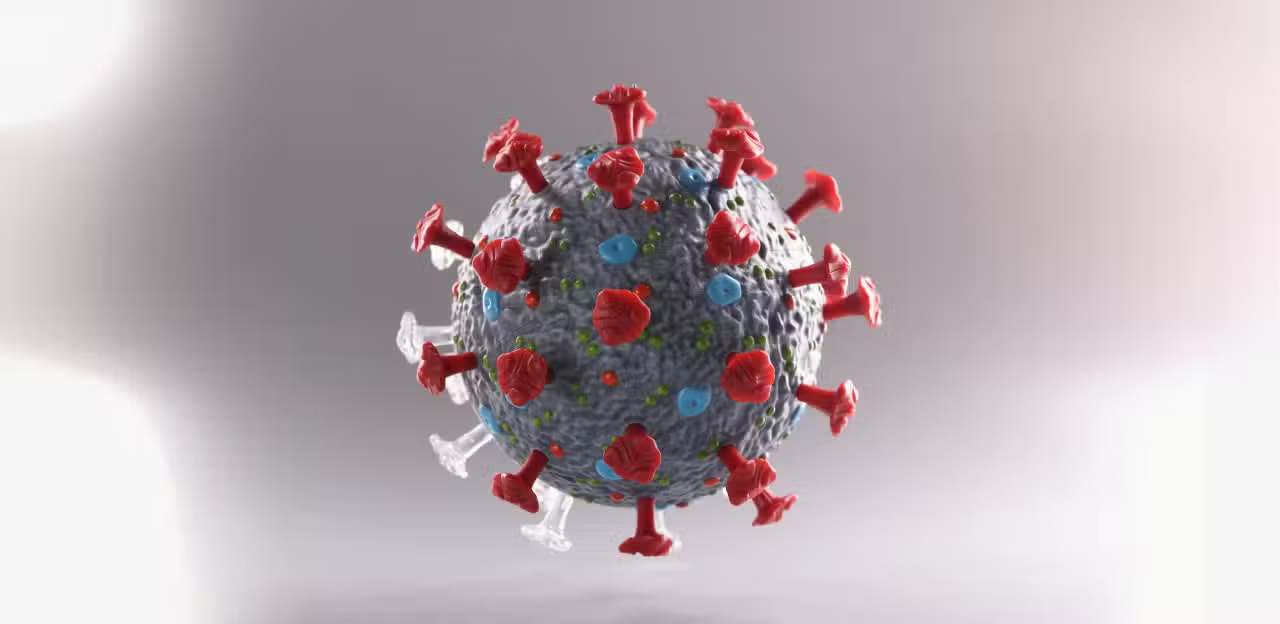
A new variant of Covid-19, called BA.3.2 and nicknamed Cicada, was initially identified in África of Sul in November 2024 and has now spread to at least 23 countries. Essa strain has approximately 75 mutations in the spike protein, which represents approximately twice as many as previous variants such as JN.1. Especialistas follow progress because genetic changes can influence transmissibility and the ability to partially circumvent immunity from previous infections or current vaccines.
Detections of the variant increased from September 2025, with peaks observed in December of the same year. In the period between November 2025 and January 2026, BA.3.2 represented around 30% of the genetic sequences reported in countries such as Dinamarca, Alemanha and Países Baixos, although without substantially increasing the total number of Covid cases in the region.
- The variant has been detected in clinical and wastewater samples at multiple sites.
- International genomic monitoring confirms independent introductions in different regions.
- As of February 2026, records include 23 nations on continents such as África, Ásia, Europa,
Genetic characteristics of the Cicada variant
BA.3.2 is part of the Ômicron lineage, but stands out for being genetically divergent from recent dominant strains. Compared to LP.8.1, used in the 2025-2026 vaccine formulation, it presents significant differences in the receptor-binding domain and the N-terminal domain of the spike protein. Essas changes include deletions and an insertion of four amino acids, which contribute to the elevated mutation profile.
Studies indicate that the immune response generated by current vaccines against this variant tends to be weaker when compared to other strains in circulation. However, experts highlight that there is still some cross-protection, especially against severe forms of the disease. The scientific community monitors closely to assess possible impacts on vaccine effectiveness over time.
Monitoring in different countries
The first BA.3.2 sequences were obtained from a respiratory sample at África of Sul. Posteriormente, the variant appeared in Moçambique, Países Baixos and Alemanha in 2025. The gradual increase in detections occurred without there being immediate signs of greater clinical severity in the majority of reported cases.
In the Estados Unidos, surveillance detected the variant in samples from travelers, in clinical patients and, mainly, in analyzes of wastewater from 25 states. The introductions seem to have occurred multiple times, according to the phylogenetic analysis of the available sequences. Até At this time, there is no indication that Cicada causes more severe illness or requires a higher rate of hospitalizations compared to previous variants.

Expert assessment of severity
Doctors and infectious disease researchers say people’s immune systems still offer some defense against highly mutated variants like this one. Até now, no clear signs of a significant increase in hospitalizations or serious cases associated exclusively with BA have been observed.3.2.
Genomic surveillance remains active in several countries to track the evolution of the virus. Autoridades of health reinforce the importance of keeping preventive measures up to date, including vaccination as recommended by local calendars, even if the current variant does not represent a global health emergency.
Current status of global detection
The Cicada variant was detected in international travelers and in sewage systems in several locations, which helps with early monitoring. In some European countries, the proportion of positive sequences rose notably in a short period, but the overall impact on the total number of infections remained within the seasonal patterns observed in recent years.
Surveillance Updates
Experts continue to analyze sequencing data to better understand the behavior of BA.3.2 in populations with different levels of prior immunity. The focus remains on early detection and information sharing across international surveillance networks.
The BA.3.2 variant, known as Cicada, represents yet another example of the continued evolution of SARS-CoV-2, with health authorities maintaining routine monitoring without drastic changes to general prevention recommendations to date.