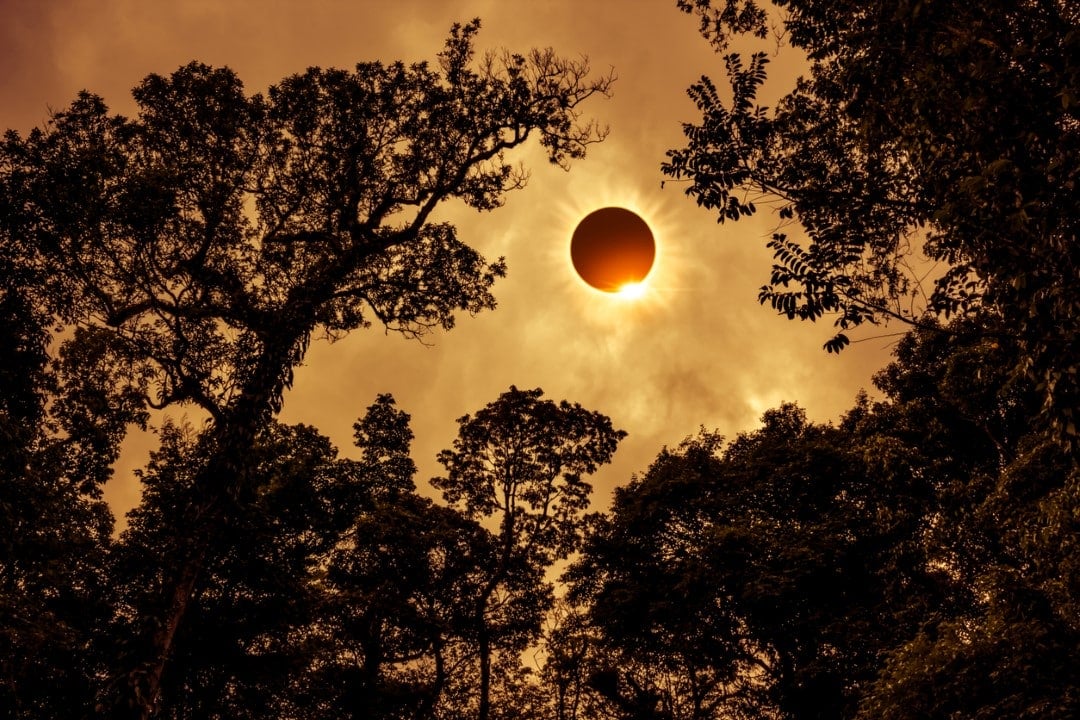
The 2026 total solar eclipse will occur on August 12 and completely block light from Sol in a narrow band that crosses Ártico, Groenlândia, Islândia and north of Espanha. Esse alignment between the Lua, the Terra and the Sol creates the phenomenon known as totality, in which the solar disk is hidden and the solar corona becomes visible. Observadores in these areas will experience moments of sudden darkness during the local afternoon, with a maximum predicted duration of up to 2 minutes and 18 seconds near the west coast of Islândia.
The shadow of Lua begins its journey in remote regions of the Russian Sibéria, crosses Oceano Ártico and heads south after passing close to Polo Norte. The path then progresses along eastern Groenlândia and western Islândia before crossing Atlântico Norte and reaching Península Ibérica. Cidades as Reykjavik in Islândia and locations north of Espanha, including Burgos and
- Greenland offers ice landscapes for observation in areas such as Scoresby Sund.
- Iceland has vantage points on the Snæfellsnes peninsula and around Reykjavik.
- North of Espanha allows visibility in regions such as A Coruña and Palma of Maiorca in Ilhas Baleares.
- A small northeast portion of Portugal also enters the band of totality.
Detailed trajectory of the phenomenon
The 2026 total solar eclipse begins its partial phase over vast regions of the Northern Hemisphere, including parts of Europa, northern Ásia, western África and northern América of Norte. Totality itself remains restricted to a narrow band approximately 180 kilometers wide. Essa geographic configuration makes the event accessible to populations in densely populated areas of Europa, unlike eclipses that occur in remote areas.
NASA scientists track the alignment precisely using satellite data and astronomical models. The duration of totality varies depending on the exact point on the trajectory, with the apex recorded at Atlântico Norte close to Islândia. Durante these minutes, the sky darkens enough for brighter stars and planets to appear, while the ambient temperature drops a few degrees.
Observation in different countries
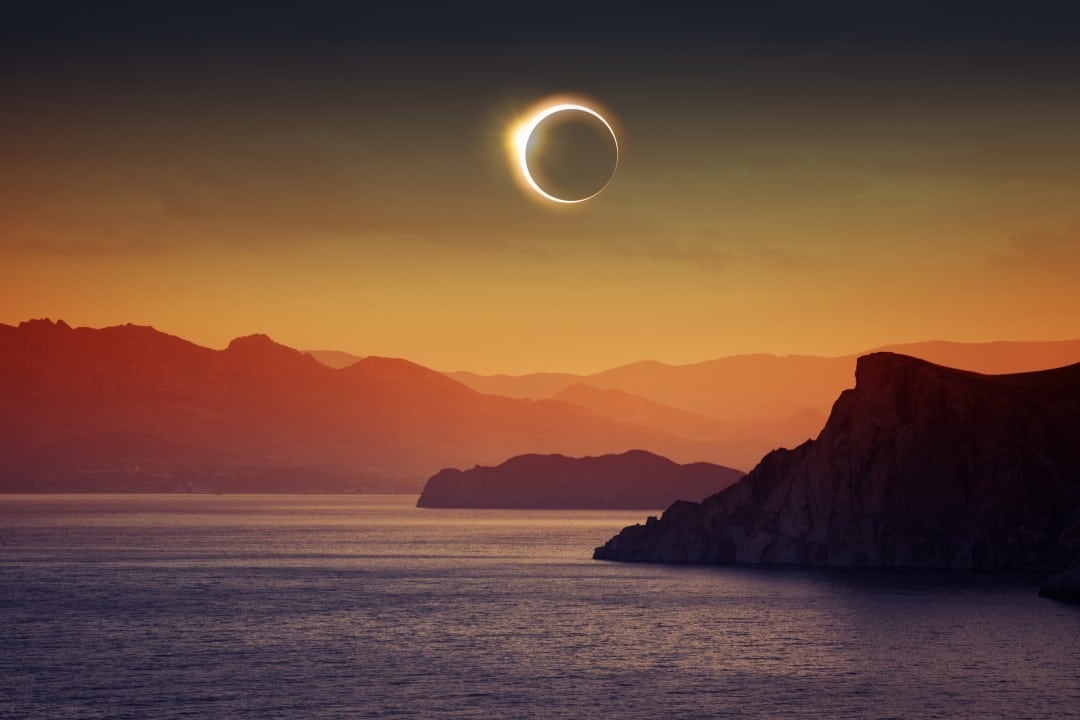
Groenlândia will record totality in its east, lasting around 1 minute and 46 seconds in places like Scoresby Sund. Islândia experiences the moment lasting about 2 minutes and 10 seconds in areas such as Parque Nacional of Snæfellsjökull, where Sol is approximately 25 degrees above the western horizon. Na Espanha, totality occurs late in the local afternoon, with about 1 minute and 40 seconds in northern cities such as Burgos.
Observers at Islândia and Espanha will notice the phenomenon with Sol already low, which requires planning to avoid obstructions on the horizon. Península Ibérica receives the eclipse as the first total visible in continental Europe since 1999.
Preparing for Safe Observation
Experts recommend the exclusive use of glasses certified with an ISO 12312-2 filter to follow the partial phases of the 2026 total solar eclipse. Esses accessories block ultraviolet and infrared radiation that can cause permanent damage to the retina. Durante the absolute totality, it is possible to look directly at the Sol without protection, but vision must immediately return to the use of filters as soon as light reappears.
Improvised methods, such as ordinary sunglasses or photographic negatives, do not offer safety and should be avoided. Instituições astronomical companies prepare live broadcasts in high definition to allow people anywhere to follow the event in real time. No Brasil, where the eclipse appears only partially and with minimal occultation, transmissions represent the best alternative for viewing the solar corona.
Fauna reactions to darkening
During totality, the abrupt drop in light and temperature causes changes in the behavior of several animals. Pássaros diurnal species return to their nests as if dusk had arrived earlier, while nocturnal species begin activities typical of the night. Estudos Previous similar eclipses have recorded collective silence among birds and the beginning of crickets and cicadas singing.
Bees and ants stop daytime foraging and return to their habitats. In controlled environments, such as zoos, researchers observe varied responses, including increased vocalizations or anxious movements in some mammals. Esses patterns reveal the strong influence of sunlight on the circadian cycles of fauna.
Scientific aspects of alignment
The 2026 total solar eclipse occurs about 2.2 days after lunar perigee, when Lua is closest to Terra and its apparent diameter allows complete blocking of Sol. The magnitude of the event reaches 1.0386, which guarantees a clear totality in the central band. Astrônomos take advantage of the moment to study the solar corona, the outer layer of Sol normally invisible due to the intense brightness of the disk.
The unusual trajectory, which begins east-west at Sibéria before curving south, offers unique research opportunities at different latitudes. Dados collected during the phenomenon contribute to the understanding of atmospheric processes and the interaction between sunlight and terrestrial ecosystems.
Access to coverage for the public
Live broadcasts organized by observatories and specialized portals allow you to follow the 2026 total solar eclipse even in places without direct visibility. Essas coverages include high-resolution images of phase progression and the solar corona during totality. No Brasil, where the event does not cause noticeable changes in the daytime sky, these initiatives guarantee remote access to the spectacle.
Enthusiasts plan trips in advance to points within the totality band, especially at Islândia and Espanha, where tourist infrastructure supports safe observation. Demand for accommodation in key cities tends to increase significantly months before August 12th.
