

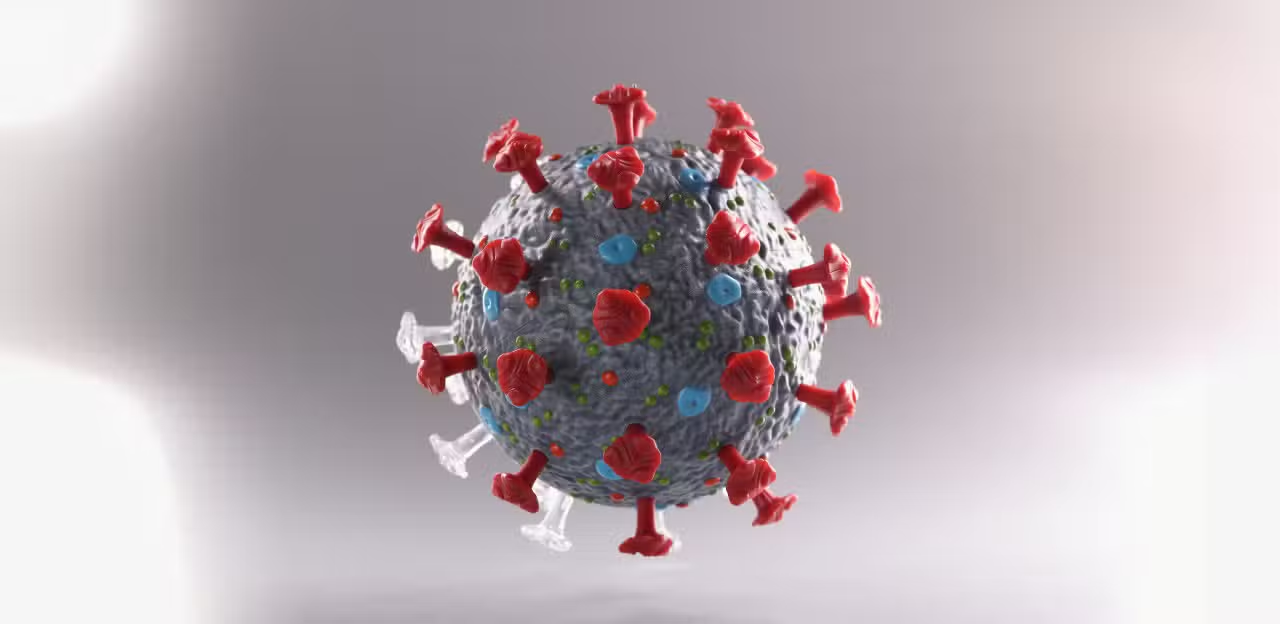
The BA.3.2 lineage of the coronavirus, popularly designated by scientists as Cicada, has established itself as the latest focus of attention from international health authorities due to its complex genetic structure. Identificada initially in samples collected in África from Sul during the month of November by genomic research teams, the strain demonstrated a silent dispersal capacity that led it to quickly cross borders. Atualmente, epidemiological reports confirm the presence of the microorganism in at least twenty-three different nations, covering multiple continents. The main factor mobilizing the scientific community is not necessarily the immediate severity of the infections, but rather the unprecedented number of changes in their genetic code, which requires a constant reevaluation of the tools to combat respiratory disease.
Genetic details and structure of the new strain
The most striking feature of the Cicada variant lies in its protein Spike, the part of the virus responsible for binding to human cells and initiating the infection process in the body. Laboratory analyzes revealed the presence of approximately seventy-five specific mutations in this fundamental structural region alone.

This number represents practically double the genetic changes observed in previous lineages that dominated the global contagion scenario, such as the JN.1 variant. The density of modifications raises technical questions about how the pathogen interacts with neutralizing antibodies developed by the population over time.
Virology experts point out that such a drastic change in the protein’s conformation could, theoretically, facilitate immune escape during exposure to the virus. Isso means that the microorganism acquires additional tools to circumvent the defenses generated both by previous infections and by immunizers applied in public health campaigns.
International tracking and the contagion curve
The epidemiological behavior of BA.3.2 began to attract the attention of health systems in the second half of the previous year, when detection graphs showed a slight upward slope. The gradual increase in notifications began in September, culminating in a peak in identifications during the month of December on surveillance networks.
During the period between November and January, European nations such as Dinamarca, Alemanha and Holanda recorded a significant presence of the strain in their genomic databases. In certain time frames, Cicada represented around thirty percent of all samples sequenced in these specific regions.
Despite the significant proportion in laboratory sequencing, public health departments noticed a peculiar phenomenon in relation to the absolute volume of patients in care units. The total number of people infected by the new variant has not seen an exponential jump that could overwhelm primary health systems.
This discrepancy between genomic prevalence and clinical incidence suggests that, although the strain is highly competent in circulating between individuals, it did not provoke a massive wave of contagion. The observed pattern differs substantially from the transmission peaks recorded in the first years of the global health emergency.
Epidemiological detection and surveillance methods
The identification and monitoring of variant Cicada depends on a global surveillance network that uses multiple approaches to map the presence of the virus even before patients seek hospitals. One of the most effective tools in this process has been wastewater analysis, which allows researchers to detect fragments of the pathogen’s genetic material in the sewage of large urban centers. Esse method works as an early radar, indicating the silent circulation of the disease in a community. Paralelamente, the collection of clinical samples at health centers and the testing of passengers at international airports complement the database, providing a detailed overview of the microorganism’s dispersion routes across continental borders on an ongoing basis.
The consolidated reports detail the territorial extent of this spread, using the following laboratory confirmation fronts around the world:
– Detecção active in municipal sewage samples in metropolitan areas with high population density.
– Confirmação genomics through clinical tests carried out on patients with mild and moderate respiratory symptoms.
– Identificação of the pathogen in international travelers undergoing screening at strategic ports and airports.
– Presença confirmed in nations located at África, Ásia, Europa, América of Norte and Oceania.
The monitoring scenario at Estados Unidos
In the United States, disease control agencies intensified data collection as soon as the first signs of the variant appeared on international sequencing radars. Analyzes focused on travelers and the expansion of the wastewater monitoring program revealed that the strain was already circulating in a decentralized manner throughout the country. The researchers identified the presence of Cicada in the sewage systems of at least twenty-five different states, indicating multiple introduction and community transmission already established in several regions.
Despite the wide geographic distribution confirmed by environmental tests, clinical indicators remained stable in the weeks following detection. Hospitals and emergency care centers did not record an increase in hospitalization rates or the severity of respiratory conditions that could be directly attributed to the new strain. The absence of a severe worsening in the American hospital infrastructure corroborates the observations made in Europa, suggesting that the variant maintains the aggressive pattern characteristic of recent sublineages of the Ômicron family.
Assessment of the effectiveness of current immunizers
The genetic architecture of BA.3.2 presents notable divergences when compared to the LP.8.1 strain, which served as the basis for the formulation of vaccines distributed in the most recent immunization campaigns. Virologists highlight that Cicada has the deletion of four specific amino acids, in addition to unprecedented insertions in its main protein structure.
These structural differences raise the need for ongoing studies to measure the neutralization capacity of antibodies induced by vaccines available in health centers. However, the current scientific consensus indicates that cellular immunity, responsible for preventing severe forms of the disease, continues to operate efficiently against the new variant in circulation.
Prevention and institutional response guidelines
Global health authorities maintain a vigilant alert stance, without indicating the need for restrictive measures or drastic changes in the social coexistence protocols adopted by the population. The core recommendation remains focused on maintaining up-to-date vaccination coverage, especially for the most vulnerable demographic groups, such as the elderly and individuals with underlying health conditions that affect the immune system. The continued evolution of the respiratory virus, exemplified by the emergence of variant Cicada, reinforces the importance of sustainable investments in genomic sequencing infrastructure and transparent data sharing between countries. Enquanto microorganism demonstrates the ability to accumulate dozens of mutations to adapt to the human environment, science will need to keep its monitoring networks active, ensuring that any change in the virulence pattern is detected and contained as quickly as possible by health agencies.