

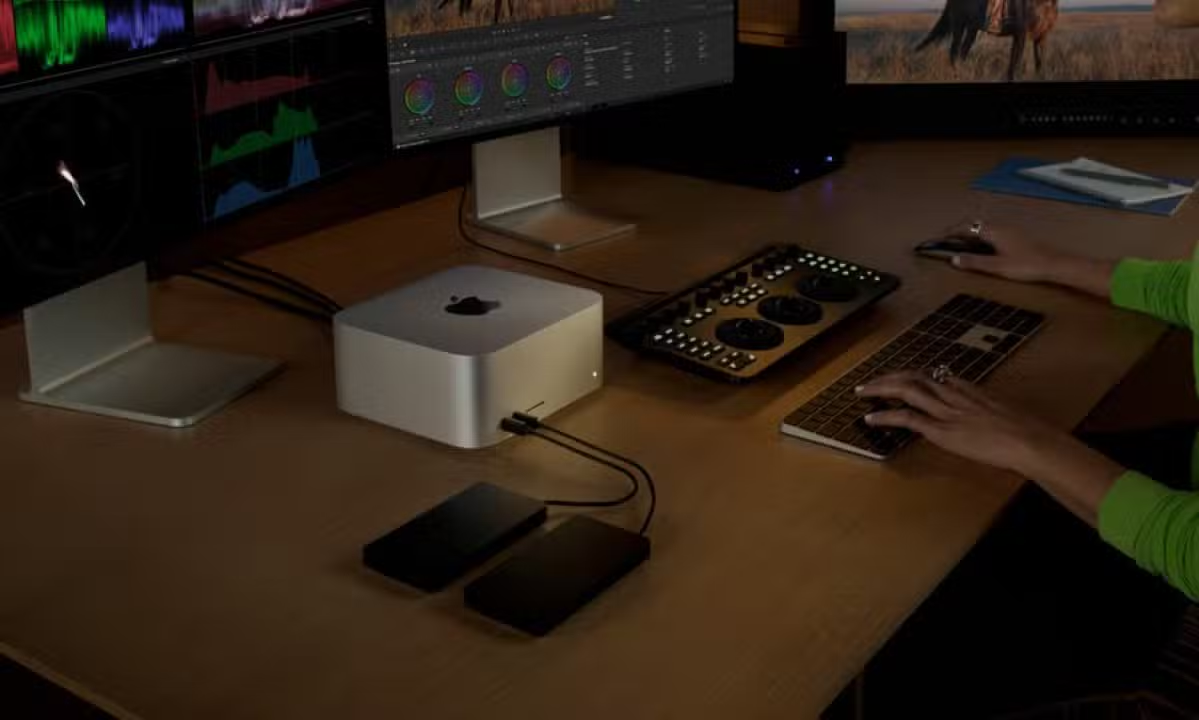
The official online store of the North American electronics manufacturer began to record a significant increase in waiting times for the purchase of desktops aimed at professionals. Consumidores who seek to purchase specific high-performance configurations currently face a gap of between two and three weeks until shipping confirmation.
This change in the normal distribution flow is mainly concentrated in machines equipped with the most advanced processing chip of the current generation. The sudden change in immediate availability sparked intense debates on technology forums about an imminent renewal of the brand’s hardware portfolio.

Digital retail monitoring experts note that selective product shortages often precede official announcements of new generations of equipment. The current phenomenon has peculiar characteristics that attract the attention of the technology market:
– Modelos top of the line products require waiting times that exceed the twenty day mark for shipping.
– Versões with intermediate specifications keep shipping within regular logistics deadlines.
– The amount of unified memory selected by the buyer directly affects the delivery date.
Movements in stock and variation in deadlines
The extension of delivery dates gained notoriety after several reports from buyers on specialized discussion platforms at the end of March. A user documented that the purchase of a desktop with a processor with 28 CPU cores and 60 GPU cores had its shipping postponed for a period of almost a month.
Independent checks carried out in different global regions confirmed that the delay pattern is not restricted to a single market. The temporary unavailability mainly affects variants that combine the more robust processor with extreme storage capacities, such as 1TB or higher solid-state drives.
Market analysts interpret this supply restriction as a standard logistical maneuver in the technology industry. Fabricantes Large scale devices typically reduce production and inventory of current devices when the assembly line begins to transition to manufacturing next-generation components.
The selectivity of this phenomenon reinforces the thesis of intentional inventory adjustment. Enquanto The most expensive machines face bottlenecks, computers configured with lower category chips continue with a normalized shipping flow, leaving distribution centers in a matter of days after payment approval.
Clues in recent software code
The suspicion of a hardware update gains strength with recent discoveries made by developers in test versions of operating systems. Arquivos internal software updates revealed new identifiers that correspond to processors not yet commercially announced by the manufacturer.
The lines of code found specifically point to the existence of very high-performance variants of a new silicon architecture. The presence of these references in operating systems in the final testing phase indicates that the company is already carrying out compatibility validations in the laboratory, a step that precedes the public launch of new computers.
Supply chain behavior
The logistics of distributing computers aimed at the professional segment require complex coordination between semiconductor suppliers and assemblers. Quando An architectural transition approaches, the supply chain redirects its production capacity to new components, limiting the manufacturing of old parts.
Users customizing their machines with 64GB or more of unified memory will feel the impact of this transition most acutely. The integration of memory directly into the processor package means that the manufacturer cannot simply add traditional memory sticks, requiring the manufacture of a specific chip for that demand.
This unified architecture model, although it offers significant gains in speed and energy efficiency, makes inventory management more rigid. The current shortage of specific configurations suggests that the final batches of current generation processors have already been produced and remaining stocks are gradually being depleted in Asian factories.
The high-performance user profile
The equipment in question occupies a strategic position in the company’s catalog, serving as the main working tool for animation studios, film production companies and artificial intelligence research laboratories. Profissionais of these sectors demand massive computing power to compile complex codes, render three-dimensional models and process large volumes of data in real time. Choosing this compact desktop format allows technical teams to maintain extremely powerful workstations without the need to invest in bulky and noisy computer towers, optimizing physical space in corporate environments.
The expectation surrounding the next generation of processors is based on the promise of significant leaps in parallel processing and thermal efficiency. The market expects the new architecture to bring substantial improvements in neural engines dedicated to machine learning tasks, a growing requirement in contemporary software development. The ability to run language models locally, without relying on cloud servers, has become a decisive purchasing factor for corporations that deal with sensitive data and require instant processing with complete information privacy.
Desktop line update history
The evolution trajectory of the brand’s desktop computers demonstrates a consistent pattern of technological leaps every cycle of eighteen to twenty-four months. Desde the historic transition from third-party processors to proprietary silicon architecture, the company has established an unofficial but predictable schedule of improvements to its chip lines. The compact, high-performance model was initially introduced to fill a gap between entry-level computers and high-cost modular workstations. Positive market reception consolidated the format, which quickly received iterative updates to incorporate subsequent generations of processors. The current scenario, marked by delays in deliveries of the most powerful versions, exactly mirrors the logistical behavior observed months before the last two major updates to the line. Essa historical consistency provides market analysts with a solid basis for predicting that the current shortage is not the result of problems in the global supply chain, but rather a calculated step in the product life cycle, setting the stage for the introduction of superior technology.
Expectations for the announcement calendar
Discussions in the technology sector often associate stock depletion with commemorative dates or corporate events already scheduled. The company was founded on the first day of April, and the historic milestone of its existence generates speculation about product announcements that demonstrate the pinnacle of the brand’s engineering.
Sources that follow the semiconductor industry project that the official revelation of the new processor architecture should take place by the end of the first half of the year. The launch strategy may involve direct press releases or virtual presentations focused exclusively on the technical capabilities of the new hardware components.
Recommendations for consumers in the purchasing phase
Technology experts advise that individuals and companies intending to purchase high-cost workstations evaluate the urgency of their operational needs. Para For those who depend on the equipment for immediate projects, purchasing configurations available in regular stock remains a viable option, while buyers with deadline flexibility can benefit from waiting for the likely renewal of the product catalog.