

Ministério of Interior of Iraque confirmed the occurrence of a kidnapping involving a foreign journalist in the central region of the capital Bagdá. The incident, recorded at night, immediately mobilized local security forces, who launched a tactical pursuit operation along the city’s roads. The quick police response resulted in the interception of a utility vehicle suspected of being used by the criminals in the escape. Durante During the high-speed chase, the car overturned, allowing the arrest of one of the individuals involved in the action. Apesar of capture, the whereabouts of the press professional remain unknown, and rescue teams are maintaining active searches in several neighborhoods of the metropolis.
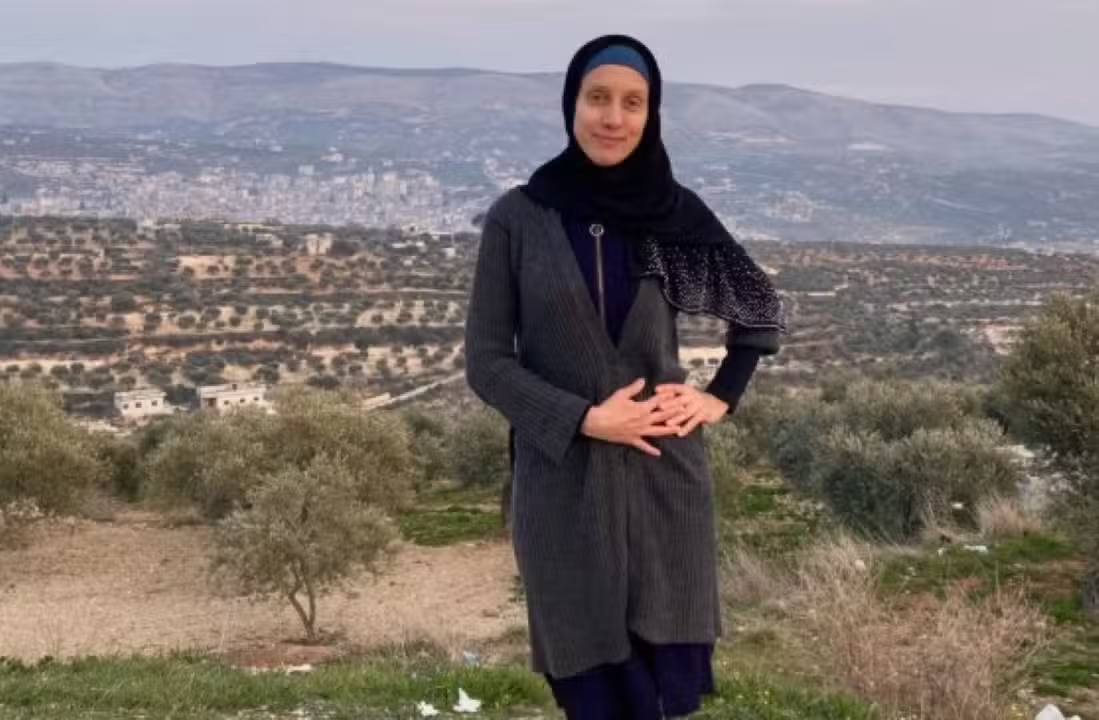
Sources linked to the state security apparatus confirmed that the victim is independent reporter Shelly Kittleson, a citizen with an American passport and extensive experience in covering conflicts number Oriente Médio. The criminal attack took place in the vicinity of hotel Baghdad, located on al-Saadoun Street, one of the busiest and most guarded commercial arteries in the center of the Iraqi capital. The journalist was in the country to document the direct and indirect impacts of the ongoing regional war, which involves major actors such as Estados Unidos, Israel and Irã, as well as local armed factions.
Kittleson’s work is widely recognized in international diplomatic and journalistic circles due to its immersive approach to high-risk areas. Profissionais who operate in the region highlight the complexity of operating in a terrain where political and military alliances change rapidly. The reporter’s work covers a series of informative fronts essential for understanding the current geopolitical scenario.
– Colaboração continues with global prestige vehicles, including Al Monitor, Foreign Policy and The National.
– Produção of front-line reports on the fight against group Estado Islâmico and the reconfiguration of militias on Iraque.
– Análise in-depth analysis of sensitive topics, such as rivalries between Shiite factions and the power dynamics that dictate the direction of Oriente Médio.
Interception dynamics and evidence analysis
Iraqi authorities stated that security forces were acting on the basis of accurate intelligence information to locate the journalist’s captivity. The ministry emphasized that the investigation continues as a matter of urgency, with the aim of identifying the entire logistical support network involved in the incident. Especialistas in public security are following the case closely, highlighting that the capture of one of the suspects shortly after the vehicle overturned provides a fundamental element in the advancement of interrogations and the possible breaking of the secrecy of the criminal operation.
Witnesses traveling along al-Saadoun Street reported that heavily armed men with their faces covered approached the professional on a public street, forcing her into the car. Vídeos from security cameras and amateur records circulating on social networks show the speed of the action, showing prior planning on the part of the kidnappers. The images, which show a woman being forcibly placed in the back seat, undergo technical expertise by the competent authorities, who prefer to focus on the active search and confidentiality of tactical operations so as not to put the hostage’s life at risk.
Professional trajectory in areas of instability
Shelly Kittleson has over a decade of experience reporting on armed conflicts, peace processes and rebuilding infrastructure in Oriente Médio. Sua Field work includes detailed documentation of military campaigns against Estado Islâmico, accompanying regular troops and paramilitary forces in the northern and western provinces of Iraque.
The reporter stood out for offering a human and strategic perspective on the influence of non-state armed groups in local communities. Recentemente, she returned to Iraqi territory to monitor developments in the escalation of military tension on the axis that connects Levante to Golfo Pérsico.
Its constant presence in areas of friction allowed the construction of a diverse network of sources, ranging from tribal leaders to military commanders. Kittleson maintained an active profile on digital platforms, where he shared updates about his work routine, the logistical challenges of independent reporting and the nuances of daily life in a nation marked by decades of instability.
The urban scenario and security in the center of the capital
Al-Saadoun Street, the location of the kidnapping, is historically known for having large hotels, travel agencies, traditional cafes and an intense commercial movement, which makes it an area with high pedestrian and vehicle traffic throughout almost the entire day. Apesar the overt presence of police vehicles and checkpoints in the vicinity, security incidents of this magnitude demonstrate the ability of criminal or paramilitary cells to infiltrate the heart of the capital. Bagdá’s urban geography, with its interconnected expressways and narrow alleys, often facilitates quick escape routes, requiring security forces to operate with real-time monitoring systems. The contrast between the apparent normality of the financial center and the sudden outbreak of a kidnapping reinforces the unpredictability of the environment for foreign citizens. Authorities highlight that kidnapping investigations in this priority zone involve the immediate blocking of bridges over the Tigre river and the mobilization of elite squads trained in urban guerrilla tactics.
Vulnerabilities of the independent press
Foreign professionals covering the country face additional security challenges compared to correspondents linked to large media corporations. Freelancers, in particular, operate without the protective structure, satellite tracking and extraction teams that usually accompany large newsrooms.
This editorial independence, while allowing access to exclusive stories and remote locations, exponentially increases exposure to physical and digital risks. Reliance on local guides, translators and drivers requires an extreme level of trust, where any failure to assess risk can result in critical situations.
The Iraqi government tends to publicly reinforce its commitment to protecting journalists and guaranteeing press freedom, issuing specific credentials to facilitate the transit of reporters.
However, episodes such as the kidnapping of Kittleson reveal the persistent vulnerabilities of the state protection system, especially when faced with the actions of groups that operate outside the law and have their own political agendas.
History of tensions and precedent cases
Iraque records recurring cases of harassment, intimidation, arbitrary arrests and kidnappings targeting journalists, activists and researchers. Milícias heavily armed, often with transnational links, are often associated with similar episodes, using hostages as bargaining chips in geopolitical negotiations or to obtain financial ransoms.
The fragmentation of power in the post-war Iraque created zones of influence where the Estado finds it difficult to impose a monopoly on force. Nesses territories, armed factions operate with relative impunity, establishing their own rules of engagement and control of movement. Para journalists trying to document the reality of these areas, the risk of being mistaken for espionage agents or becoming a target of retaliation is a constant threat that requires rigorous security protocols that are updated daily.
In September of a recent year, a researcher with dual Israeli and Russian citizenship was released after spending more than two years in captivity in the country. Esse precedent illustrates the extreme complexity of the operational environment and the slowness that can characterize rescue negotiations in a scenario fragmented by different centers of power.
Diplomatic efforts and continued mobilization
High-ranking Iraqi officials maintain direct communication with the embassies involved and international intelligence agencies to coordinate the flow of information. Embora the government of Estados Unidos maintains a low profile and has not yet issued a detailed official statement on the case, it is known that emergency consular protocols have been activated.
The international community is observing the development of events with apprehension, aware that resolving kidnappings in the region often requires the mediation of neighboring countries or neutral organizations. Pressure on the central government in Bagdá increases by the hour, demanding rapid responses that demonstrate Estado’s ability to protect foreign citizens and maintain public order in its own capital.
The absolute focus of crisis teams remains on the exact location of the victim, on ensuring their physical integrity and on the complete identification of those who ordered and executed the operation.
Scan operations in progress
Ministério of Interior reported that the searches continue on multiple fronts, with raids being carried out in suspected hideouts and the analysis of telecommunications data intercepted in the area of the kidnapping. Especialistas in hostage negotiation monitor the development of the case with maximum attention to developments that may arise from the interrogation of the detained suspect. The international journalistic community and human rights organizations await official updates, reiterating the demand that all appropriate measures be taken to ensure the reporter’s safe return.