

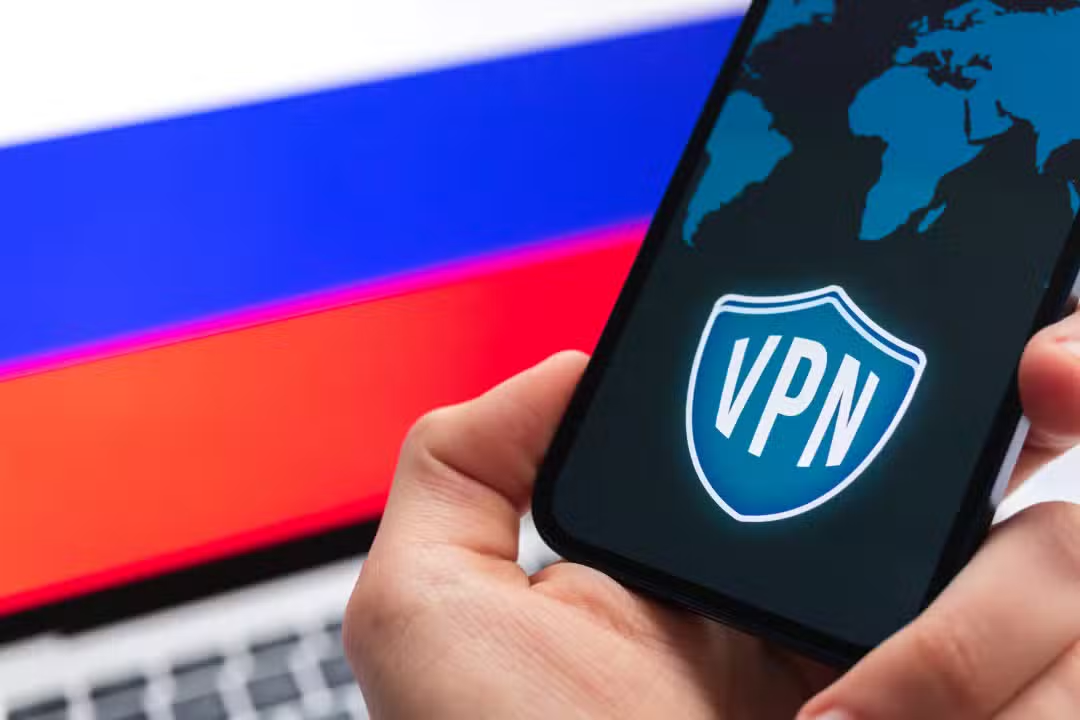
Ministério of Desenvolvimento Digital of Rússia began a series of negotiations with the country’s main telecommunications operators and e-commerce platforms to implement new barriers to the use of virtual private networks. The initiative aims to make it more expensive and difficult for citizens to access foreign servers, bypassing government-imposed blocks on Western websites and applications.
The discussions involve the creation of an extra charge for international data traffic that exceeds a certain monthly limit. Representantes from Russian technology giants and internet providers were called to evaluate the technical and economic feasibility of this measure, which represents a tightening of information control policies in the national territory.

In addition to traffic taxes, authorities also ordered the suspension of alternative payment methods for foreign digital services. The government strategy seeks to close the loopholes that still allow users to purchase subscriptions to censorship circumvention applications directly through official mobile application stores.
Strategic meetings with the technology sector
The negotiation rounds took place in two distinct stages, led by the senior leadership of the ministry responsible for communications. The first meeting focused exclusively on mobile internet providers, responsible for the network infrastructure that connects users’ devices to global servers.
In the second phase of discussions, the government summoned executives from the largest digital and e-commerce platforms operating in the domestic market. Empresas large numbers such as Yandex, VK, Avito, Ozon and Wildberries sent representatives to listen to state guidelines on limiting unregulated traffic.
The central objective of these calls was to align the private sector with the new digital restriction policies, transferring part of the responsibility for the blockade to the companies themselves. Authorities have requested that platforms identify and restrict access to customers who use IP masking tools while browsing.
Although the guidelines were presented clearly, no definitive decision was formalized immediately after the meetings. Technology companies requested time to analyze the operational impact of the requirements, and many chose to remain publicly silent about the exact content of the conversations.
- Mobile phone operators evaluate the technical feasibility of charging international traffic.
- Digital platforms received guidance to block access via IP masking.
- The government seeks to transfer responsibility for oversight to the private sector.
- Technology companies remain cautious and avoid public statements about the measures.
Charging proposal for international data
The main proposal presented to telecommunications companies, such as VimpelCom, Megafon and T2 Mobile, consists of applying an additional fee for users who consume more than 15 gigabytes of international traffic per month. Essa measure aims to separate the standard use of the national internet, which would continue at normal values, from access to servers located outside the country. By making it financially more expensive to connect abroad, the government hopes to discourage the continued use of virtual private networks, which depend on international traffic to function and guarantee the anonymity of internet users.
Experts in network infrastructure point out that implementing this differentiated billing presents significant technical obstacles for providers. The difficulty lies in distinguishing precisely what is legitimate international traffic, used for corporate or academic purposes, and what is a connection established specifically to circumvent state censorship. Além Furthermore, the measure raises questions about how operators would treat Russian citizens who are abroad using roaming services, since the automated identification of these consumption patterns requires heavy investments in in-depth monitoring systems for data packets.
Suspension of payments in app stores
In parallel with discussions about data traffic, mobile operators received direct instructions to stop supporting payments for Apple services using the cell phone balance. The determination takes effect at the beginning of April and directly affects users’ ability to add funds to their accounts at App Store.
Since the departure of the main credit card brands from the Russian market, carrier billing had become one of the few viable alternatives for purchasing apps and digital subscriptions. Essa facility allowed citizens to continue purchasing premium connection masking services directly from the official iOS system store.
By blocking this payment method, acquiring anonymous browsing tools becomes substantially more complex for the average user. The movement demonstrates coordination between different regulatory fronts to financially stifle foreign services operating in the country without the approval of media control authorities.
Structure of fines and financial penalties
The Russian legal framework already provides for severe economic sanctions for the use and promotion of tools that bypass internet blocks. Cidadãos Those caught using these networks to intentionally access materials classified as extremist or illegal by Ministério are subject to fines ranging between three thousand and five thousand rubles.
The legislation hits the advertising sector and the legal entities that promote these services even harder. Running ads for block evasion tools can result in penalties of up to 80,000 rubles for individuals, while companies and service providers can be fined up to 500,000 rubles for facilitating access to banned resources.
Impact on the operations of e-commerce platforms
The requirement that e-commerce and digital services platforms restrict access to users with masked IPs adds a layer of complexity to Russian online retail operations. Empresas that rely on high volume of traffic and fast sales conversion fear that implementing strict filters will end up blocking legitimate consumers who use privacy tools for cybersecurity reasons, and not necessarily to circumvent censorship. Adapting internal policies to meet ministry guidelines requires rewriting security algorithms and updating terms of service, a process that takes time and software engineering resources. Algumas corporations in the retail sector argue behind the scenes that the responsibility for policing internet traffic should fall exclusively on infrastructure providers, preventing technological friction from harming the end consumer’s shopping experience and affecting national e-commerce revenue.
Technical challenges in traffic identification
The separation of the data flow into different tariff categories comes up against the encrypted nature of modern connections. Como Most IP masking services use advanced security protocols to hide the final browsing destination, ISPs face the challenge of classifying traffic without violating remaining telecommunications privacy regulations, requiring the adoption of inspection technologies that can degrade overall network speed.
Regulatory scenario and information control
The recent proposals for charging and blocking payments represent an evolution in the information control tactics adopted by the government. Instead of focusing solely on directly blocking IP addresses, which often results in a game of cat and mouse with software developers, authorities are now seeking to make the use of these tools unviable through financial exhaustion and difficult access.
The strategy of making international navigation more expensive and cutting off local payment methods demonstrates a multifaceted approach to isolating the country’s digital ecosystem. The success of these measures will depend on the technical ability of operators to implement the guidelines without causing massive disruptions to essential services that depend on global servers.
- Fines for users range from three thousand to five thousand rubles for intentional access to banned content.
- Companies advertising evasion tools face sanctions of up to 500 thousand rubles.
- Blocking payments via cell phone balance directly affects the purchase of foreign applications.
- International data pricing aims to create an economic barrier to anonymous browsing.