

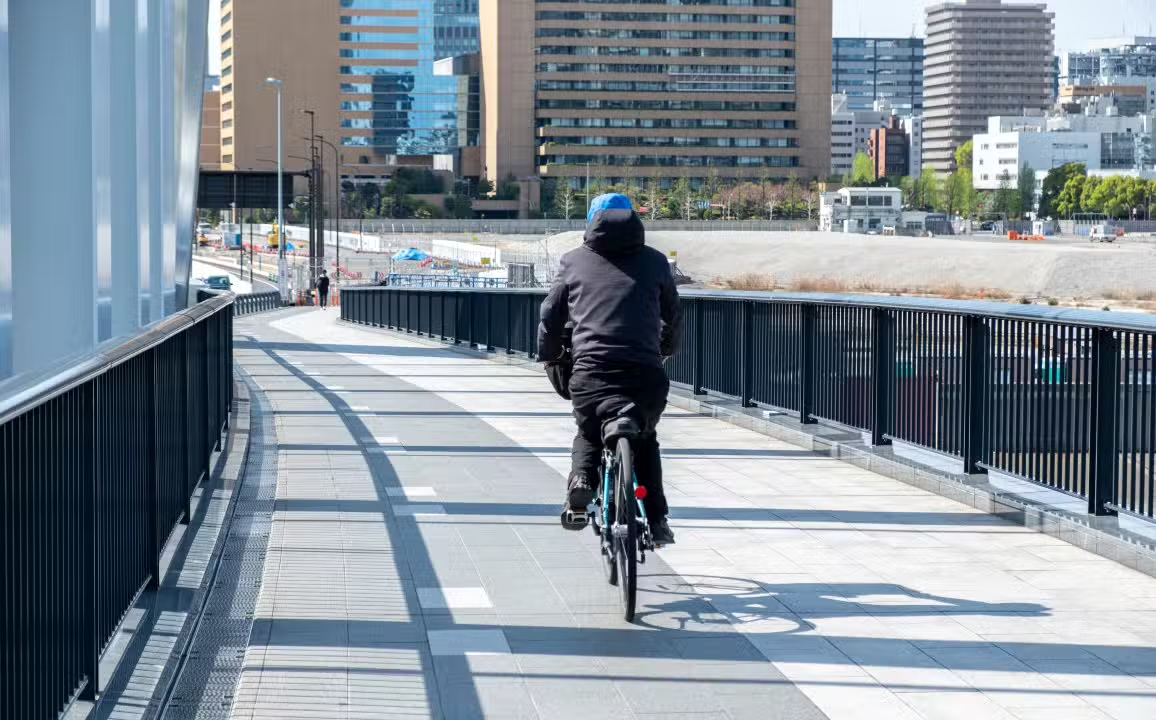
Departamento of Polícia Metropolitana of Tóquio began implementing the new blue fines system for traffic violations committed by cyclists. The measure came into force on April 1st and applies to people aged 16 and over. Authorities carry out awareness campaigns near busy intersections in the neighborhood of Kita, in Tóquio, to guide users about the new rules. The main objective is to reduce accidents caused by risky traffic behavior.
The system covers 113 different types of infractions involving bicycles. Para Most of them, such as walking on the sidewalk or running a red light, the police prioritize verbal or written instructions and warnings before imposing any fine. Apenas When the guidelines are not followed, a blue fine may be issued. Essa approach seeks to balance education with progressive application of penalties.
Ongoing guidance campaigns
Police officers explain the rules directly to cyclists at strategic points in the city. Actions include distribution of informative materials and practical demonstrations on how to cycle safely. The teams reinforce the importance of respecting signs and giving way to pedestrians in shared areas. Essas Initiatives have been ongoing since the beginning of the system.
Authorities emphasize that the initial focus is on prevention rather than immediate punishment. Ciclistas receive clear guidance on the risks of certain behaviors in everyday life. Departamento of Polícia Metropolitana monitors the results of these campaigns to adjust actions as necessary. The goal is to increase the level of awareness among bicycle users throughout the metropolitan region.

Distracted cycling receives immediate attention
The police plan to issue blue fines directly in cases of distracted cycling. Using a cell phone while cycling, whether holding the device to talk or staring at the screen fixed to a support on the bike, can result in a maximum fine of 12,000 yen. Essa infraction receives priority treatment because it significantly increases the risk of accidents involving other road users.
The manual compiled by Agência Nacional of Polícia details inspection policies and general guidelines for the safe use of bicycles. The document is available on the agency’s official website for public consultation. Nele, there are practical examples of conduct that should be avoided and the consequences associated with each of them.
Rules for applying blue fines
Cyclists who receive a blue fine must pay the amount at banks or post offices within the established period, generally around seven days. Payment prevents criminal prosecution and does not generate a background record. The measure simplifies the procedure compared to more serious notifications that can lead to other types of sanctions.
The introduction of the system does not change the basic rules of circulation for bicycles. Cyclists continue to be obliged to respect the same safety principles that already existed. The novelty is the possibility of applying administrative fines for minor infractions when observed directly by the police.
Examples of fine amounts
Several common infractions receive specific values in the new system. Andar Going the wrong way or ignoring a red light can result in a fine of 6,000 yen. Outras conducts, such as cycling with an open umbrella or using headphones, are in the range of 5 thousand yen. Duas People on the same bike generate a 3,000 yen fine.
Agência Nacional of Polícia prepared materials that list the main behaviors to avoid. Esses resources help cyclists better understand authorities’ expectations in urban traffic. Consulting the manual is recommended for anyone who uses a bicycle regularly in Tóquio and in other regions of the country.
Efforts to reduce accidents
Departamento of Polícia Metropolitana records a gradual increase in the number of infractions committed by cyclists in recent years. Current campaigns aim to reverse this scenario through greater visibility of the rules. Policiais work at high-traffic points to interact directly with users and answer questions in real time.
The guidelines emphasize the need to maintain full attention on the road while cycling. Qualquer Activity that takes your eyes or hands away from controlling the bicycle is seen as a high risk factor. The teams reinforce that small changes in habits can contribute to a safer environment for everyone.
Details of the inspection procedure
Police officers who witness violations initiate contact with verbal guidance in most cases. Quando The conduct represents an immediate danger, such as distraction by cell phone, the issuance of the blue fine occurs more quickly. The process includes the delivery of a document describing the infraction and payment instructions.
The system allows the cyclist to regularize the situation without having to go to court. Essa Practicality represents one of the main advantages compared to previous procedures. Authorities monitor the volume of fines issued to assess the effectiveness of the new approach over the coming months.
Additional information available
The Bicycle Rules Manual provides comprehensive guidance on enforcement policies. Ele includes sections dedicated to different types of infractions and the corresponding amounts. Usuários can access the content directly through Agência Nacional’s website to review specific details.
Awareness campaigns remain active in several neighborhoods in Tóquio. Elas seek to reach as many cyclists as possible through direct approaches and educational materials. Departamento of Polícia Metropolitana plans to maintain these actions as part of the long-term strategy for road safety.
System updates
The application of the new system occurs gradually in different areas of the city. Policiais receive specific training to deal with situations involving cyclists. The focus remains on education combined with selective application of fines for more serious cases.
Cyclists who want more information about the rules can consult the traffic authorities’ official channels. The materials highlight safe practices that help avoid both accidents and penalties. The initiative represents a step towards aligning bicycle use with similar responsibility standards as other vehicles.