

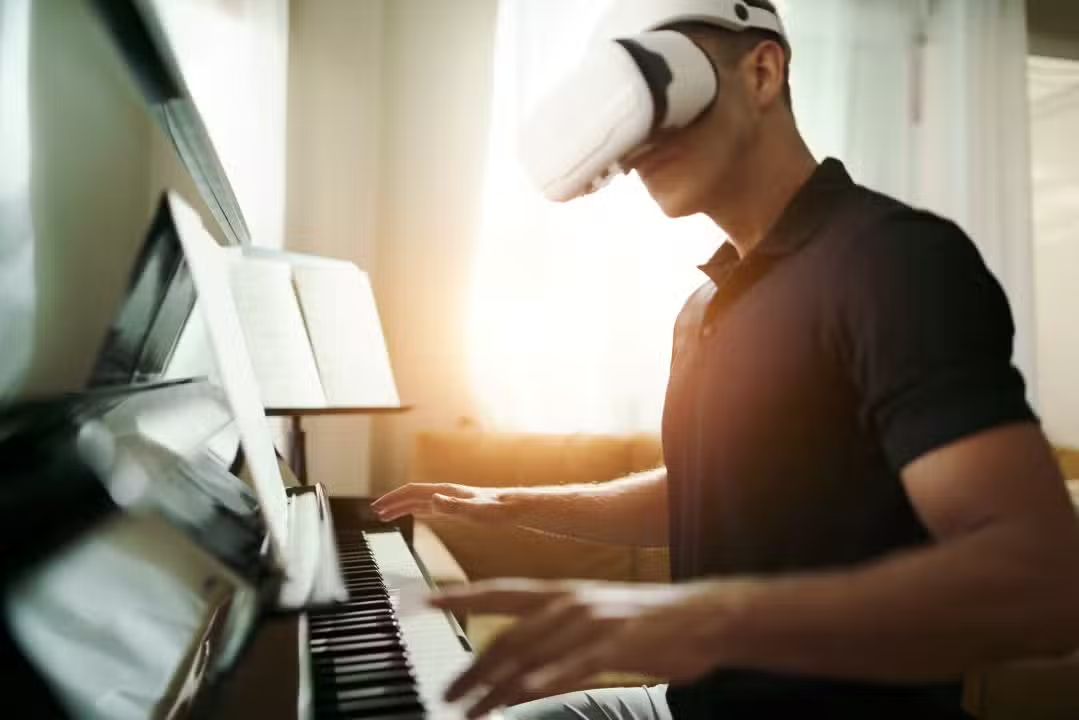
VR software developer Piano Co., Ltd. announced the expansion of the functionalities of its mixed reality application, Sigure. The system was designed to transform musical learning, allowing users to practice the instrument in virtual environments without the immediate need to read traditional sheet music. The initiative arose from the difficulties faced by the project’s creator himself when trying to resume musical studies as an adult, seeking a solution that combined immersive technology and practical education.
The software works with visual mechanics similar to rhythm games, facilitating the assimilation of notes and time through direct stimuli in the user’s field of vision. Desde its initial launch, the platform has received constant updates that consolidated its basic training and motor adaptation functions. The engineering team’s current objective is to transform the application into a complete entertainment and musical education center, serving both beginners and musicians with previous experience.

/ Shutterstock.com
The company, headquartered in the city of Yokohama, plans to implement a series of complex technological innovations over the next few years. The updates aim to break down the physical and financial barriers that have historically limited access to the study of classical instruments by utilizing recent advances in spatial processing and audio recognition hardware.
Integration of sound capture for acoustic instruments
One of the main innovations in the development phase is the ability to detect pitch from the raw sound generated by acoustic pianos. Atualmente, Most music learning applications require connecting digital keyboards via MIDI cables or wireless networks to record notes played accurately. The new functionality will allow the virtual reality device’s built-in microphone to capture and process audio from a grand or upright piano in real time, filtering external noise to isolate the exact frequency of each key press.
This audio recognition technology will evaluate note accuracy and playing time, providing immediate feedback to the user about their performance on the digital interface. Eliminating the requirement for connected electronic equipment considerably expands the system’s compatibility in different environments. The company’s software engineers work to refine the pickup algorithms, ensuring that the experience in the virtual environment accurately reflects the authentic feel and acoustic dynamics of playing a traditional instrument.
Three-dimensional visual elements in musical performance
To complement the auditory experience, the design team is studying the incorporation of dynamic visual effects that react directly to the touch of virtual or physical keys. The project foresees that the pressure exerted on each note triggers three-dimensional animations in the user’s field of vision, such as the projection of cherry blossoms, directional beams of light or simulations of water splashes. Furthermore, the system will track the movement of the player’s hands using infrared sensors, generating luminous auras that accompany the fluidity of the performance and the intensity of the touch. Essa graphic layer aims to enrich sensory perception during study, transforming practice sessions that tend to be solitary and repetitive into visually stimulating and interactive activities.
The integration of these graphic elements will occur progressively in the next versions of the application. The goal established by the developers is to ensure that the visual effects work in harmony with the existing game interface, without causing light distractions that impair the reading of notes or the focus on performing the musical piece.
Digital environments for presentations and social interaction
The creation of virtual spaces dedicated to recitals is another priority in the mixed reality platform’s development timeline.
The system will allow musicians and spectators to come together in personalized digital rooms, regardless of their geographic locations, creating an ecosystem for live performances.
During these exhibitions, artists will have tools at their disposal to apply three-dimensional effects in real time, expanding the possibilities of artistic expression beyond traditional sound.
The software structure was designed to support collaborative events and virtual concerts of different scales, optimizing the server infrastructure to reduce latency and guarantee the synchronization necessary for joint presentations.
Hardware evolution and advanced tactile simulation
The developer’s long-term planning follows projections for the evolution of virtual and augmented reality devices on the global market. The technology sector’s expectation is that immersion glasses will become progressively lighter, more ergonomic and accessible, physically resembling conventional sunglasses, which will facilitate prolonged use during study sessions.
In conjunction with reducing the size of displays, the use of mixed reality gloves equipped with haptic feedback actuators represents a fundamental technological leap for music learning without physical instruments. Esses accessories will provide precise mechanical resistance and vibration to the user’s fingers, simulating the weight, exhaust and tactile response of a real piano’s keys even when the user is playing on a table or flat surface.
With the combination of these tracking and physical simulation technologies, the need to own a real instrument will be bypassed. Users will be able to practice complex fingering techniques in any environment, democratizing access to musical study in smaller residential spaces and eliminating the high costs associated with purchasing, transporting and tuning traditional pianos.
Virtual competitions and instrument diversification
– Para To encourage continuous user engagement, the application will receive game modes focused on multiplayer interaction and friendly technical competition.
– The system will organize online tournaments where musicians can demonstrate their skills in duels of precision and rhythm, with global leaderboards.
– Real-time duet sessions will allow two instrumentalists to play the same piece simultaneously, sharing sections of the score collaboratively.
– The software will also expand its scope of capture to include singing and guitar reviews, creating a more comprehensive and integrated music ecosystem.
The implementation of a unified scoring system for different instruments and voice will transform the platform into a versatile tool for forming virtual bands. The company considers that this multidisciplinary approach will increase user retention and diversify the application’s target audience.
Democratization of music education for beginners
The central philosophy of the project remains focused on removing technical and theoretical obstacles that often demotivate new students in the first few months of practice. The software’s current catalog already offers a wide selection of popular music, including Japanese animation soundtracks, contemporary J-Pop hits, and classical compositions adapted for different difficulty levels.
The visual note-scrolling format allows people without any formal instruction in music theory to start playing their favorite songs from day one. The company’s strategic planning for the next decade foresees the continuous improvement of these accessibility tools, monitoring the sector’s technological progress to consolidate the platform as a global reference in immersive and interactive musical education.