

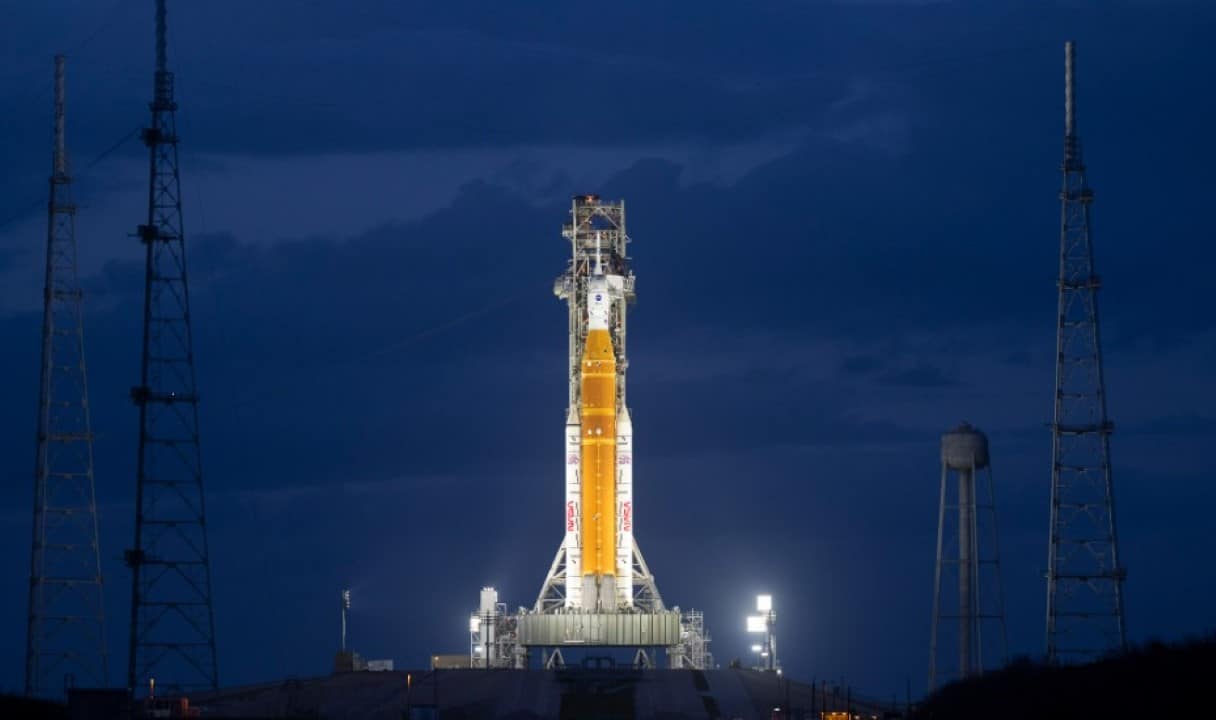
Nasa successfully launched mission Artemis II, sending four astronauts aboard spacecraft Orion attached to rocket Space Launch System. Liftoff took place on April 1, 2026, at 6:35 pm local time. Flórida, from Centro Espacial Kennedy. Essa operation represents the first manned lunar flight since mission Apollo 17 in 1972, more than 50 years ago. The crew will carry out a test flight around Lua on a free return trajectory, expected to last around ten days.
The team is made up of astronauts from Nasa Reid Wiseman as commander, Victor Glover as pilot, Christina Koch as mission specialist, and Jeremy Hansen from Agência Espacial Canadense also as mission specialist. Eles will verify Orion’s systems in a deep space environment, including life support, navigation and radiation protection. The main objective is to validate the capabilities needed for future missions that take humans back to the lunar surface.
- Reid Wiseman accumulates experience from previous missions and leads the international crew.
- Victor Glover contributes expertise in spaceflight operations.
- Christina Koch holds the record for the longest stay in space by a woman.
- Jeremy Hansen marks the Canadian presence on an American lunar mission.
The SLS rocket provided more than 8.8 million pounds of thrust during ascent, propelling the spacecraft beyond low-Earth orbit. Após the separation of the stages, Orion followed the path that will take it to pass Lua without entering its orbit, collecting crucial data on the performance of the systems in real deep flight conditions.
Technical details of the launch and Orion spacecraft
Centro Espacial Kennedy, at Flórida, served as the basis for all preparation and execution of the launch. Ground teams monitored each phase of the countdown, ensuring the integrity of the solid propellants and cryogenic fuel tanks. The process took place within the expected window, with favorable weather conditions in the region.
Spacecraft Orion has advanced communications and computing systems that allow constant monitoring of the health of the crew and vehicle. Durante During the ten days of the mission, the astronauts will carry out maneuver tests, heat shield checks and re-entry simulations into the Earth’s atmosphere. Esses procedures provide essential information for the development of subsequent missions of the Artemis program.
The integration of modern technologies in the Orion includes equipment that facilitates the recording of data and images during the route. The crew relies on personal devices adapted for use in a space environment, such as smartphones in airplane mode, to capture high-quality photographs and videos of Terra, Lua and the interior of the capsule. Essa approach seeks to document aspects of the journey with accessible tools with proven performance.
The visual records generated during the flight should offer unprecedented perspectives of the Earth’s curvature in contrast to the lunar surface, as well as images of the interior of Orion in operation. The initiative reflects the ongoing effort to combine consumer capabilities with stringent safety and functionality requirements in space exploration missions.
International participation and crew preparation
The addition of Jeremy Hansen to the crew reinforces the collaboration between Nasa and Agência Espacial Canadense in the Artemis program. Hansen participated in extensive joint training focused on Orion operations and deep space emergency procedures. The international partnership expands the scientific and technological scope of the mission.
The four astronauts underwent quarantine and rigorous medical evaluations in the weeks leading up to launch. Eles performed full mission simulations at Centro Espacial Johnson, at Texas, and at training facilities at Flórida. Esses preparations ensured that the team was aligned with safety protocols and the specific demands of the flight around Lua.
Technological advances in mission documentation
The devices provided by Apple allow astronauts to capture moments of their journey with high photographic quality, even in conditions of microgravity and exposure to radiation. The devices operate in configurations adapted to the space environment, prioritizing the security of Orion systems. Essa integration represents a novelty in the way space agencies equip crews for personal recording and image sharing.
The images and videos produced should contribute to public awareness of the mission, offering visuals that connect the public with the challenges and discoveries of deep space. Visual documentation also assists ground teams in analyzing behavioral and operational aspects within the capsule.
Expectations for the trip around the moon
During Lua’s approach, Orion will reach distances Terra greater than any previous manned mission. Astronauts will monitor the performance of communications systems over significant signal delays, as well as test the spacecraft’s autonomy in critical phases. Esses data will be essential for refining designs for future manned lunar expeditions.
Mission Artemis II serves as a bridge between the unmanned test Artemis I and operations aimed at sustainable landing on Lua in later missions. Nasa uses the results of this trip to adjust schedules and technologies needed for the long-term lunar exploration program.
The crew maintains regular contact with the control centers on Houston and Kennedy, exchanging information on the status of the systems and the well-being of members. The flight continues as planned, with continuous updates on trajectory progress.
Importance of the Artemis program for space exploration
The successful launch consolidates the SLS as the most powerful vehicle ever developed by Nasa for manned missions. Seus Thrusters and stages demonstrated performance in line with technical specifications during the initial phase of flight. Orion, in turn, confirmed the correct separation and activation of its solar panels.
These initial milestones allow the agency to move confidently into the next steps of the mission, including the translunar insertion burn and trajectory correction maneuvers. Real-time data collection supports engineering teams in validating computational models used in the project.
Artemis II reinforces the commitment to sustainable return to Lua, preparing the ground for building a lasting human presence on Earth’s satellite. The results of this mission directly influence the planning of manned landings and future international partnerships in deep space.