

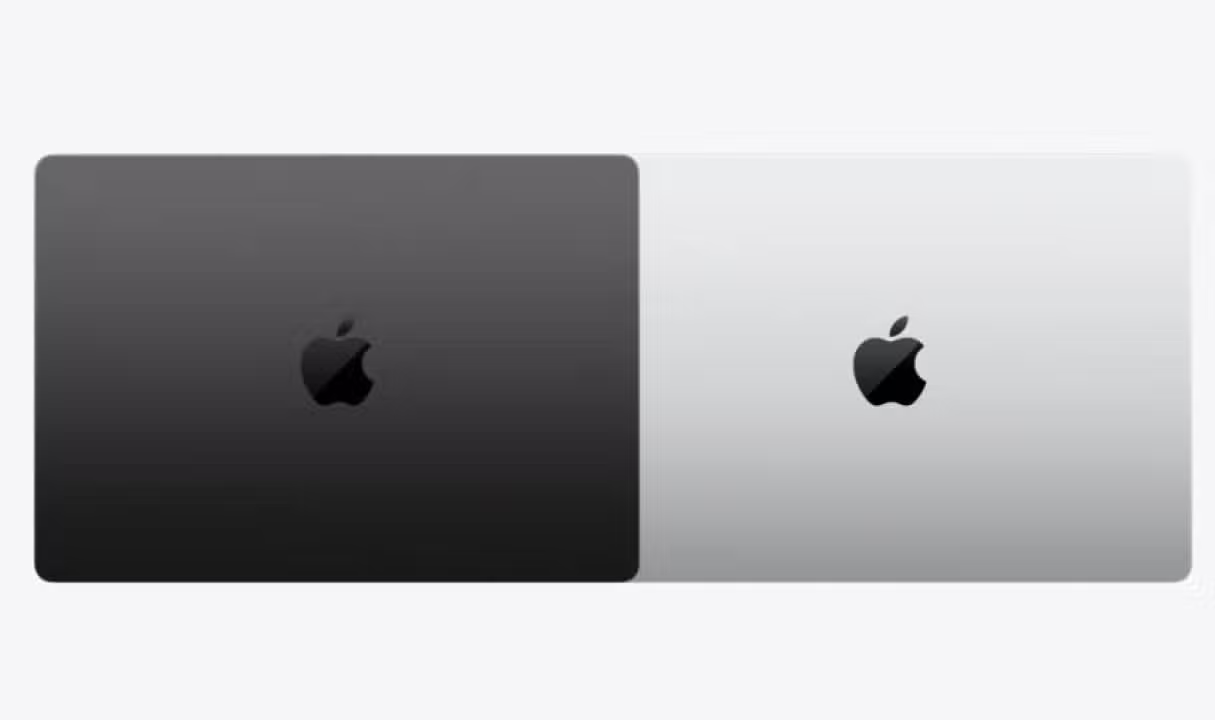
North American manufacturer Apple has updated its line of portable computers aimed at the corporate market with the introduction of an unprecedented silicon architecture. The newly launched equipment focuses on the technical demands of software engineers and founders of technology-based companies who require high daily computing power. The main hardware change unifies the central and graphics processing cores, which changes the dynamics of executing complex tasks in agile development environments and information technology operations.
Technology infrastructure experts point out that the physical integration of internal components drastically reduces the operating system’s response time. Tarefas that require large memory allocation, such as compiling extensive source codes and rendering three-dimensional models, occur simultaneously. The new unified memory structure allows different sectors of the chip to access the same blocks of information without the need to duplicate data, eliminating transfer bottlenecks that were common in previous generation computers aimed at professional use.

The enterprise technology market monitors these hardware upgrades due to the constant need to process large volumes of data in real time. Profissionais Those who demand mobility find in the new configuration a tool capable of replacing fixed workstations without loss of performance. Entre the technical specifications observed in the device, specific operational characteristics aimed at system stability stand out:
– Ampliação of bandwidth for transferring heavy files between external and internal storage drives.
– Otimização of energy consumption during the training of machine learning and artificial intelligence models.
– Integração native with mobile and tablet app development platforms.
Silicon architecture and execution speed
The computer’s central component restructures the communication path between the processing unit and the graphics core, allowing multiple virtual machines to run simultaneously. Desenvolvedores software can emulate different operating systems and test applications in isolated environments with immediate response from the machine. Expanding volatile memory capacity represents a profound operational shift for data engineering teams working on artificial intelligence. Projetos of this nature require the rapid loading of vast sets of information, and the system manages these resources dynamically, allocating processing power exactly where demand reaches critical peaks during the execution of complex scripts.
Compilation speed dictates the pace of new product launches in today’s technology market. Ferramentas development processes that previously required long periods to complete the construction of software now complete the process in a fraction of the original time. Engenheiros perform a significantly greater number of automated tests throughout the working day, identifying and correcting programming errors immediately. The ability to run complex language models locally, without relying on cloud servers, accelerates the implementation of advanced features in new enterprise applications. The gain in technical productivity is reflected in the reduction of operating costs for companies that adopt the new machinery.
Thermal management in continuous operations
The device’s internal cooling system has been redesigned to operate silently throughout most of the daily usage cycle. The fans built into the aluminum chassis are activated exclusively when the processor reaches extreme temperatures in tasks with very high computational demands.
Exporting videos at full resolution and rendering complex three-dimensional graphics are examples of processes that activate active ventilation of the equipment. Essa thermal engineering preserves the physical integrity of internal components and prevents the forced reduction of processing speed, technically known as thermal throttling.
Operating system optimization reduces wasted energy on applications that run in the background without direct user interaction. The practical result is a machine that maintains a stable temperature to the touch, even during long working hours that go beyond the conventional business hours of technology agencies.
Physical connectivity for workstations
The presence of multiple high-speed connection ports facilitates the integration of the equipment with essential peripherals in modern offices. The updated data transfer standard allows the movement of terabytes of information in just a few minutes, ensuring agility for content producers and systems analysts.
Technical support for multiple high-resolution external monitors expands the visual area available to the professional user. Programadores use secondary screens to monitor extensive lines of code while following the visual result on the device’s main screen, without registering drops in the frame update rate.
The inclusion of memory card readers and native video ports eliminates the need for external adapters during frequent travel. Apresentações in meeting rooms occurs directly, connecting the computer to the projectors available in the corporate environment in a simplified and immediate way.
Wireless network interfaces have received hardware upgrades to support the latest broadband data transmission standards. Access to code repositories and remote servers occurs with minimal latency, ensuring absolute stability in high-definition video conferences with clients and investors.
Security and data protection protocols
The protection of intellectual properties and sensitive customer information is an absolute priority for companies expanding in the digital market. The hardware incorporates a security enclave physically isolated from the main processor, designed exclusively to store encryption keys and biometric data of registered users. Essa architectural barrier prevents malicious software and external attacks from accessing important credentials, even if the operating system is compromised by network vulnerabilities. Biometric authentication speeds up screen unlocking and approval of corporate financial transactions with a higher level of security than traditional methods based on alphanumeric passwords. Administradores of enterprise networks are able to implement strict access policies through mobile device management tools natively integrated into the system. End-to-end encryption applied directly to the storage disk ensures that files remain inaccessible if the memory unit is removed from the mainboard. Device tracking and remote blocking discourage theft and protect industrial confidentiality in situations where machinery is lost during business trips. The integrity checking ecosystem blocks the execution of unsigned code, mitigating the risk of corporate intrusions.
Battery autonomy when working remotely
Battery life emerges as a critical operational factor for professionals operating in hybrid or fully remote work models. The new processor’s energy management extends the device’s continuous use time away from electrical power sources, optimizing executives’ routines.
Extended meetings, international travel, and coding sessions in shared workspaces occur without interruptions due to lack of charge. The efficiency of the silicon ensures that the machine’s performance is not reduced when the computer is unplugged, maintaining the fluidity of applications.
Systems integration in the corporate environment
Continuity of tasks between different devices from the same manufacturer optimizes internal communication and the workflow of development teams. Documentos copied on a corporate smartphone can be instantly transferred to the text editor open on the same user’s laptop.
This fluid exchange of information eliminates intermediate steps, such as sending files via email or using third-party messaging applications. Cloud synchronization keeps data updated in real time on all registered terminals, facilitating the management of ongoing projects.
Durability of physical components
The construction of the equipment uses high-resistance materials designed to withstand the daily wear and tear of intense corporate use. The aluminum chassis protects the main board from light impacts during transport, while extended support for software updates ensures the machine remains compatible with new technologies for years to come, preventing early hardware obsolescence and ensuring a return on investment for corporate purchasing.