

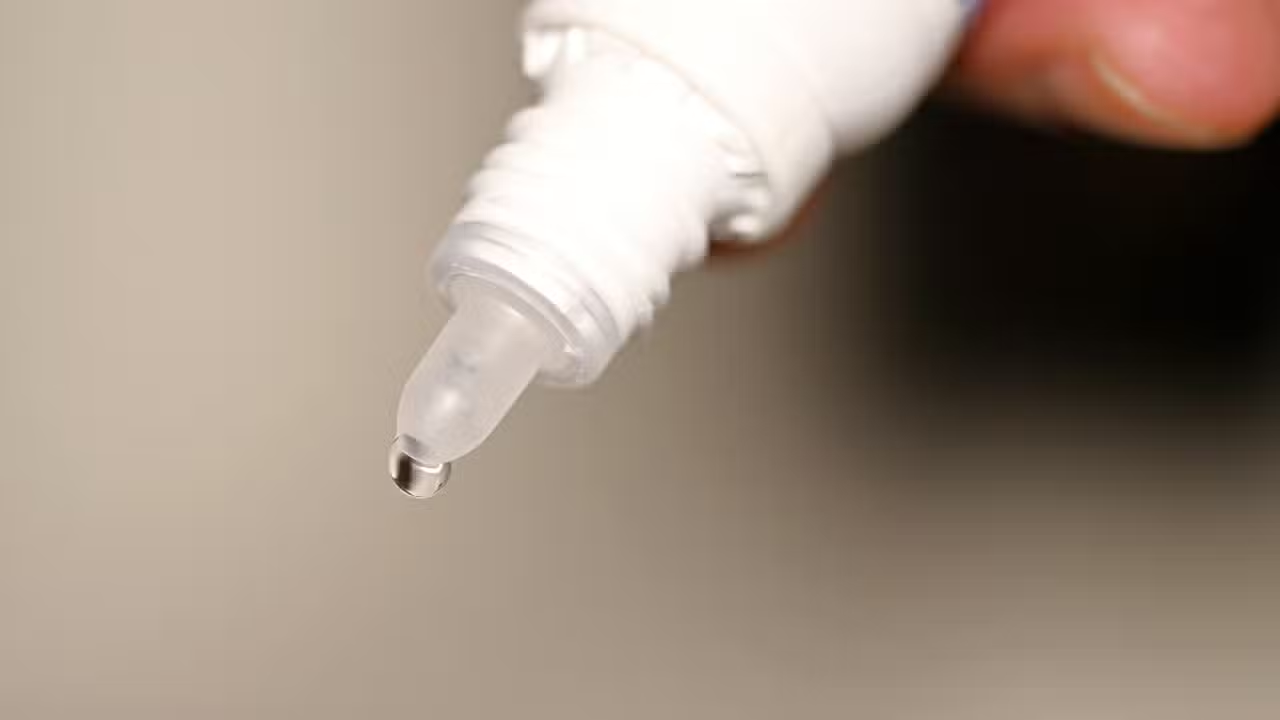
Federal health officials issued an urgent warning Friday for consumers to check their medicine cabinets following the announcement of a massive recall. The measure covers more than 3.1 million bottles of eye drops distributed throughout the national territory due to serious concerns about the health safety of the products. Food and Drug Administration (FDA) confirmed that the action was motivated by the lack of sterility guarantee in the manufacturing processes of the responsible company.
K.C. Pharmaceuticals, Inc., with headquarters at Pomona, at Califórnia, initiated the voluntary recall after identifying that it could not guarantee that the items were produced free of microorganisms. Embora No specific contamination has been confirmed to date, the absence of strict sterilization protocols represents a potential risk of eye infections for users. The affected products were sold in large retail chains and hospital distributors, reaching a significant share of the consumer market.
Key points of attention for consumers include:
- Immediate check of brands such as Walgreens, CVS, Kroger and Rite Aid for suspicious lots.
- Identification of batch codes that begin with the acronyms AC, AR, LT, SU, RG, RL, SY or AT.
- Immediately stop using any eye lubricant or redness relief eye drops listed in the alert.
- Discard or return the product to the point of sale if the expiration date extends until 2026.
Health risks and health agency classification
The agency classified the recall as Classe II, which means that the use of the products may cause temporary or clinically reversible adverse effects on human health. Essa category is applied when there is a remote probability of serious consequences, but still requires immediate action to protect the physical integrity of the population served. The main focus of concern lies in the possibility of bacteria or other microbes thriving in solutions that should be completely sterile in nature.
Ophthalmology experts reinforce that the introduction of any contaminating agent directly into the eyeball can trigger severe inflammatory processes or keratitis. The manufacture of ophthalmic solutions requires a controlled environment that the company, at the moment, has not been able to validate in accordance with the technical standards required by the American federal government. Monitoring of the units continues to be carried out to ensure that all problematic batches are definitively removed from the shelves.
Detailed list of products and brands affected by the recall
The list of items collected is extensive and includes popular formulas of artificial tears and eye drops for advanced irritation relief. Mais of 1 million bottles of Dry Eye Relief Eye Drops, sold in stores such as H-E-B, Meijer and Harris Teeter, are among the most significant volumes on the official list. Outros 589 thousand bottles of lubricating artificial tears distributed by Publix and Kroger must also be returned by consumers as per the authorities’ guidance.
In addition, the recall affects specific redness relief formulas and calming eye drops that circulate in convenience stores and even in military exchanges. Cerca of 378 thousand units of the original sterile formula, sold at Dollar General and Circle K, are part of the inventory that showed documented failures in guaranteeing purity. The diversity of affected labels makes quick visual identification difficult, requiring the user to carefully read the information printed on the secondary packaging or on the bottle itself.
- Dry Eye Relief Eye Drops (Glycerin 0.2%) – 1,023,096 units.
- Artificial Tears Sterile Lubricant (Polyvinyl alcohol) – 589,848 units.
- Sterile Eye Drops Original Formula (Tetrahydrozoline) – 378,144 units.
- Sterile Eye Drops Redness Lubricant – 315,144 units.
- Eye Drops Advanced Relief – 303,216 units.
- Ultra Lubricating Eye Drops – 245,184 units.

Agency of Alimentos and Medicamentos of Estados Unidos FDA – Jeppe Gustafsson/shutterstock.com
Critical distribution channels and expiration dates
The products were widely distributed through national chains and workplace suppliers, such as distributor Cintas, expanding the scope of the risk. Most of the bottles listed have expiration dates reaching the end of 2026, meaning many consumers may have stocks at home for future use. The official recommendation is that even unopened products within their expiration date be rigorously checked before any ocular application.
Transparency in the recall process aims to prevent isolated cases of infection from evolving into an outbreak related to the product manufactured in Califórnia. Pharmacy chains have already been notified to remove batches from sales areas and isolate stock returned by customers seeking refunds. Não, until the last update of this news, confirmed cases of vision loss or permanent injuries directly linked to these specific batches of eye drops were reported.
Procedures for consumers and return of goods
People who use eye drops daily for chronic dry eye conditions should seek therapeutic alternatives from other manufacturers immediately after the conference. Contact with K.C. Pharmaceuticals can be called for clarification on specific batches that are not clear in the labeling available on the agency’s official website. Farmacêuticos across the country are also advised to assist patients in identifying the security codes printed on the side of the 15 mL bottles.
The check must be carried out paying attention to the batch prefixes mentioned by the health authorities to avoid unnecessary disposal of products that are not part of the recall. Manter The integrity of visual health is the priority of surveillance teams that monitor the supply chain of over-the-counter medicines. The manufacturing company continues to collaborate with investigations to identify the exact point of failure in the filling and processing system for liquid solutions intended for ophthalmic use.
Medical advice in case of exposure to the product
If a consumer has used the recalled eye drops and presents symptoms such as eye pain, changes in vision or persistent discharge, the advice is to seek medical advice. Professional care is essential to rule out bacterial infections that can progress quickly if not treated with specific antibiotics. Relatos of adverse reactions must also be forwarded to the health agency’s adverse event reporting system to form the official database.
Patients must take the medicine bottle to the doctor’s office so that the professional can identify the batch and report the case with technical precision. Prevention remains the best way forward in the face of sterility failures in products that come into direct contact with sensitive mucous membranes. Constant surveillance over industrial drug processes is what guarantees the safety of the consumer market on a global scale, especially in commonly used and over-the-counter items.
The interruption of use is a precautionary measure that aims to mitigate any possibility of damage to the vision of American citizens and other affected markets. Novas Updates on the technical investigation at the Pomona plant are expected to be released once quality inspections are completed by the regulatory team. Até There, strict compliance with the recall is the only way to ensure that no individual suffers consequences for a preventable production failure.