

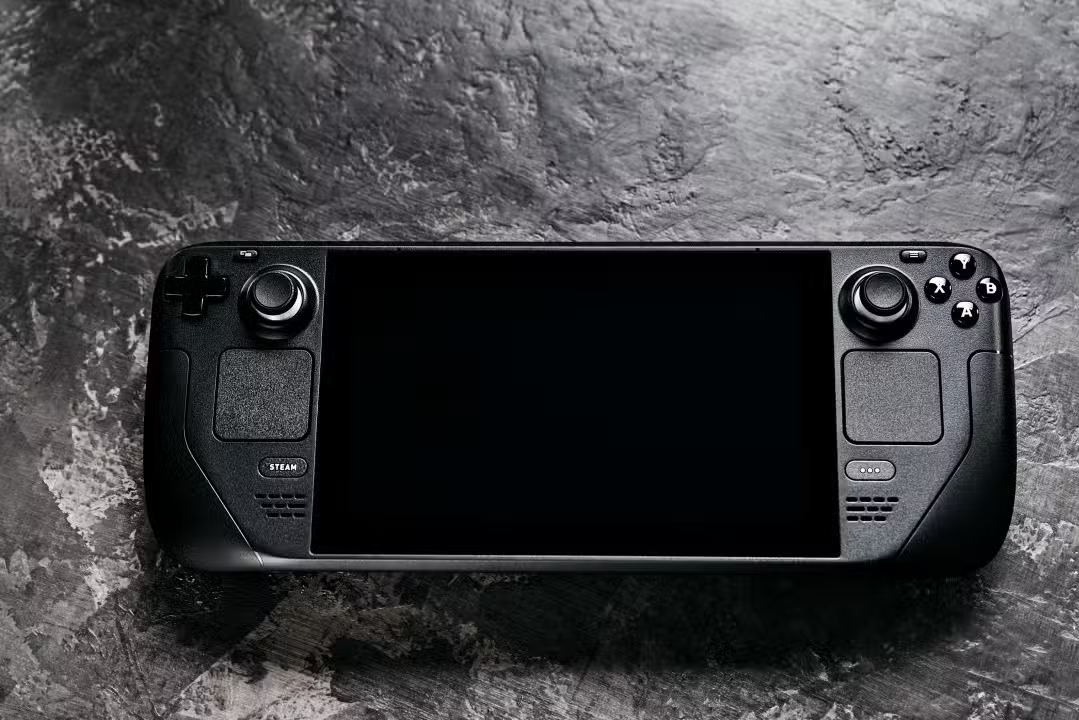
The technology industry closely follows the movements of the hardware manufacturer and game developer responsible for popularizing modern portable PCs. The development of the next generation of the gaming-focused device faces significant logistical hurdles due to high global demand for specific components. The initial forecast for placing the new equipment on the market has changed, pushing the launch window to 2028.
This change of route comes at a time of transformation in international assembly lines, where supply priorities have changed drastically. Centros of data processing aimed at training language models and automation absorb most of the production of RAM memories and NAND storage chips. Consequentemente, companies focused on consumer electronics find it difficult to guarantee the necessary volume of parts without passing on exorbitant costs to the end consumer.

The current scenario already has direct impacts on virtual and physical shelves around the world. The model with an OLED screen, previously launched, has been experiencing stock instability in several commercial regions since the first months of this year. The engineering team responsible for the project monitors semiconductor price fluctuations to define the final specifications of the next device without compromising the product’s profit margin or affordability.
Requirement for substantial technical evolution
The company’s board of directors has established a strict policy against incremental updates that offer only marginal performance improvements. The central objective of the new project is to deliver a clear generational leap, capable of running today’s heaviest titles with stable frame rates and high visual fidelity. Engenheiros involved in the development state that a thirty or fifty percent increase in processing capacity does not justify the introduction of a new platform on the market. The goal is to provide a user experience that rivals robust desktop computers, while maintaining the compact format and ergonomics already approved by users.
To achieve this level of excellence, the hardware team works closely with chip suppliers to customize silicon solutions. Energy efficiency emerges as the main technical challenge, since increased computing power generally results in greater battery consumption and heat dissipation. The refrigeration system of the future device undergoes constant review in the laboratory, searching for innovative materials that allow temperatures to be kept under control even during prolonged sessions of intense use. The company rules out launching the product before completely resolving the equation between raw performance and energy autonomy.
Strategic partnership for processing architecture
The heart of the future wearable device will rely heavily on innovations developed by the partner semiconductor manufacturer. The technical expectation points to the use of central processing cores based on the Zen 6 architecture, which promises to optimize the distribution of complex tasks.
In the graphics department, the project must incorporate RDNA 5 technology, focused on maximizing polygon rendering and advanced lighting effects. Essa combination of cutting-edge technologies will allow the device to run games developed on the latest graphics engines without the need for drastic reductions in visual quality.
Deep integration between the custom hardware and the Linux-based operating system remains a key pillar of the strategy. Desenvolvedores software works in parallel to ensure that the compatibility layer translates native game commands from other systems with zero loss of performance.
The extra time until launch in 2028 will serve to refine the video drivers and expand the catalog of perfectly optimized titles. The company seeks to ensure that the compatibility verification seal covers almost the entire digital library available in the online store on launch day.
Bottlenecks in the global supply chain
Shortages of essential components directly affect financial planning and large-scale production capacity. Volatility in the prices of random access memory and solid-state storage modules prevents the establishment of a definitive retail value for the new equipment.
International logistics experts predict that the readjustment of semiconductor factories could take up to two years to normalize the flow of deliveries. Durante During this period, manufacturing capacity will continue to be mainly directed towards corporate contracts with high added value, leaving the video games sector in the background.
Fierce competition in the portable electronics sector
The pioneering of the first model opened the door to a new category of products, attracting the attention of technology giants who quickly introduced their own versions of handheld computers. The proliferation of competing devices running traditional operating systems has raised the bar for consumers, who are now looking for screens with higher refresh rates, triggers with precision sensors and long-lasting batteries. The OEM faces the pressure of maintaining its leadership position in a commercial environment where new options arrive in stores every semester. Para to differentiate itself from the competition, the strategy involves not only delivering superior hardware, but also maintaining a closed and highly optimized ecosystem, where game purchasing, cloud file management and social interaction occur fluidly and without the interruptions common in general-purpose operating systems adapted for small screens.
Commercial trajectory of the original device
The acceptance of the hybrid concept exceeded the sales department’s initial projections, consolidating the device as an absolute commercial success. Levantamentos indicate that millions of units have been sold globally since the introduction of the first batch in online stores.
The significant sales volume proved the financial viability of investing in dedicated hardware, even for a company whose main business has always been the digital distribution of software. The device has created a profitable niche and built a loyal user base that prefers the convenience of gaming on the go.
Despite the natural technical limitations that begin to emerge when running recent releases in the gaming industry, the current model maintains a remarkable survival. Atualizações Firmware constants and specific optimizations by the studios ensure that the device remains relevant in discussions about entertainment platforms.
Reallocation of resources in the technology industry
The race to dominate automation and content generation tools has changed the balance of forces between silicon purchasing companies. Fabricantes of video cards and processors direct their best engineers and the most modern assembly lines to meet billion-dollar orders for network infrastructure.
These market dynamics force entertainment divisions to rethink their research and development schedules. The strategic wait until the end of the decade allows the laptop manufacturer to accumulate capital and negotiate supply contracts at a future time of greater economic stability.
Planning focused on product longevity
The adoption of long life cycles, similar to those of traditional table consoles, reinforces the company’s commitment to consumers who invest in its ecosystem. Refusing to participate in an annual rush for new hardware protects the resale value of older devices and ensures that game developers have a solid, predictable installed base to optimize their future projects.