

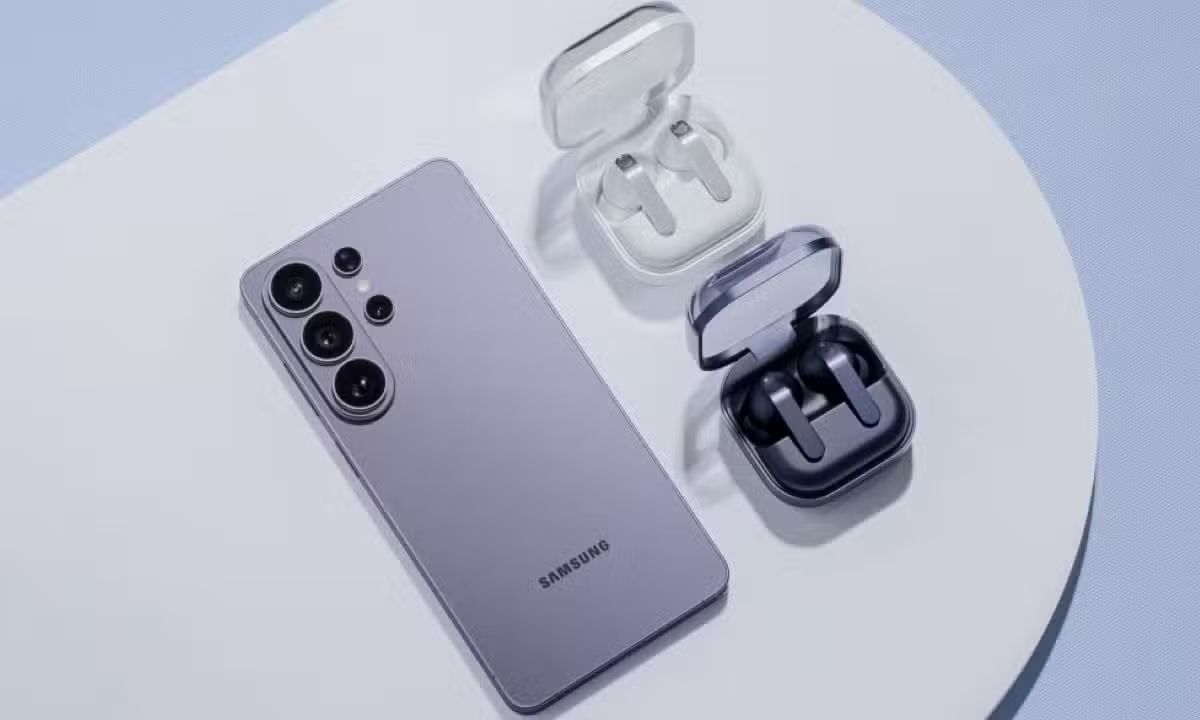
Power component durability remains one of the most critical factors for consumers when choosing a high-performance mobile device. Aparelhos in the premium segment require a power supply capable of supporting powerful processors, extremely high-resolution screens and multiple resources operating simultaneously.
Market expectations depend on manufacturers’ ability to balance these technical requirements without compromising the thickness or weight of the equipment. Maintaining ergonomics and ease of daily use is a fundamental requirement when developing new projects in the telecommunications industry.
The launch of the Galaxy S26 Ultra attracts the attention of technology experts precisely because of the promises of significant advances in consumption management. Análises details of the device’s behavior demonstrate that autonomy does not depend exclusively on the physical size of the storage component, measured in milliampere-hours.
Advanced integration between physical components and operating system
The internal architecture of the new smartphone features innovations aimed at reducing thermal and electrical losses during continuous operation. The use of processors manufactured with smaller lithographs allows a greater number of transistors to operate at reduced voltage. Isso guarantees the same level of processing with lower demands on the main power supply.
Improving the cooling system acts directly to prevent unnecessary energy dissipation. Temperature maintenance at ideal levels occurs even during the execution of complex tasks, preventing premature wear of the load cells and maintaining hardware integrity.
An integrated power management circuit acts as a conductor, directing electrical current only to those sectors of the motherboard that actually need power in that millisecond. Essa Surgical precision cuts off the supply of inactive areas, optimizing electrical flow continuously and imperceptibly for the user.
The device’s screen uses a variable refresh rate that automatically adjusts to the content displayed. The frequency drops to the minimum level when the image is static, which saves a substantial amount of charge over the course of a full day of uninterrupted use of reading or photo viewing applications.
Assessment methodology based on real usage scenarios
To understand the true capabilities of equipment, testing labs move away from traditional static measurements and implement scenarios that mimic human behavior. Máquinas automated devices simulate tapping, scrolling, and typing on popular social networks and instant messaging apps.
Playing high-definition videos through streaming platforms makes up a significant part of the daily assessment. Testers measure the percentage drop in charge while the device maintains screen brightness at a comfortable level for use indoors and outdoors, switching between mobile connections and local networks.
Energy efficiency during standby and inactivity
Loss of charge while the phone remains idle on a table or in a pocket represents one of the main complaints of smartphone users. Esse phenomenon, known as idle consumption, receives special attention from software developers, who implement deep sleep modes triggered at times of prolonged inactivity. The integration between motion sensors and the operating system makes it possible to identify exactly when the device is not being required by the owner, initiating a strict energy conservation protocol.
When the sensors detect the absence of movement and the screen remains off for a predetermined period, the system cuts off internet access for the vast majority of background applications. Apenas Essential notifications, such as phone calls and priority messages, are authorized to wake up the main processor and activate the display backlight. Essa Strict restriction ensures that power is preserved for times of active use, eliminating waste generated by invisible secondary software updates.
Impact of modern telecommunications networks on autonomy
Current telecommunications infrastructure creates severe challenges for the autonomy of high-end mobile devices. Browsing on fifth-generation networks provides impressive download and upload speeds, but requires a considerable amount of power from the radio transmitter built into the device.
Maintaining signal stability at higher frequencies requires continuous effort from the connectivity hardware. The simultaneous use of multiple wireless protocols, such as headphones via Bluetooth, global positioning systems and smart watches synchronizing health data, worsens the daily consumption scenario.
To mitigate this wear and tear, the device employs algorithms that determine the exact moment to switch between available networks. If the user only reads static text, the system may temporarily downgrade the connection quality to a more economical standard, resuming full speed only when a new data load is actively requested.
Application of artificial intelligence in routine management
Artificial intelligence plays a central role in extending the lifespan of everyday loads and preserving the long-term integrity of physical components. The device continuously collects data on the owner’s habits during the first few weeks of use, creating a detailed profile of peak times and moments of absolute idleness. Based on this locally processed information, the operating system predicts actions, preloading applications that are frequently opened in the morning and limiting the activity of rarely accessed software during business hours. If the user is in the habit of always plugging the device into the socket at the same time during the night, artificial intelligence regulates the recharging speed to preserve the chemical health of the internal cells. Essa predictive management ensures that the battery reaches maximum capacity just minutes before the first alarm of the day sounds, avoiding prolonged thermal stress and ensuring that natural degradation occurs much more slowly over the years, maintaining performance close to that of a device fresh out of the box.
Strategic positioning in the face of competition in the market
In the premium category device market, energy efficiency has become the main battleground between technology giants. The ability to provide additional hours of operation without the need for recharging is often used as the ultimate selling point in advertising campaigns aimed at corporate audiences.
These competitive dynamics force the entire industry to invest substantial resources in research and development to maintain commercial relevance. Manufacturers need to demonstrate real innovations with each generation to justify consumers’ investment in new high-cost devices and sustain their market share.
Consumer demands for ultra-fast charging systems
The advanced smartphone buyer profile does not accept compromises when it comes to operational availability, requiring the device to support a full day of corporate and multimedia use. Para complement extended durability, ultra-fast charging technologies allow just a few minutes plugged in to provide hours of operation, an essential function for professionals on the constant urban commute who depend on the equipment for uninterrupted communication.