
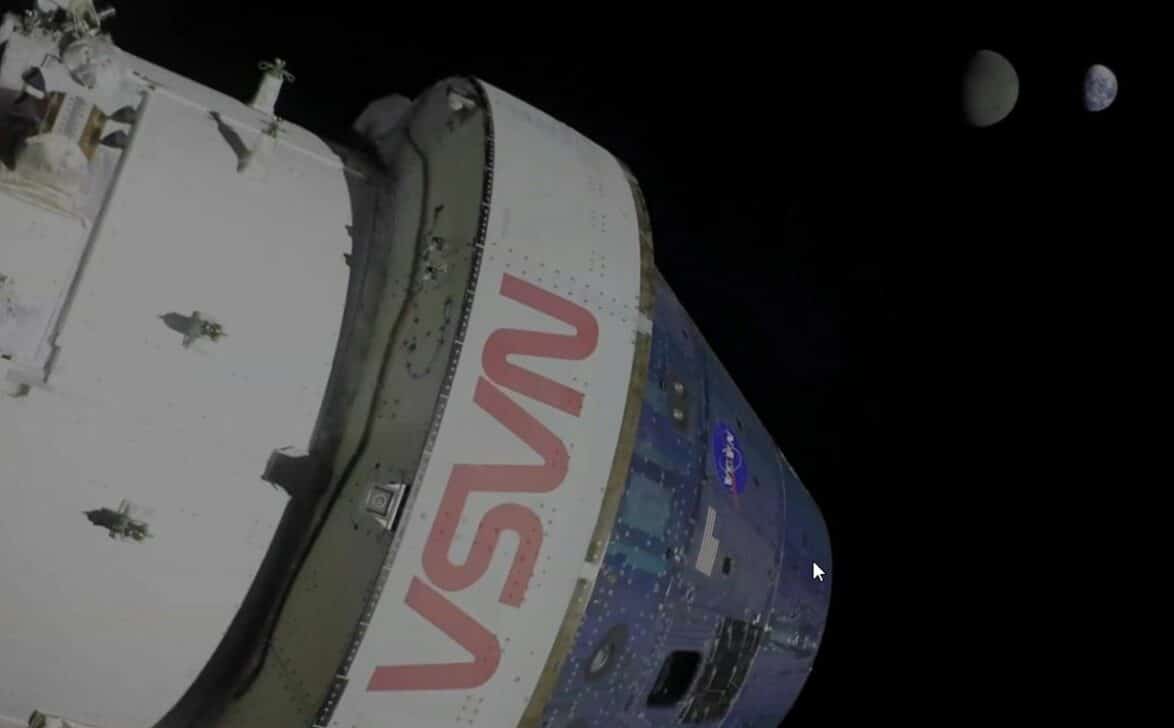
The crew of Artemis II, made up of astronauts Reid Wiseman, Victor Glover, Christina Koch and Jeremy Hansen, received iPhones during the quarantine period that began in March. Cada team member uses the device to capture photos and videos inside the Orion capsule, marking the first time NASA has allowed smartphones on a crewed deep space mission. The devices operate without an internet connection or Bluetooth, ensuring operational security while recording moments of the flight that orbits Lua.
Astronauts document views of Terra, Lua and the upper stage of the rocket that powered them. Imagens show the iPhone floating in the cabin due to the absence of gravity, with a silver device passing from hand to hand between the crew about four hours after the start of the mission. Essa practice enriches the visual record of the journey, which represents the return of humans beyond Earth’s orbit after more than five decades.
Use of iPhones in the booth at Orion
The devices help capture visual records that complement the mission’s official equipment. Tripulantes photograph the exterior through the capsule window and record team interactions during maneuvers. NASA distributed iPhones 17 Pro Max after a rigorous four-phase approval process, which evaluated safety, compatibility and risks in a space environment.
Each astronaut keeps the device for specific documentation purposes. The images include details of the lunar surface, such as craters on the far side of Lua, taken with optical zoom during the flyby. The records contribute to the visual collection that will be analyzed by teams on the ground.
More on this story: Artemis II mission: crew reveals details of historic lunar journey and inspires with unique experience
Smartphone approval process by the space agency
NASA subjected iPhones to rigorous testing before authorizing use on the mission. The protocol included hardware assessments, impacts on Orion systems, and stability checks under vacuum and radiation conditions. The devices were configured to operate only with camera functions, eliminating any possibility of data transmission.
This release represents a change from previous missions, where photographic equipment was limited to older models. The inclusion of modern consumer technology aims to improve the quality of images captured by the crew without compromising safety protocols.https://twitter.com/WhiteHouse/status/2041493954831540466?ref_src=twsrc%5Etfw
Images captured during the lunar flyby
Astronauts recorded photos of Terra and Lua with their iPhones as the capsule headed towards the furthest point ever reached by a manned mission. Reid Wiseman shared images of the hidden face of Lua, highlighting craters with impressive clarity. The team turned off the cabin’s internal lights to optimize the quality of the captures.
Videos and photos also document Orion’s movement and interactions between crew members. Esses materials show the rocket’s upper stage still visible shortly after separation. Visual documentation supports both real-time tracking and later mission analysis.
Operational details of devices in the space environment
iPhones float freely in the cabin, as seen in live broadcasts when one device passed over the heads of two astronauts before being received by another. The lack of connectivity prevents any use of applications that require networking or pairing. The main function remains restricted to capturing photos and videos.
Learn more: NASA releases 12,000 photos of the Artemis II mission around the Moon
Crew members use the devices in a practical way to record everyday aspects of the trip. Imagens sent to Terra include team selfies with Terra in the background and panoramic views of Lua during the flyby. Esses records complement scientific data collected by Orion specialized instruments.
Technical aspects of smartphone integration in Artemis II
Mission Artemis II, launched on April 1, 2026 from Kennedy Space Center, tests Orion systems for future lunar operations, including demonstrations of maneuvers and preparations for docking with landers. iPhones serve as an additional documentation tool, offering portability and high image quality in a microgravity environment.
The space agency confirmed that the devices underwent minimal modifications to meet flight requirements. The focus remains on reliable visual capture, which aids in public communication about the progress of the Artemis program. The crew continues the mission with an expected return to Terra after approximately ten days in space.
- iPhone floating in Orion cabin during maneuvers
- Capturing images of the hidden face of Lua with zoom
- Recording interactions between astronauts in zero gravity
- Rocket stage documentation visible through window
The inclusion of iPhones in Artemis II demonstrates the evolution in how NASA manages personal items and recording tools on long-duration missions. Astronauts maintain the use of devices in accordance with established protocols, always prioritizing operational safety and the integrity of the capsule’s systems.
On the same topic: Storm forecast delays mission of Chinese probe Chang’e 7 to the Moon
Benefits of visual documentation with accessible technology
Records obtained by iPhones enrich the material available for analysis and dissemination. Fotos from Terra views from deep space and the lunar approach offer unique perspectives that complement scientific sensors. The crew explores camera capabilities in extreme conditions, generating high-resolution content.
These materials support public monitoring of the mission as Orion completes the lunar flyby and begins its return. NASA continues to share updates based on data and images collected by the team.