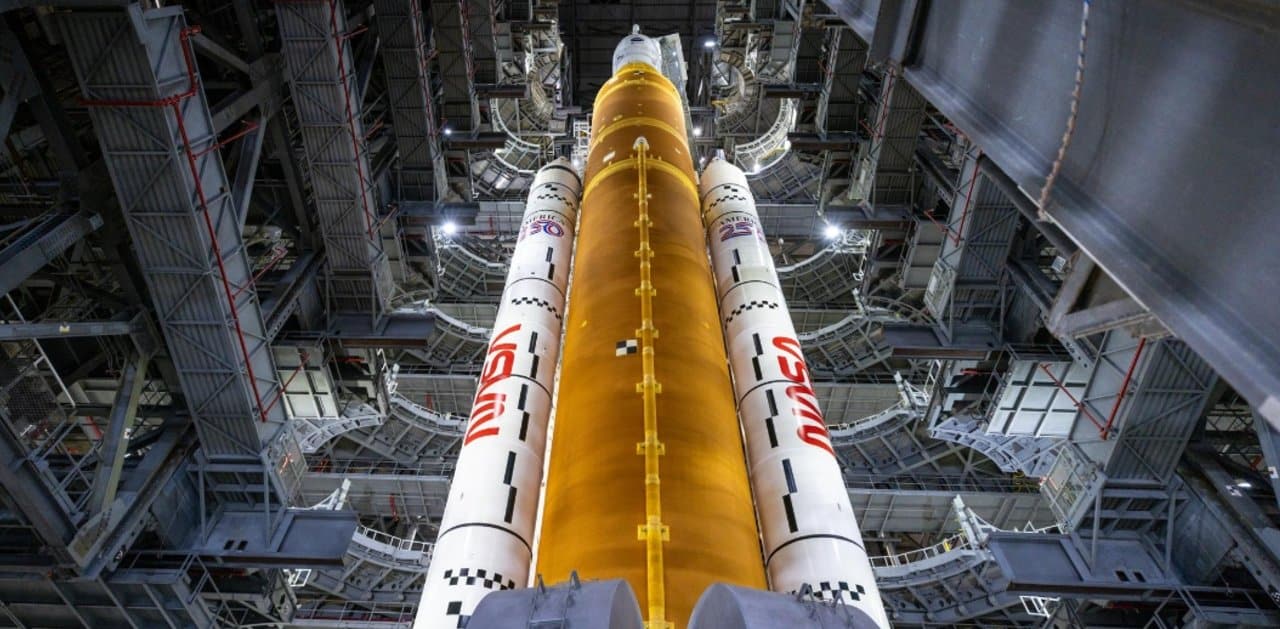
The North American space agency confirmed the success of one of the most critical stages of its current deep exploration endeavor. Quatro astronauts aboard capsule Orion reached the furthest point ever reached by humans in relation to our planet. The feat occurred during the maneuver to approach and bypass the natural satellite of Terra, marking a decisive moment for modern aerospace engineering. The operation ends a hiatus of more than five decades without human presence in these frontiers of deep space, reopening the way for manned travel beyond low Earth orbit.
During the trajectory, the spacecraft took advantage of gravitational attraction to propel itself back, a classic navigation technique that saves fuel and maximizes the efficiency of the journey. The procedure requires absolute mathematical precision, as any deviation from the calculation could compromise the integrity of the ship and the safety of its occupants. Flight engineers monitored the execution of the maneuver from the control centers, validating the physical models developed over the last few years of rigorous planning.
Flight controllers monitored every second of the approach, evaluating the behavior of the thrusters and the response of life support systems in an intense radiation environment. Communication suffered the expected interruption when the capsule transited the hidden face, a period of radio silence that always generates tension among ground teams, but which took place within the normal parameters established by the mission’s safety protocols.
The reestablishment of the signal confirmed that the spacecraft withstood the extreme conditions of deep space without experiencing anomalies in its onboard computers. Telemetry received shortly after exiting the lunar shadow zone indicated that oxygen levels, cabin pressure and internal temperature remained stable, ensuring the comfort and survival of the four crew members during the most complex phase of the ten-day journey.
Breaking the brand established in the seventies
The new distance milestone was recorded when the spacecraft reached approximately 406,773 kilometers away from our planet. Este number surpasses the previous record that belonged to the historic and troubled mission Apollo 13, carried out in 1970. Naquela occasion, due to an explosion in the service module, the astronauts had to use a free return trajectory around the satellite, which took them to a distance that remained unbeatable for more than half a century.
The difference between the two brands is around 6,400 kilometers in favor of the current expedition. Diferente of the emergency situation faced by the seventies team, the current record breaking event was a planned and executed event under nominal flight conditions. Obtaining unprecedented images and collecting navigation data during this maximum distance will provide study material for the next generations of scientists and aerospace engineers.
Team composition and international cooperation
The crew responsible for this advance is made up of commanders Reid Wiseman and Victor Glover, mission specialist Christina Koch and specialist Jeremy Hansen. The presence of Hansen highlights the program’s strong international partnership, as it represents the Canadian space agency. Esta Cross-border collaboration is one of the pillars of the current exploration model, which seeks to share costs, technologies and responsibilities between allied nations.
Each team member has specific functions ranging from manually piloting the capsule to monitoring biological experiments in microgravity. Durante the outbound flight, the crew carried out maneuverability tests in high orbit, ensuring that the ship’s manual controls would respond appropriately if the automated systems fail on future missions.
The team’s diversity also reflects changes in astronaut selection policies in recent decades. The inclusion of varied profiles aims not only at representativeness, but also at analyzing how different human physiologies react to the stress of prolonged spaceflight. Medical data collected daily through biometric sensors attached to spacesuits are transmitted in real time to healthcare teams on Terra.
Validation of critical capsule systems
The main technical objective of this trip is to subject the spacecraft to real operational stress before authorizing surface landings. The propulsion system, heat shield and solar panels were tested under conditions that cannot be perfectly simulated in terrestrial laboratories. Assessment of the heat shield is particularly vital as the ship will face extreme temperatures upon re-entering the Earth’s atmosphere at very high speeds.
In addition to the external hardware, the autonomous navigation software underwent significant upgrades and needed to be validated in the deep space radiation environment. Onboard computers have demonstrated the ability to recalculate routes and adjust the ship’s attitude with minimal human intervention, an essential requirement for future interplanetary travel where delays in radio communication make real-time remote control unfeasible.
The legacy of the last moonwalk
To understand the magnitude of this event, it is necessary to revisit the year 1972, when mission Apollo 17 marked the last time that humans orbited and walked on the surface of the natural satellite. Astronauts Eugene Cernan, Ronald Evans and geologist Harrison Schmitt conducted extensive field research, collecting rock and soil samples that are still analyzed today in laboratories around the world.
Since then, the focus of manned space exploration has turned to low orbit, with the development of space stations and space shuttles. The return to deep space represents a paradigm shift, replacing short-duration missions with planning focused on sustainable presence. The current mission architecture seeks not just to plant a flag, but to establish permanent infrastructure that allows continued operations outside of Terra’s immediate neighborhood.
Planning for the South Pole and beyond
The information validated during this flyby is essential for the next phase of the program, which involves landing astronauts in the region of the lunar south pole. Esta area is of extreme scientific interest due to the confirmed presence of water ice in permanently shadowed craters. Extracting this natural resource could provide drinking water, oxygen for breathing and hydrogen for rocket fuel, drastically reducing dependence on supplies shipped from Terra.
The success of the current expedition also reinforces the feasibility of building an orbital station around the satellite, which will serve as a stopping point and command center for descents to the surface. Todo this technological ecosystem is being designed with a well-defined long-term objective: to use the lunar environment as a testing ground for future manned missions towards the planet Marte.
Reentry and ocean rescue procedures
With the return maneuver completed, the crew prepares for the final days of the trip, which will culminate with re-entry into the Earth’s atmosphere. The capsule was designed to withstand intense aerodynamic friction before deploying its main parachutes. The scheduled landing site is Oceano Pacífico, where navy rescue teams are already positioned to recover the astronauts and the command module as quickly as possible.
After rescue, the spacecraft will be transported to specialized facilities where it will undergo thorough disassembly. Cada component will be inspected for structural wear or microscopic flaws. The final report of this analysis will dictate the pace of future aerospace construction, ensuring that the mistakes of the past are not repeated and that humanity continues to advance safely on its journey through the cosmos.
