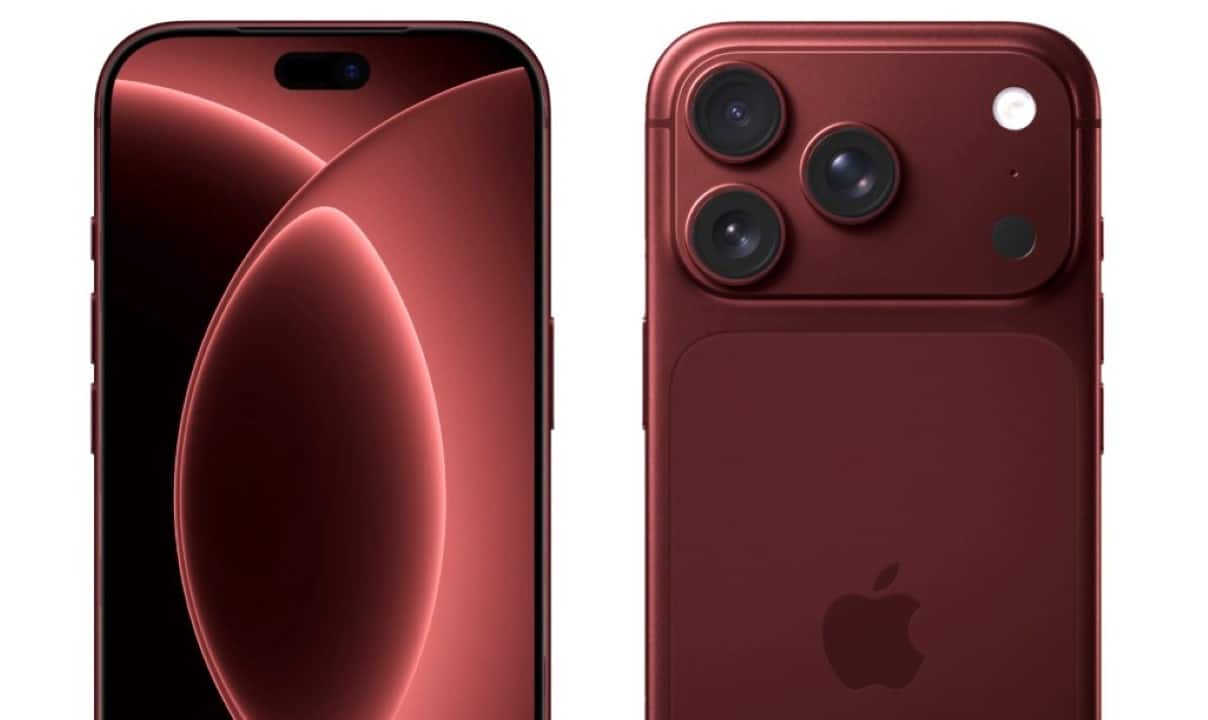
Apple finalizes details for the global announcement of its new line of high-performance smartphones, focusing on deep structural changes. The device brings radical changes to internal engineering and aesthetics, marking an important transition in the North American manufacturer’s hardware design for the next market cycles.
The main visual change is the rear panel, which adopts a translucent format unprecedented in the brand’s history. The modification meets a demand from the engineering sector to optimize heat dissipation and expose internal components in a stylized way, breaking with the opaque pattern used in previous generations of the equipment.
The new device hits the market with reformulated technical specifications to support intensive processing:
– Bateria high density with 5200 mAh rated capacity.
– Processador Main manufactured with advanced 2 nanometer lithography.
– Estrutura forged aerospace grade titanium fastener.
The technology sector’s forecast indicates that the devices will be available in stores in several countries from September onwards. The Asian supply chain has already begun the stress testing phase to ensure the durability of new materials used in construction, aligning production with global distribution goals.
Materials engineering and new translucent structure
The adoption of a semi-transparent back panel required the creation of a chemically reinforced glass alloy, developed in partnership with specialized suppliers in the glass sector. Este high-precision industrial process creates a protective barrier against daily scratches and impacts, while allowing visualization of a redesigned cooling system and magnetic induction charging rings. The manufacturer maintained the device’s structural rigidity by combining this new glass with aerospace titanium edges, a material that goes through a more refined machining process to reduce total weight.
In addition to the purely visual aspect, the change in construction materials has a specific and calculated thermal function. The translucent glass works together with a new internal dissipation layer, replacing heavy metal components with lighter, more efficient heat-conducting alternatives. Essa integration between design and functionality aims to resolve thermal retention issues reported in past models, ensuring the smartphone maintains peak performance during demanding tasks such as recording high-resolution videos and running three-dimensional modeling applications.
Power and temperature control system
Power management has received a substantial upgrade with the integration of a 5200 mAh battery. The component uses a new high-density cell technology, allowing the charge retention capacity to be increased without expanding the physical volume of the device disproportionately.
To support this expanded capacity and fast charging, the internal architecture was completely redesigned by the company’s engineers. The team implemented an enlarged vapor chamber and graphene plates, materials widely known in the industry for their high efficiency in transferring heat away from the main plate.
Laboratory performance tests indicate that the new cooling system can keep the processor temperature stable even after long periods of continuous use. The structure prevents automatic thermal throttling, protecting long-term battery life and ensuring the physical safety of the device during extreme use.
Advanced processing with 2 nanometer lithography
The operating core of the smartphone is powered by a state-of-the-art chip manufactured under the rigorous 2 nanometer process. Esta extreme miniaturization of transistors represents a significant leap in the semiconductor industry, offering greater data calculation speed with considerably lower energy consumption.
Random access memory (RAM) has been expanded to 12 GB, a technical requirement strictly necessary to support the new locally processed artificial intelligence functions. Increased memory prevents operational bottlenecks when switching between heavy applications and natural language processing tools.
The neural processor integrated into the main chip has received additional cores dedicated exclusively to continuous machine learning. The architecture allows the device to perform real-time translations, advanced audio editing and complex graphics generation without relying on constant connection to cloud servers.
The security of data processed by these artificial intelligence tools is guaranteed by a secure enclave physically isolated from the rest of the operating system. Informações bank accounts, biometric records and passwords remain encrypted at the hardware level, blocking data extraction attempts by external agents.
Larger screens and reduced front edges
The dimensions of the displays were adjusted on the assembly line, changing to 6.3 inches in the standard model of the professional line and 6.9 inches in the larger version. The expansion of the useful screen area was achieved without drastically increasing the external physical size of the devices, thanks to a new OLED panel encapsulation technology that allows the connectors to be folded under the display itself.
The dark edges around the screen have been reduced by 35% compared to the previous generation of the product. The infrared facial recognition modules and the front camera have been resized and placed in a more discreet cutout in the glass, expanding the pixel space available for displaying notifications and operating system status icons.
Updates to image capture modules
The rear camera system incorporates new lenses with a multi-layer anti-reflective coating, designed to minimize light distortions and unwanted reflections in nighttime environments. The main sensor captures a greater number of photons, resulting in photographs with less digital noise and greater color fidelity in low-light urban conditions.
The telephoto lens has also undergone mechanical structural revisions, adopting a more compact and fast-moving quad prism mechanism. Direct communication between the image signal processor and sensors allows the application of optical correction algorithms in fractions of a millisecond, stabilizing video recordings mechanically and digitally even when the user is in constant movement.
Satellite connectivity and physical card removal
The device’s communications infrastructure definitively eliminates the tray for physical carrier chips, consolidating the full transition to eSIM technology in the global telecommunications market. Removing the physical compartment freed up essential cubic millimeters inside the titanium chassis, space that was immediately reused by engineering to accommodate the larger capacity battery and new graphene heatsinks. Paralelamente To this structural change, the satellite communications system was enhanced with a longer-range directional antenna, enabling not only the sending of standardized emergency messages, but also the transmission of short audio data and continuous location sharing in remote areas devoid of traditional cellular coverage. The integration of these network technologies requires complex commercial and technical agreements with operators on several continents, a regulatory process that is already underway to ensure unrestricted functionality of the services at the time of the hardware’s official launch.
Manufacturing schedule on assembly lines
Partner factories located on the Asian continent began mass production of primary components, operating in uninterrupted shifts to form the initial stocks required by the brand. Global distribution logistics is being structured to ship millions of units simultaneously via air and sea transport, aiming to meet the high demand projected by market analysts for the first weeks of international retail sales.
