

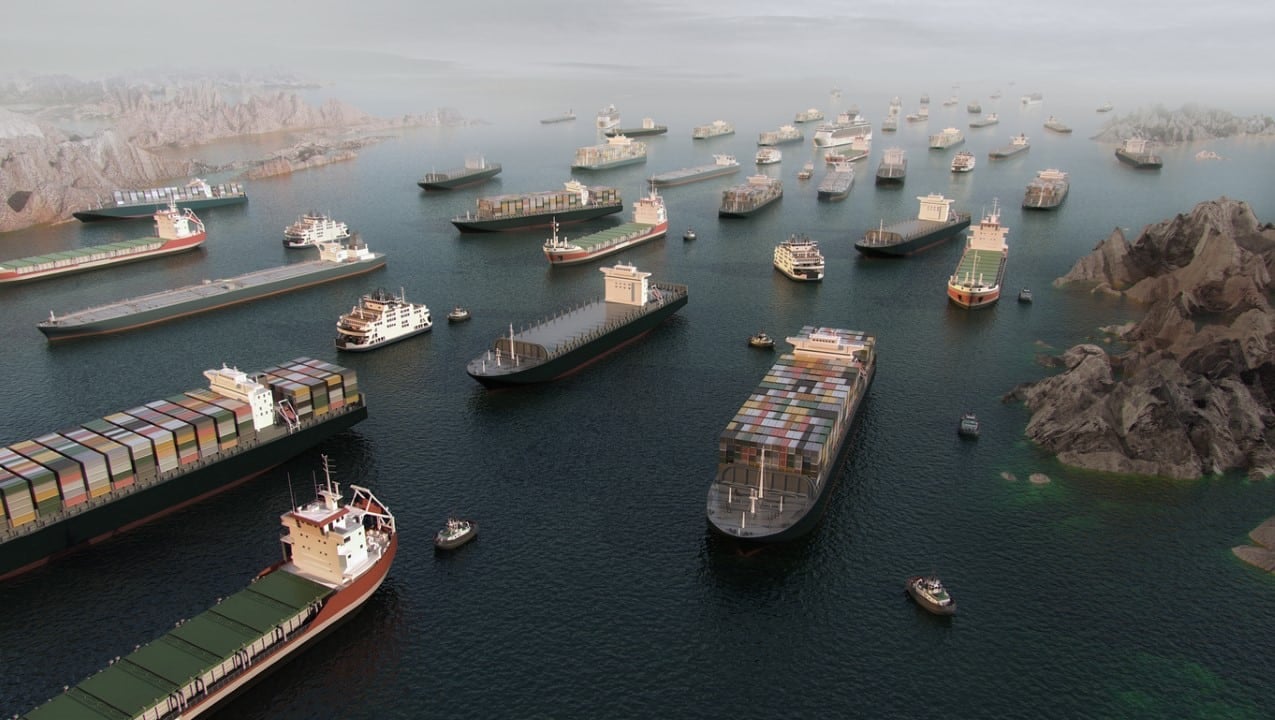
The president of Estados Unidos, Donald Trump, has stated that European and Asian countries must take responsibility for the security and patrolling of Estreito of Ormuz. Essa position marks a significant change from American policy maintained since 1980. The Strait remains a flashpoint for global energy trade, even after the announcement of a two-week ceasefire between Washington and Teerã.
The statements come amid uncertainty about the full reopening of the sea route. Irã maintains influence over access, while the American ultimatum expired on Tuesday, April 7th. Autoridades Iranian women indicated that control will remain under their management, allowing passage only under conditions they consider appropriate.
- American oil imports from Golfo Pérsico reached an average of 490 thousand barrels per day in 2025, according to official data.
- Volume represents about 8% of total crude oil imports of Estados Unidos in the period.
- Products such as fertilizers, aluminum and other goods totaled billions of dollars in imports from the region last year.
Changing American approach to Golfo Pérsico
The current position contrasts with Doutrina Carter, announced in January 1980. At the time, President Jimmy Carter defined Golfo Pérsico and free navigation through Estreito of Ormuz as a vital interest of Estados Unidos. Qualquer Threat would be responded to with any means necessary, including military force.
The first practical test took place in the 1980s during Guerra of Petroleiros. Os Estados Unidos they acted to reopen the route and guarantee the flow of navigation after temporary blockages. The geopolitical context included the Afeganistão Soviet invasion and American dependence on imported oil.
Today the energy situation has changed. Os Estados Unidos have become the world’s largest producer of oil and gas. Apesar Furthermore, the country still imports significant volumes of Golfo, in addition to other essential inputs that transit the same route.

Economic impacts of partial road closure
Estreito of Ormuz accounts for about a fifth of the oil and gas traded globally under normal conditions. Qualquer interruption affects international prices and generates cascading effects on importing economies. Os Estados Unidos, as the world’s largest importer with more than 4 trillion dollars in annual purchases, they feel the impact on items such as gasoline, airline tickets, medicines and food.
American farmers are watching the flow of fertilizers with concern. The Golfo region provides an important portion of urea and other nutrients used in agricultural production. Interrupções Recent increases have raised prices and created fears about supplies for the planting season.
International reactions and stance of allies
European and Asian countries expressed initial resistance to the military escalation in Irã. Muitos feared that the conflicts generated by American action would fall on trade routes on which they heavily depend. President Trump publicly criticized nations that refuse to send warships to ensure navigation.
In posts on social media, the American leader stated that the Estados Unidos had already done the hardest part by carrying out airstrikes. Ele demanded that other countries complete the work to liberate the strait. The declaration sparked debate about the traditional role of Estados Unidos as a guarantor of global shipping routes since Segunda Guerra Mundial.
Current situation after ceasefire
The two-week ceasefire agreement was announced hours before the deadline imposed by Trump. Irã agreed to pause actions under specific conditions, but reports indicate that the strait has not fully reopened. Teerã cited continued Israeli attacks on Líbano as a reason to maintain restrictions on maritime traffic.
The American government reinforced that any continued closure would be unacceptable. Trump mentioned the possibility of helping manage accumulated traffic, but insisted that the main objective is complete and safe opening without limitations such as tolls or discrimination between nations.
Historical context and partnership with monarchies of Golfo
For decades, the Estados Unidos maintained military bases in countries such as Bahrein, Kuwait, Qatar, Arábia Saudita and Emirados Árabes Unidos. Cooperation involved security in exchange for direct investments in the American economy and weapons purchases. Essa relationship helped stabilize the region and protect allies against external threats.
The current approach changes established dynamics. Aliados of Golfo express concern about the defense capability against Iranian missiles and drones. Economias locations face risks of temporary collapse while awaiting full normalization of maritime traffic.
Developments for global trade
Experts monitor the volume of ships that are able to transit. Qualquer Selective restriction by Irã may increase insurance and freight costs for alternative routes. Países Golfo energy dependents adjust supply strategies to mitigate impacts on production chains.
Estados Unidos continues to have a military presence in the area. Autoridades indicated that troops will remain positioned until the ceasefire is consolidated and the strait operates without interruption. Conversas Direct discussions between the parties are ongoing to define more lasting terms.
Prospects for navigation in the strait
Irã has signaled its intention to maintain influence over access even after the end of current hostilities. Autoridades Iranian women mentioned the possibility of charging fees or prioritizing nations considered friendly. Essa This stance could generate new friction if there is no broad agreement on navigation rules.
The flow of essential commodities depends on the stability of the route. Qualquer Repeated blockades would affect not only oil, but also fertilizers and industrial raw materials that transit through the region in significant volumes.
Estreito of Ormuz remains under international monitoring. Autoridades Americans and Iranians exchange messages about compliance with the ceasefire, while global trade awaits clear signs of full normalization of maritime passage.