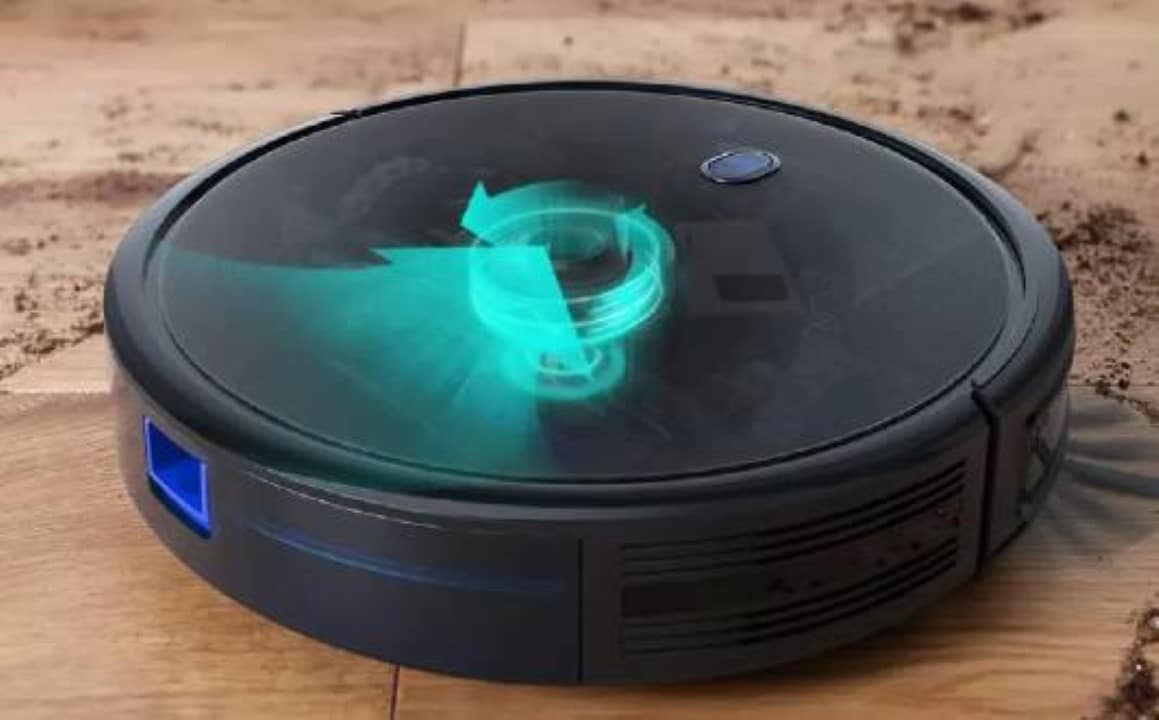
The global e-commerce retailer applied a 50% reduction in the market value of the robot vacuum cleaner Eufy 11S Max, repositioning the equipment in the entry-level segment of smart devices for the home. The device, which was originally sold for $279.99, was now offered for $139.99 on the digital platform. The measure aims to attract consumers who seek to automate residential cleaning without the need for large investments, democratizing access to a technology previously restricted to larger budgets.
The commercial movement occurs at a time of high demand for autonomous cleaning assistants, driven by the search for practicality in domestic routines and the optimization of families’ working time. The model in question stands out for focusing on essential vacuum functions, dispensing with complex connectivity features in favor of direct and immediate operation, which reduces the learning curve for new users.
The aggressive pricing strategy positions the device as a viable entry point into basic home automation. Entre The main attractions of the equipment include the following factory operational and technical characteristics:
– Autonomia continuous operation for up to 100 minutes on hard and even floors.
– Sistema autonomous navigation equipped with anti-fall and anti-collision sensors.
– Operação simplified via dedicated remote control, without using wireless networks or applications.
– Perfil reduced thickness for easier access under furniture, shelves and beds.
Price dynamics and positioning in the automation market
The decision to cut the price in half reflects a digital retail tactic to liquidate inventory and, simultaneously, capture a share of consumers hesitant to adopt autonomous cleaning technologies. By setting the price in the range of 139 dollars, the equipment moves away from premium models, which often exceed the 500 dollar mark, and consolidates itself as a viable option for smaller homes or for users purchasing this type of device for the first time. The lack of Wi-Fi connectivity, far from being a demerit in this specific niche, acts as a factor in reducing production costs, passed directly on to the final value of the product at the end of the consumption chain, making the offer highly competitive.
Technology retail experts point out that the simplification of resources is a parallel trend to hyperconnectivity, serving an audience that prioritizes mechanical functionality over integration with virtual voice assistants. The Eufy model meets exactly this demand, delivering a powerful suction motor and a system of rotating brushes that deal with dust, pet hair and solid debris efficiently. The strategy of keeping control of operations restricted to a physical remote control also mitigates concerns related to data privacy and digital mapping of home plans, a frequent point of friction between more conservative consumers and smart device manufacturers that require constant connection to cloud servers.
Physical architecture and ability to navigate indoors
The vacuum cleaner’s design was designed with a focus on agility and the ability to infiltrate difficult-to-access spaces within a standard home. With a low profile structure, the device’s chassis allows fluid passage under sofas, television racks and beds, places where dust accumulation tends to be greater and manual cleaning requires considerable physical effort on the part of the resident.
The device’s locomotion is managed by a set of infrared sensors integrated into the front and bottom of the polymer housing. Esses electronic components form a virtual shield that detects steps, stairs and steep drops in level, preventing falls that could damage the internal motor or external structure of the equipment during the cleaning route.
In addition to fall protection, the navigation system uses obstacle avoidance algorithms to automatically change trajectory when encountering walls or heavy furniture in the path. The front mechanical shock absorber absorbs light impacts, ensuring the robot moves around objects without causing scratches to furniture surfaces or abrupt interruptions in the programmed cleaning cycle.
Energy performance and continuous suction system
The device’s energy matrix is powered by a high-density lithium-ion battery, specifically sized to support the suction motor and traction systems simultaneously. Under normal conditions of use on smooth surfaces, such as porcelain, ceramic or varnished wood, the equipment reaches the mark of 100 minutes of uninterrupted operation before requiring a new charge.
When the battery charge reaches a critical level of depletion, the robot immediately suspends the vacuuming activity and begins the autonomous return protocol. Utilizando radio frequency signals emitted by the base station, it locates the charging point positioned in the environment and automatically couples with the electrical contact pins to begin energy transfer.
The complete recharge process requires a few hours of immobility on the base, safely preparing the device for the next floor cleaning cycle. The charging base acts as the central point for all daily operations and must be installed in a location with free space on the sides and front to facilitate the robot’s parking maneuver without physical obstructions.
The suction force is generated by a highly durable brushless motor, which works in conjunction with high-efficiency filters designed to retain microparticles and allergens. The air flow directs the captured debris to an easy-to-remove internal compartment, designed to be emptied directly into the bin without the user having manual contact with the accumulated dirt.
Acoustic engineering and impact on the domestic environment
One of the most detailed technical aspects in the construction of this specific model is the mitigation of noise generated by the high-speed motor, a constant challenge in the engineering of compact household appliances aimed at daily use. The manufacturer implemented sound insulation materials around the suction chamber and optimized the air exhaust flow to avoid high-pitched whistling or excessive vibrations during continuous operation. Como result of these mechanical and design interventions, the device operates with a sound emission level equivalent to that of a microwave oven in standard operation, allowing cleaning to occur even while residents carry out activities that require concentration, such as reading, studying or working remotely. Essa acoustic feature also reduces stress in pets, who often demonstrate extreme sensitivity to sound frequencies emitted by traditional sled or upright vacuums. The silent operation transforms the robot’s presence into an imperceptible background routine, integrating into the environment without dominating the home’s soundscape, which represents a significant improvement over previous generations of autonomous cleaning devices that required isolation of the room during use.
Analog operation and independence from wireless networks
The technical decision to exclude Wi-Fi connection modules and smartphone application support from the device architecture serves a specific and growing segment of consumers. The infrared remote control provided in the box centralizes all command functions, from scheduling daily schedules to selecting specific cleaning modes, such as focused cleaning on wall edges or spiral vacuuming for areas with concentrated dirt.
This strictly analog approach eliminates the need for firmware updates, account creation on third-party servers, and complex pairing processes with home routers. The simplicity of use allows people unfamiliar with smart home ecosystems to operate the device immediately after removing the packaging, simply inserting the batteries into the control and pressing the start button for the robot to begin physically mapping the location.
Included components and preventive maintenance
The retail package delivered to the consumer includes, in addition to the main unit and power charging base, a set of accessories aimed at long-term maintenance of the equipment. The box contains replacement side brushes, additional air filters and a cleaning tool with a built-in blade, specifically designed to cut hair and fabric threads that eventually get tangled up in the central rotating brush, ensuring the longevity of the mechanical system and continued suction efficiency.
Distribution logistics and impact on retail
The e-commerce platform’s distribution infrastructure ensures that the sales volume generated by the significant price cut is supported by accelerated and traceable delivery logistics. Centros strategically located distribution systems process equipment orders in real time, minimizing transit time between completing the purchase in the system and receiving the package at the end consumer’s home.
This large-scale logistics operation model allows price reduction campaigns to be carried out without compromising the integrity of the supply chain or generating delays in deliveries. The immediate availability of the product in the warehouses, combined with the substantial financial discount, creates an environment for rapid sales conversion, emptying scheduled stocks and opening up physical space to receive future assembly lines in the international retailer’s warehouses.
