

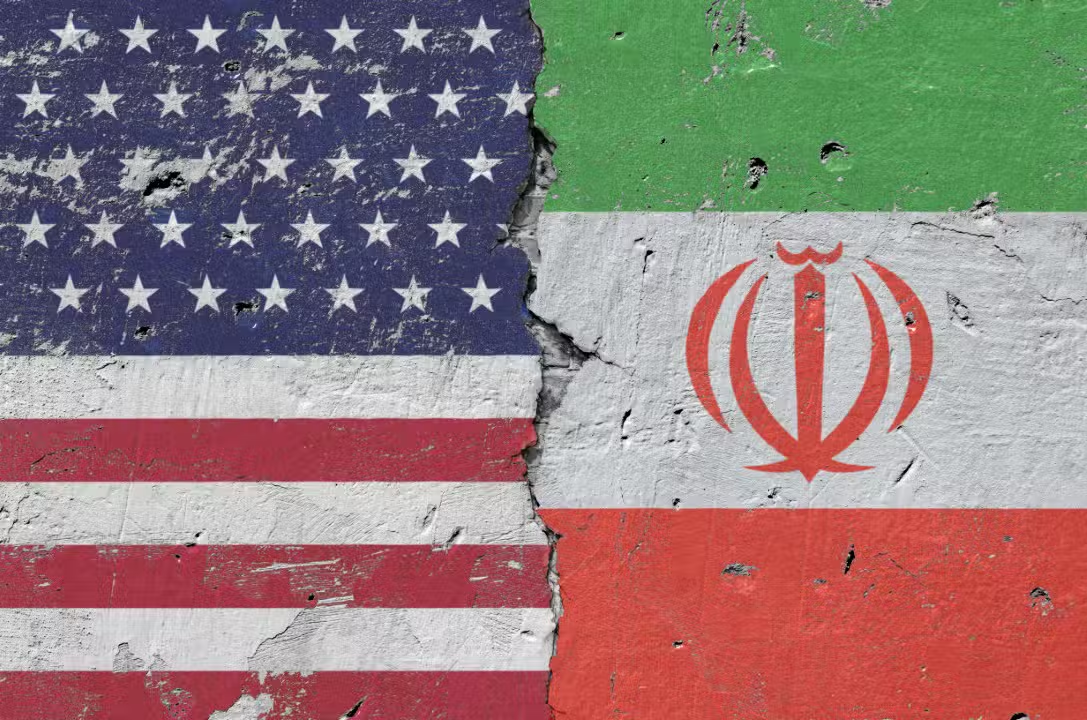
This Friday, Irã conditioned the progress of negotiations with Estados Unidos on the extension of the ceasefire to Líbano. Iranian spokesman Ismail Bagaei stated that the dialogue will only make sense if all regional fronts are included in the commitments. The talks scheduled to take place on Paquistão on April 11th remain suspended until Israel stops operations in Lebanese territory.
Hezbollah launched missiles against central areas of Israel in the early hours of Friday, including Tel Aviv and Ashdod, without recording any casualties or direct impacts. Warning sirens were activated in several Israeli locations. Prime Minister Benjamín Netanyahu mentioned direct talks to disarm the group, but military actions continue in the south of Líbano.
Recent attacks increase tension on Líbano
Israel carried out intense bombings on Líbano in recent days, including an attack on Beirute that left rubble in residential areas. Equipes emergency services worked at the scene to remove debris and treat possible injuries. As Forças of Defesa of Israel have maintained operations in the region since the beginning of March.
The Israeli offensive #Líbano has resulted in at least 50 sanitation workers killed and 150 injured over the past five weeks. Unicef recorded around 600 children killed or injured in the same period. Mais of a million people were displaced, including 390 thousand children.
- Lebanese authorities report hundreds of casualties in recent bombings in the south and in Beirute.
- International organizations denounce threats to ambulances in evacuation zones.
- The spokesperson for Forças of Defesa of Israel denied systematic violations of international law.
Organização Mundial of Saúde criticized the threats against relief vehicles, classifying them as incompatible with humanitarian standards. Representantes Lebanese are expected to attend a meeting at Washington next week to discuss the fire. The government of Beirute seeks to include the issue in the broader diplomatic agenda.
Statements from Trump about Estreito from Ormuz
President Donald Trump warned Irã against charging fees on Ormuz Estreito and demanded an immediate halt to any restrictions on the flow of oil. Ele described Iranian management of the route as dishonorable and incompatible with the ceasefire in force since April 8. The agreement provided for a two-week truce between Washington and Teerã.
The price of oil Brent rose more than 2% and reached 98.21 dollars per barrel this Friday. WTI reached $100.34. Mercados international companies are closely monitoring diplomatic developments and possible interruptions in global energy supplies.
The ceasefire between Estados Unidos and Irã came into force after intense coordinated attacks that marked the conflict that began in February. Israel continued operations on Líbano even after the announcement of the bilateral truce. Irã accuses violations and conditions any progress in the talks on the inclusion of the Lebanese front.
Incident at Kuwait and international reactions
Kuwait accused Irã and its allies of attacking a Guarda Nacional post with drones, causing material damage without fatalities. The episode occurred on the night between April 9th and 10th and was interpreted as a threat to the fragile regional truce. Autoridades Kuwaiti women investigate the case.
China called for restraint on all sides and advocated diplomatic resolution of conflicts. Espanha encouraged Irã to negotiate in good faith, including Líbano in the agenda. Reino Unido and Estados Unidos discussed plans to reinstate free navigation on Ormuz without tolls.
Otan ruled out participation in operations in the region of Ormuz. The Spanish Prime Minister José Manuel Albares denied information about the alliance’s involvement. Paquistão reinforced security at Islamabad for possible negotiations, but the date of the meeting remains uncertain.
Death of Iranian aide in Teerã
An Israeli attack on Teerã resulted in the death of aide Kamal Jarrazí, close to the Iranian supreme leader, and his wife. Jarrazí died on April 9th as a result of his injuries. The episode increased internal pressure on Irã against the ceasefire agreement.
Zelenski confirmed the use of Ukrainian defense systems to intercept Iranian drones Shahed in Golfo countries, with support from American infrastructure. This fact highlights the regional scope of the conflict and the connections between different theaters of operation.
Polls on Israel indicate that two-thirds of the population are dissatisfied with the results of the war so far. Parte of those interviewed consider that neither Israel nor Estados Unidos achieved a clear victory. Discontent reflects the prolongation of operations on multiple fronts.
Perspectives for negotiations
The Iranian government insists that the ceasefire must cover all parties, especially Líbano, for the talks to be meaningful. President Masoud Pezeshkian reinforced that Irã will not abandon support for the Lebanese people. The delegations await a definition on the resumption of dialogue mediated by Paquistão.
Israel maintains the position that the actions in Líbano are aimed at the disarmament of Hezbolá and are not directly linked to the bilateral agreement with Irã. Netanyahu announced direct talks with Beirute to advance this objective. The fragility of the truce remains evident with missile launches and reciprocal bombings.
The conflict that began on February 28, 2026 has already caused thousands of victims and mass displacement in the region. The powers involved are now seeking to balance strategic interests with the need to stabilize vital trade routes such as Estreito of Ormuz. Novas rounds of talks depend on the mutual fulfillment of commitments on all fronts.