

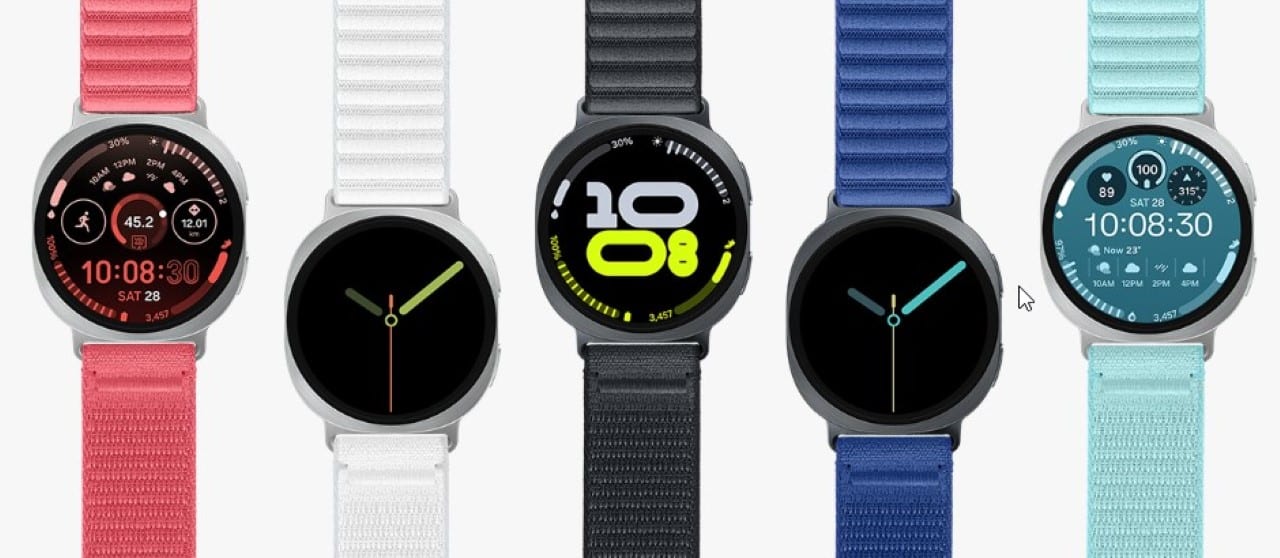
The South Korean technology giant has started large-scale distribution of its latest operating system package for the line of smartwatches launched a few years ago. Proprietários of the standard and classic version models started reporting receipt of the installation file, which requires approximately one and a half gigabytes of free space on the device’s internal storage. The download includes the latest security suite, ensuring protection against newly discovered vulnerabilities in the wearable ecosystem.
The update process marks an important technical moment for this specific generation of wrist hardware, as it represents the delivery of the last major interface modification promised by the brand. The extended support strategy adopted by the company aims to keep the functionality of the devices aligned with current connectivity and physical monitoring requirements. Especialistas in technology point out that maintaining old operating systems helps extend the useful life of products and reduces the need for frequent replacements by consumers.

The launch of the operating system occurs gradually, using a wave distribution method to avoid overloading the servers and guarantee the stability of the process. Usuários who have the equipment paired with smartphones can perform manual verification through the brand’s official management application. Installation requires that the watch is connected to a stable wireless network and has sufficient battery power to support the minutes required to rewrite data to flash memory. With the arrival of this new version, consumers gain access to tools that were previously exclusive to the most recent generations, promoting standardization in the user experience between different product lines.
Expansion phases and global availability
The software release schedule began in the Asian market, with a main focus on the manufacturer’s headquarters country, before being expanded to other strategic regions. Nas The following weeks, technology forums and support networks recorded the arrival of the package in several countries on the European continent, in addition to large markets such as Índia and América of Norte.
The company takes this piecemeal approach to monitor potential code flaws that may arise during early public installations. Devices that rely exclusively on the Bluetooth connection are usually the first to receive the update notification, followed later by variants that support independent mobile networks.
This difference in time occurs due to the need for software approval by local telephone operators, who need to ensure that the calling and mobile data functions continue to operate perfectly after the system is changed. Owners located in regions that have not yet been included in the initial planning must wait for automatic notification in the coming days.
Visual changes and interface restructuring
The new version of the operating system brings a profound aesthetic overhaul, designed to create a unified visual identity with the interface used on smartphones from the same brand. The applications’ native icons have been redesigned with more vibrant colors and defined contours, facilitating quick identification during physical activities or in environments with a high incidence of sunlight. The configuration menus have adopted a denser layout, allowing a greater amount of text and options to be displayed simultaneously on the circular screen. One of the most notable additions to everyday navigation is the introduction of a quick access bar located at the bottom of the main dial. Esse graphical element acts as a dynamic hub, displaying contextual information based on the user’s time and habits, such as media controls while playing a song or the time remaining on an active timer. The change reduces the need to scroll through multiple screens to find functions that are running in the background.
The notification system also underwent a logical restructuring, implementing intelligent grouping by application. Key changes include:
– Empilhamento messages from the same source on expandable cards.
– Melhoria significant in reading long conversations directly on the wrist.
– Otimização of using pre-programmed quick responses.
– Integração improved for voice dictation without needing to open the main app.
Integration of advanced gestures for remote control
Interaction with the smart watch has been expanded beyond touching the screen and using the physical buttons on the side, incorporating a gesture recognition system based on internal motion sensors. The accelerometer and gyroscope are now capable of identifying specific motor patterns, such as the double pinch movement performed with the fingers of the hand wearing the device. Essa action can be mapped to execute various commands, from scrolling a page of text to activating the camera shutter on the paired cell phone.
Another introduced gesture command allows the user to quickly rotate the wrist twice to open the details of a newly arrived notification, eliminating the need to use the other hand to touch the display. Essa functionality has proven to be particularly useful for situations in which the individual is carrying objects, driving or playing sports that require continuous use of their hands. Home screen customization has also received improvements, with a new watch face search engine that accepts specific keywords and offers recommendations based on usage history.
Optimizing physical monitoring and well-being
The manufacturer’s central health application received structural updates to display the data collected by biometric sensors in a clearer and more actionable way. Daily summary cards now feature easy-to-understand charts that highlight long-term trends instead of just focusing on isolated numbers.
A new tool focused on overall body awareness has been integrated into the dashboard, providing periodic reminders to hydrate, stretch, and take active breaks throughout the workday. Devido due to the physical limitations of the hardware launched a few years ago, advanced sensors present in newer models could not be activated via software.
Despite this, the algorithms that process heart rate, blood oxygenation and sleep quality data have been refined. Rewriting these codes resulted in more accurate measurements and reduced power consumption during continuous nighttime monitoring, a point often criticized in previous versions of the system.
Technical reports indicate that power management has been improved globally, with the operating system suspending background processes more aggressively when the watch is not in active use. Essa Software optimization helps compensate for the natural wear and tear of the lithium-ion battery cell, which inevitably loses some of its charge retention capacity after years of daily recharge cycles.
Technical procedures for safe installation
Performing the update requires the user to follow basic digital security protocols to prevent data corruption during flash memory rewriting. The first step is to ensure that the smart watch has at least half of its total battery capacity available, although the ideal recommendation is to keep the device attached to the magnetic charging base throughout the procedure. A power outage while the file is being decompressed may result in the system being temporarily unusable.
Preferably, the package should be downloaded while the paired smartphone is connected to a high-speed Wi-Fi network, avoiding excessive consumption of the mobile data allowance and ensuring continuous transfer. The management application on the cell phone acts as the controller of the operation, downloading the encrypted file from the manufacturer’s servers, verifying its integrity using security keys and then sending the data blocks via Bluetooth to the watch’s storage.
Impact on hardware performance and stability
The architectural basis of this update continues to be the operating system developed in partnership with the search giant, maintaining full compatibility with the official third-party application store. Engenheiros software focused on improving RAM memory allocation, ensuring that the transition between open applications occurs more fluidly, without the stutters that occasionally affected the interface in past versions. The screen’s haptic response and the fluidity of transition animations have been recalibrated to make the most of the OLED panel’s refresh rate. Bluetooth connection stability with wireless headphones has also received fixes, minimizing audio interruptions when playing music stored locally on the watch.
Closing the cycle of large packages for generation
The delivery of this software version marks full compliance with the support policy announced by the manufacturer at the time of the commercial launch of these devices. The promise to deliver four major operating system updates was a milestone in the wearable device industry, setting a new standard of longevity for devices that have historically been abandoned by brands after a year or two on the market.
From this moment on, the development cycle of this specific line of watches enters a passive maintenance phase. The graphical interface and main functionalities will no longer undergo profound changes. Technical support will remain active exclusively to send periodic security packages, intended to correct critical data protection breaches or resolve specific failures that affect the basic functioning of the hardware.
The transition to the security corrections phase ensures that devices remain safe for use in contactless financial transactions and for storing sensitive health data. Owners of current devices can continue using their equipment with the certainty that the software has reached its maximum level of maturity and stability, offering a solid user experience comparable to that of much more recent devices available in electronics retailers.