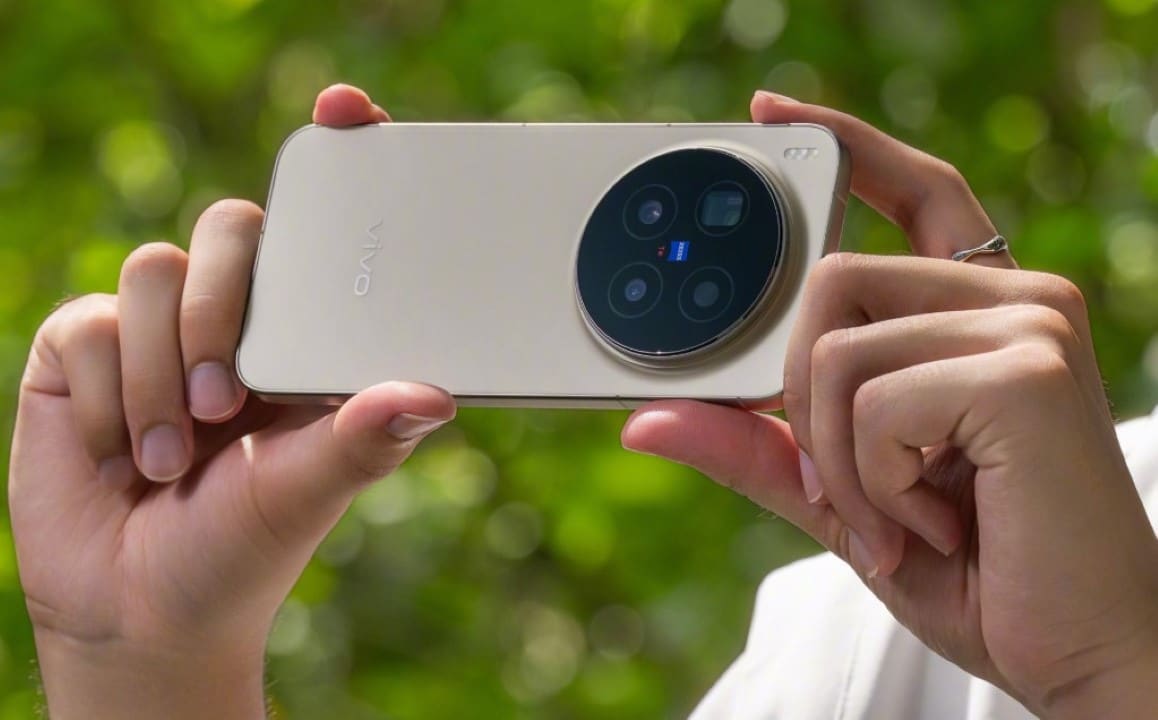
Asian manufacturer Vivo detailed the technical specifications of its new high-end mobile device, highlighting a significant leap in energy capacity. The unprecedented X series model incorporates a 7,100 mAh energy storage component, establishing the largest volume ever recorded in a device in this commercial line. Confirmation of the characteristics occurred through the company’s official product management channels. The number represents a direct advance over the previous generation, which operated with 6,200 mAh, and surpasses the variants currently available on the international market.
The hardware upgrade uses fourth-generation silicon anode technology to increase energy density without compromising the physical dimensions of the equipment. The engineering choice aims to support intensive use scenarios, such as running games with complex graphics and continuously recording high-resolution videos. The device supports fast charging of 90 W via cable and 40 W wirelessly. Data transfer occurs via a USB-C 3.2 Gen 1 port, capable of reaching speeds of up to 5 Gbps when communicating with computers and external peripherals.
Power Architecture and Life Preservation
The device’s power system, called BlueVolt, uses new generation materials to optimize long-term charge retention and reduce chemical degradation of the cell. One of the main technical implementations is bypass charging, which changes the energy route during processor-intensive tasks. Instead of sending electrical current to the battery and then to the motherboard, the system powers the processing components directly from the socket. Esse bypass drastically reduces thermal stress and prevents unnecessary wear and tear on loading and unloading cycles. Performance stability is maintained over prolonged usage sessions, directly benefiting video rendering and running heavy applications. The device’s software also integrates the MicroPower Genie 2.0 function, which acts as a data protection layer. If the phone’s power runs out completely during an important activity, the operating system saves the exact state of the application in flash memory. Assim Once the user connects the cable and turns the device back on, progress is automatically restored, preventing the loss of unsaved information.
Thermal management in high-performance scenarios
The smartphone’s temperature management is carried out by the VC Ice Pulse Fluid heat dissipation system. The internal vapor chamber has a significantly larger contact area than the solutions adopted in previous versions of the brand. Essa structure allows the heat generated by the processor to be quickly spread across the entire surface of the chassis.
Efficient thermal control is essential to keep components operating at their maximum capacity without the need to reduce clock speeds, a phenomenon known as throttling. Quando the main chip works at adequate temperatures, the system delivers sustained performance and is free from abrupt drops in frame rate. Usuários Those who perform intense multitasking notice the difference in physical comfort when holding the device. Improved dissipation prevents the back panel and display from reaching levels of heat that are uncomfortable for your hands during continuous use.
Structural strength and optimized biometrics
The equipment’s biometric security is based on an ultrasonic fingerprint reader embedded under the screen. The sensor underwent software and hardware optimizations that resulted in a 15% faster response time in identifying the user. Sound wave technology allows recognition to work accurately even when fingers are damp or slightly dirty. The external structure of the phone has IP68 and IP69 certifications, attesting to a high level of sealing against external elements. The IP69 rating indicates that the chassis withstands high-pressure, high-temperature water jets, as well as prolonged immersion in fresh water.
The multimedia experience is complemented by a set of stereo speakers that deliver spatial audio without the need for headphones. The X-axis linear vibration motor provides precise haptic feedback during typing and interface interactions. Esses physical elements improve overall immersion when consuming audiovisual content.
Screen specifications and central processing
The front panel is equipped with an OLED screen model Q10 Plus, manufactured by BOE, with a diagonal size of 6.78 inches. The display operates at 1.5K resolution and achieves a refresh rate of 144 Hz, ensuring fluid transitions in the operating system interface. Central processing must be handled by MediaTek’s Dimensity 9500 platform, a chip designed to handle complex artificial intelligence algorithms. The front camera has a 50 MP sensor equipped with autofocus, a feature that improves sharpness in video calls and self-portraits.
- 6.78-inch OLED panel manufactured by BOE with high refresh rate.
- Processing platform focused on artificial intelligence and energy efficiency.
- Dual charging system with wired and wireless high-speed options.
- Reinforced structure against submersion and high pressure water jets.
Photographic setup and market positioning
The rear photographic module concentrates three distinct lenses to cover different focal lengths and lighting scenarios. The main sensor captures images with 200 MP resolution, using the combination of adjacent pixels to absorb more light in dark environments. The 50 MP ultra-wide-angle camera allows you to record wide landscapes and large groups of people without distortion at the edges. A telephoto lens, also with 50 MP, brings distant objects closer with optical zoom, preserving the details of the original image. The configuration aims to offer versatility for amateur photographers and digital content creators who depend on their cell phones as their main work tool. The manufacturer has not yet established an exact date for the start of sales in the Asian market, but recent certifications indicate an imminent launch. The product’s commercial strategy prioritizes the delivery of extended battery life combined with processing resources found only in the most expensive segment of the technology industry.
