

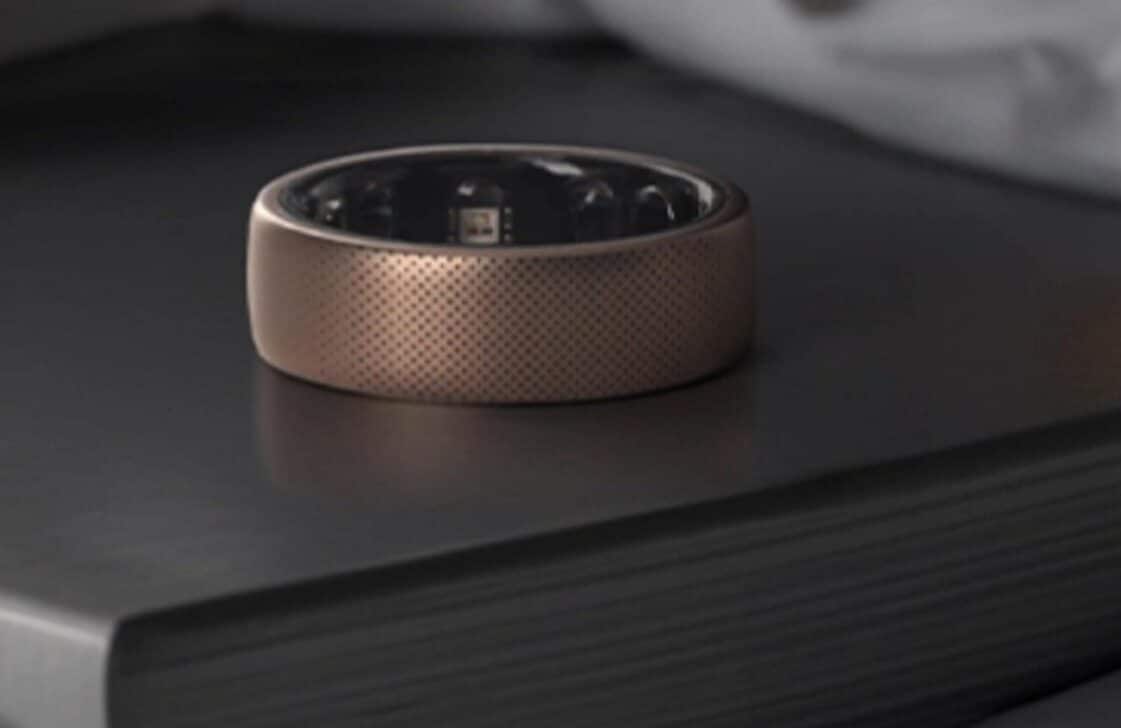
Two smart rings compete for space in the health tracking market. The Amazfit Helio Ring appears as the cheapest option, while the Oura Ring 4 maintains leadership in advanced features and refined design.
Tests carried out by editors at CNN Underscored compared the models over several weeks. The focus was on monitoring sleep, daily readiness, physical activity and overall user experience. Ambos The devices measure metrics such as heart rate, temperature and sleep quality, but deliver different results in usability and cost.
Ring design and comfort
The Oura Ring 4 has a more elegant finish, with titanium options and a recently launched ceramic version. The model is available in multiple sizes and colors, which makes the choice easier for those who value an appearance similar to a common piece of jewelry. The ring is lightweight, weighing between 3.3 and 5.2 grams depending on size, and measuring just 2.88 millimeters thick. The ceramic version uses high-performance zirconia, a material that offers durability and lightness without layers of paint that could peel over time.
The Amazfit Helio Ring uses titanium alloy on the outside and resin on the inside. Ele weighs around 3.65 to 3.82 grams and is 2.6 millimeters thick, making it discreet in everyday life. The two rings are comfortable for continuous use, including while sleeping, and are water resistant up to 100 meters. Usuários report that none of them interfere with routine activities. The internal structure prevents protruding sensors, which reduces skin irritation over weeks of use.
- Oura Ring 4 offers more finishes, including ceramic in colors such as Tide, Cloud, Petal and Midnight
- Helio Ring has a simple design and is available in fewer color and size variations
- Both avoid protruding sensors for greater internal comfort
- Oura Ring 4 includes sizes 4 to 15, while Helio has limited options like 8, 10, and 12 in some markets
- Ceramic version of the Oura stands out for its colors integrated into the material

Applications and UI
The Oura app delivers daily sleep, mood, activity and heart rate scores in an intuitive interface. Data appears clearly, with simple scrolling to access details about sleep quality, stress and heart health. The app takes about two weeks to personalize information based on the user’s habits. Ele also offers insights into the menstrual cycle, detecting signs of illness and integration with other healthcare services.
The Zepp app, used with Helio Ring, shows data on a scale of 1 to 100, similar to Oura. Ele offers detailed metrics without mandatory subscription for basic functions, but the organization of information is less fluid. The free version covers sleep duration, regularity and quality, while extra features like an AI sleep assistant require a monthly payment of around $6 via Zepp Aura. Zepp allows you to quickly view pace, heart rate and distance during activities.
Tests indicated that Oura provides clearer explanations about the origin of the data. Zepp, in turn, compensates with a focus on real-time metrics for specific modalities. Ambos Applications require initial learning time to deliver accurate personalized data. The difference appears mainly in the way they organize complex information such as heart rate variability and recovery.
Battery and charging
Battery life represents a clear difference between models. The Oura Ring 4 lasts five to eight days with normal use and charges in about 45 to 80 minutes. The Amazfit Helio Ring offers autonomy of around three to four days and requires more than an hour, in some cases up to 100 minutes, to fully charge.
Both use a portable and compact charging base. The Oura allows for quick recharging during morning routines such as bathing or grooming. The Helio requires more frequent charging, which may bother users who prefer to forget the device for longer. The Oura’s battery benefits from algorithms that optimize consumption in the background, while the Helio can reduce autonomy when all sensors are continuously active.
Physical activity tracking
The Oura Ring 4 automatically detects movements throughout the day, including short walks, and suggests recordings in the app. Ele Continuously monitors without needing to manually start most sessions. Para cardiovascular exercises, the focus is on post-workout insights, with analysis of recovery and effort patterns over time. The ring also monitors body temperature and signs that may indicate the onset of colds or hormonal variations.
Amazfit Helio Ring limits real-time tracking to four main modes: running, walking, treadmill, and outdoor cycling. Durante these activities, the app Zepp displays pace, heart rate and distance more directly, including with a widget on the lock screen. Outros workouts require importing manually or from external sources, without full heart rate or calorie details in the app. The Helio includes an electrodermal activity sensor to measure stress responses, which adds a layer of mental monitoring.
Both rings deliver solid readiness and sleep monitoring. Nenhum of them replaces dedicated watches for intense training, but serves as discreet complements. The Oura excels in broad auto-sensing, while the Helio shines in immediate feedback during runs or walks. Testes showed that both achieve good accuracy in sleep duration, but Oura offers more detailed stages of deep and REM sleep.

Pricing and subscription model
The Oura Ring 4 starts at around US$349 for titanium versions, with prices reaching US$499 for the ceramic version or premium finishes. Full access to in-depth insights requires a monthly subscription of approximately $5.99 or $69.99 per year. The first month is usually included for new users.
The Amazfit Helio Ring costs around US$149.99, with promotional variations under US$150 in some markets. The Zepp app offers useful metrics in the free version, with no subscription required for main functions. Premium Recursos and Zepp Aura are optional. Essa difference makes Helio attractive for those looking for low initial costs and avoiding recurring payments.
Comparative technical sheet
- Battery: Oura Ring 4 — 5 to 8 days; Amazfit Helio Ring — about 3 to 4 days
- Loading: Oura — 45 to 80 minutes; Helio — more than 1 hour, up to 100 minutes
- Main sensors: Oura includes blood oxygen, accelerometer and extensive automatic monitoring; Helio adds electrodermal activity for stress and focus in running
- Water resistance: 100 meters on both models (equivalent to 10 ATM on Helio)
- app: Oura — more intuitive with holistic insights; Zepp — Detailed without base subscription and good for real-time metrics
- Approximate price: Oura Ring 4 from US$349 + subscription; Helio Ring about $150 no subscription required
- Weight and thickness: Oura 3.3 to 5.2 g and 2.88 mm; Helio 3.65 to 3.82 g and 2.6 mm
- Available sizes: Oura from 4 to 15; Helio Limited options like 8, 10 and 12 in some markets
- Materials: Oura titanium or zirconia ceramic; Helio titanium alloy with internal resin
Considerations for different user profiles
Those who prioritize elegant design, a fluid app and complete insights into general health tend to opt for the Oura Ring 4. The model serves people interested in detailed sleep, recovery and signs of well-being over time. Subscription guarantees access to constant updates and deeper analysis, which justifies the investment for dedicated users.
Those looking for savings and real-time metrics for runs or walks may prefer the Amazfit Helio Ring. The ring works well as a complement to running watches, eliminating the need for another device during aerobic workouts. Ele delivers immediate value with no recurring cost, ideal for those who want basic sleep and alertness tracking without extra complexity.
Both rings are water resistant and comfortable for 24-hour wear. Testes Real-world conditions showed that comfort does not decrease after weeks of continuous use. The final choice depends on budget, the importance placed on design, and the need for real-time data versus in-depth post-activity analysis.
The smart ring market continues to expand in 2026, with options that range from casual users to amateur athletes. The Oura Ring 4 consolidates its position as a premium reference, while the Amazfit Helio Ring democratizes access to discreet tracking technology.