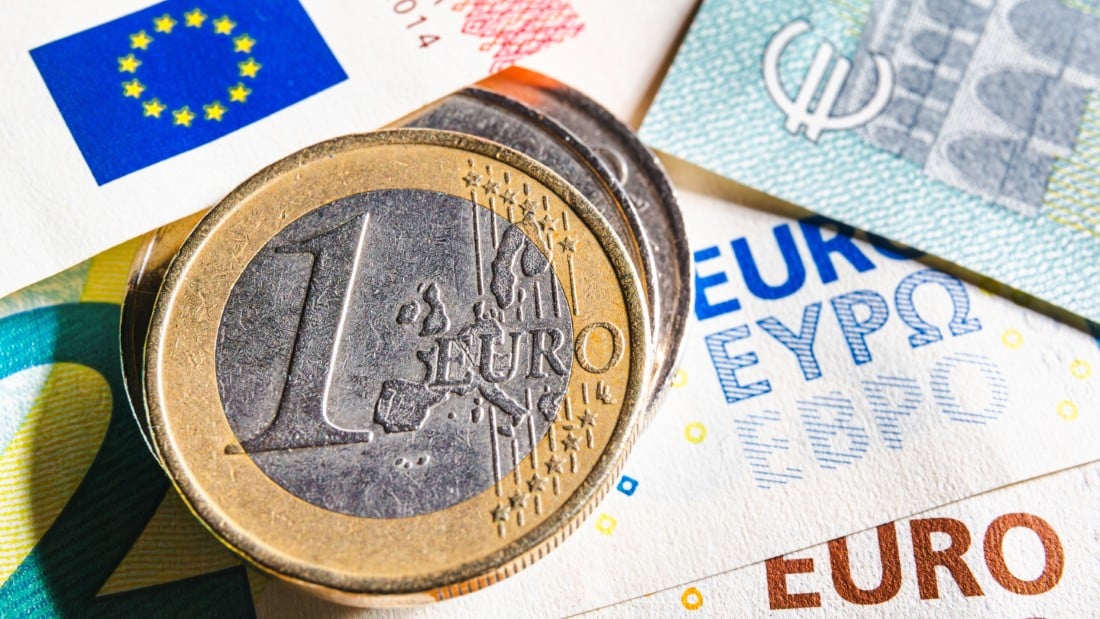
The German government plans to allow companies to pay their employees a bonus of up to 1,000 euros, exempt from taxes and contributions, during the year 2026. The measure is part of a broader package aimed at providing relief to consumers in the face of rising energy and mobility costs. Esta initiative reflects the search for solutions to mitigate economic pressures on the population.
However, the effectiveness of the proposal faces significant skepticism as bonus payments are voluntary and not a legal obligation for employers. Muitos Business sectors, already under pressure due to the delicate economic situation, express doubts about their ability to bear the additional cost. The issue of implementation and scope raises important debates in the country’s economic and social scenario.
Government plan details
The center-right/center-left coalition, responsible for the proposal, seeks to offer financial relief to workers without increasing the tax burden for those who receive it. The intention is for this bonus to act as a direct subsidy, helping to stabilize purchasing power in a period of economic challenges. The validity period set for 2026 is a crucial point, as it limits the window for payments and agreements to be made.
- Key points of the plan include:
- Payment of a bonus of up to 1,000 euros.
- Total exemption from taxes and social contributions on the value.
- The measure will be valid exclusively during the year 2026.
- The bonus is part of a set of government actions to alleviate living costs.
Challenges of voluntary adherence by companies
Confederação of Associações Patronais Alemãs (BDA) and Associação Central of Artesanato Alemão have already expressed their concerns. Ambas entities doubt that a large number of companies, especially smaller ones or those operating in sectors with tight margins, will be able to fully finance the bonus. The voluntary nature of the payment, although it gives flexibility to employers, creates uncertainty regarding the real capillarity of the benefit. The current economic situation, characterized by inflationary pressures and rising operating costs, restricts the ability of companies to assume new financial burdens, even if tax-free for the employee. The decision to pay the bonus becomes a complex calculation for each management, considering the company’s financial health and the well-being of its employees.
The logic behind the decision to make the bonus voluntary, rather than mandatory, is to avoid imposing additional costs on companies that are already struggling. Contudo, this same flexibility can result in an unequal distribution of the benefit, favoring more financially robust sectors and companies. The objective of providing relief to the population may be partially compromised if a significant portion of workers do not have access to aid, creating disparities within the labor market. Economistas monitor the potential impact of this approach on overall purchasing power and perceived equity.
The role of collective bargaining and deadlines
Collective bargaining plays a key role in distributing bonuses and salary benefits in many sectors of the German economy. Tradicionalmente, these agreements are the main mechanism for formalizing additional payments and integrating them into the compensation structure. The deadline established for the bonus, limited to 2026, is considered short by entities such as Confederação Alemã of Sindicatos (DGB) and Confederação Alemã of Associações Patronais (BDA). Eles argue that, in many sectors, there are no collective negotiations scheduled to take place within this period, which prevents the inclusion of bonuses in agreements. The lack of an adequate framework for the approval and implementation of these payments through collective agreements represents a significant practical obstacle. Isso suggests that the measure, although well-intentioned, may run into bureaucratic and temporal issues that limit its effectiveness, making it difficult to incorporate it in a broad and standardized way.
Including the bonus in collective bargaining would allow it to be linked to other components of wage agreements, such as regular increases or more comprehensive financial support measures for employers and employees. Sem this integration, the bonus runs the risk of being a one-off and isolated initiative, with less structural impact. The limited time for collective bargaining also means that the process can be rushed, or simply ignored, to the detriment of a deeper analysis of the needs and capabilities of each sector. Essa Temporal issue is not trivial and can define the success or failure of the measure in achieving its objectives.
Previous experiences and inequality in distribution
To assess the potential impact of the new bonus, economists and unions are analyzing the experience with the inflation adjustment bonus, granted between 2022 and 2024. Este bonus, which could reach 3,000 euros, had a positive role in stabilizing the economy and supporting purchasing power, according to Jan Behringer, an expert at IMK. The IAB researcher, Enzo Weber, indicates that around 80% of workers received some form of this bonus during that period.
However, previous experience has also revealed an uneven distribution. The inflation adjustment bonus was paid much less frequently in low-paying sectors. For example, in the hospitality sector, only 11.6% of employees received it. Baixas Pay rates were also observed in retail, construction, transportation and agriculture. In contrast, 100% of employees in public administration, social security and the defense industry received the full bonus of 3,000 euros, sectors where salaries are already, in general, higher. Este History suggests that, if there are no adjustments in the approach, the new bonus of 1,000 euros could follow a similar pattern, disproportionately benefiting workers with better salary and contractual conditions, and leaving aside those who most need financial assistance, deepening criticism about social imbalance.
Sectors most likely to be excluded
Analysis by experts such as Marcel Fratzscher, president of the DIW, and Enzo Weber, of the IAB, points to the fact that employees of smaller companies and those in sectors with lower wages or weak collective agreements are left out of the benefit. The impact would be especially notable on segments of the workforce that have the greatest need for financial assistance but are, paradoxically, less likely to receive it due to the voluntary structure and market conditions. “Those who earn little will receive little aid”, summarizes Weber, highlighting the measure’s central concern with social equity. Essa disparity not only fails to meet the objective of relief for all, but can also generate frustration and increase the perception of inequality between different categories of workers.
The absence of a mandatory mechanism or more robust incentives for smaller companies could create a significant gap. Setores with less union bargaining power or with more dispersed business structures have historically found it more difficult to implement voluntary bonuses. Isso means that, while some workers in large corporations or more stable sectors may see the bonus as a boost to their income, others, in more precarious conditions, may just observe the measure without benefiting from it directly. The government therefore faces the challenge of ensuring that aid is not just focused on specific segments of the economy, but that it more equitably reaches the base of the workforce.
Suggestions for expanding the scope of the bonus
Faced with criticism and lessons learned from previous experience, unions and employers present suggestions to improve the effectiveness of the new bonus. The main one is the extension of the payment deadline, extending it at least until 2027. Essa change would grant more time for the bonus to be properly included in collective bargaining agreements, increasing the chances of a broader and more organized distribution. A longer term would allow for an in-depth discussion between the parties, adjusting the benefit to the realities of each sector.
In addition to extending the deadline, Enzo Weber suggests the creation of benefits or incentives for employers who pay the bonus but who are unable to integrate it into collective agreements, for example, through a double deduction of costs for tax purposes on commercial activities. Essa additional measure could encourage a greater number of companies to offer the bonus, even those without a strong tradition of collective bargaining or with less immediate financial capacity. Tais incentives would mitigate the burden on companies and transform the bonus into a more viable and attractive option, contributing to greater equity in its distribution and, consequently, to the effective relief of the most vulnerable consumers.
