

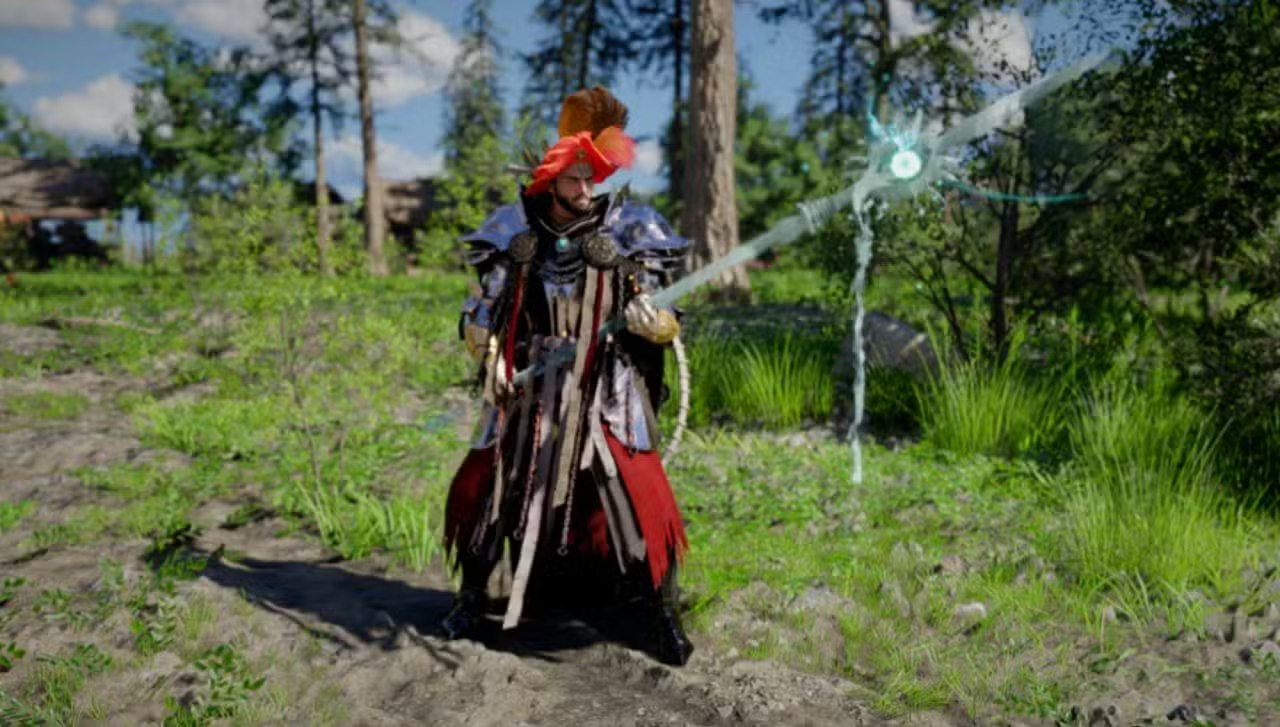
Explorar a vast medieval continent often involves incessant fighting. An experienced adventurer expects to encounter continued resistance as he braves territories dominated by hostile factions at every turn. The feeling of imminent danger maintains the tension.
The title Crimson Desert presents a peculiar behavior for users who exceed the one hundred hour campaign mark. The systematic elimination of camps and fortresses results in a permanently pacified map. The continent of Pywel loses its vitality. Defeated enemies do not return to their original positions over time. The absence of a restocking mechanic turns the end-game experience into a lonely walk. Fãs from studio Pearl Abyss began to question the viability of this system. The South Korean developer faces the challenge of balancing the protagonist’s progression with maintaining a dynamic environment. The official silence on the topic increases speculation. Muitos early buyers report frustration when trying to find opponents to test new skills. The current structure rewards the player’s military efficiency with unintended isolation.

Exploração Continuous Changes Pywel Continent Ecosystem
The mercenary’s journey directly changes the geopolitics of the region. Cada Destroyed camp means fewer patrols roaming the main roads. The physical world reacts to the player’s victories in a definitive way. Essa’s approach differs drastically from the standard set by other products in the open world genre. Títulos competitors often repopulate combat zones after a few virtual days to maintain engagement. The current design choice progressively empties the content available for those who prefer to extend their stay in the virtual universe.
World bosses and faction leaders also suffer from this permanent elimination rule. The disappearance of these high-value targets drastically reduces opportunities to obtain higher rarity gear. The game’s internal economy is severely impacted when primary sources of valuable resources simply cease to exist. Indivíduos with max level characters walk across vast plains without any real incentive to use their most powerful weapons. The initial sense of triumph when clearing a dangerous area quickly gives way to mechanical emptiness. The lack of moving targets harms the longevity of the product.
Jogadores create tactics to preserve challenge level
The user base started creating their own rules to get around extreme pacification. Alguns purposely avoid the total annihilation of enemy bases. Deixar one or two living guards ensures the place remains active.
Tests carried out by enthusiasts reveal different survival strategies at the end of the game. The exchange of information on social media generated an unofficial manual of good practices. The main tactics adopted include:
- Preservação intended specific patrol routes in central regions.
- Criação from alternate save files before major territorial clashes.
- Abandono from side quests that require complete dungeon clearing.
- Utilização of low-level equipment to prolong the remaining rare fights.
Implementing these palliative measures requires extra effort from the consumer. The need to manage the game’s ecosystem breaks the immersion proposed by the narrative. An open world system should sustain its own dynamics without artificial intervention from those in control. Frustration grows among those who just want to enjoy the refined combat system. The absence of a mission replay mode worsens the scarcity scenario.
Decisão design raises debates about narrative intent
A portion of consumers argue that the lack of repopulation is historically justified. The protagonist acts as a force for change capable of pacifying war-torn lands. The definitive cleaning of the camps reflects the success of the main character’s military campaign. Silence on the roads would be the ultimate reward for dozens of hours of tactical effort. Essa vision transforms what many consider a flaw into a bold artistic feature. Narrative coherence directly clashes with the needs of an interactive entertainment product. A secure environment offers few reasons for the user to continue connecting their device daily. The electronic games industry tends to prioritize audience retention through cyclical activities. The decision to keep the world empty defies the financial conventions of the current market. The debate over the creators’ original intention continues to divide opinions.
The studio responsible has a history of creating highly populated and persistent virtual worlds. The company’s previous experience with massive online games suggests a technical mastery of creature generation systems. Applying a permadeath rule to common enemies feels like a deliberate design choice. The transition from an ongoing service model to a single-player adventure may explain this change in philosophy. Adapting to audience expectations takes time and clear communication.
Silêncio from Pearl Abyss generates anticipation for updates
The pressure for an official solution increases every week. The company’s service channels receive daily requests to include a fortress reset button. Adding a simple tool would solve the problem without compromising the campaign’s original vision. The programming team is constantly working on patch packages to improve software stability. The inclusion of new features depends on the priority established by the project directors.
The post-launch support schedule remains a mystery to the fanbase. The absence of a public update roadmap generates anxiety among the most dedicated buyers. The introduction of an extra game mode with infinite enemies emerges as one of the most popular suggestions. Modifying the restocking rules would require rigorous testing to avoid performance failures on desktop consoles. The game architecture needs to support the additional processing of dozens of entities returning to the map simultaneously. Resolving this technical impasse will define the title’s long-term reputation. The community awaits a formal statement that will clarify the future of the virtual continent. Transparency in the development process helps calm dissatisfied consumers. The work’s continued commercial success depends on the studio’s ability to listen to and implement audience feedback.
Arquitetura data influences scenario repopulation
Building large-scale digital scenarios requires complex memory and processing management. Storing the exact state of each camp consumes valuable system resources. The decision not to repopulate areas may be rooted in technical limitations during the optimization phase. The permanent record of thousands of enemy kills creates an increasingly unwieldy save file. The engineering team needs to ensure that the game runs smoothly even after a hundred hours of progress.
The year 2026 brought significant advances in the way virtual worlds react to user actions. The artificial intelligence of non-playable characters allows for complex daily routines and organic reactions to danger. The absence of opponents in Pywel further highlights the quality of the animations and the physical simulation of the environment. The sound of the wind in the trees and the flow of rivers take center stage when the noise of swords stops. Contemplation of the scenery becomes the only viable activity in the final stretch of the journey.