
Astrophysicist Avi Loeb presented a new perspective on the search for organisms outside of Terra during an event at Museu of Ciências Frost, located in Miami. The researcher argues that most of the cosmic biomass must exist underground on distant worlds, far from direct exposure to cosmic rays. The surface of rocky celestial bodies presents extreme temperature conditions and constant radiation bombardment. Underground Ambientes provide natural protection against these external threats and ensure the thermal stability necessary for biology. The theory changes the focus of space agencies.
The hypothesis is based on the idea that humanity itself would need to seek refuge underground if the planet faced global catastrophes. Impactos from large asteroids, nuclear conflicts or severe climate change would make the Earth’s crust uninhabitable. The nature of other planetary systems may have forced life forms to adopt this same survival strategy billions of years ago. The scientist questions the feasibility of establishing human settlements on the surface of Lua or Marte. Esses locations have thin or non-existent atmospheres. The construction of surface bases would require an immense logistical effort to shield astronauts against the hostile environment. The safest alternative involves sending artificial platforms and autonomous equipment. Robôs guided by artificial intelligence can operate for decades without the biological limitations of our species. The development of probes capable of drilling into the ground or navigating dark caves replaces the need for risky human crews. Essa paradigm shift prioritizes the collection of scientific data in a sustainable way.
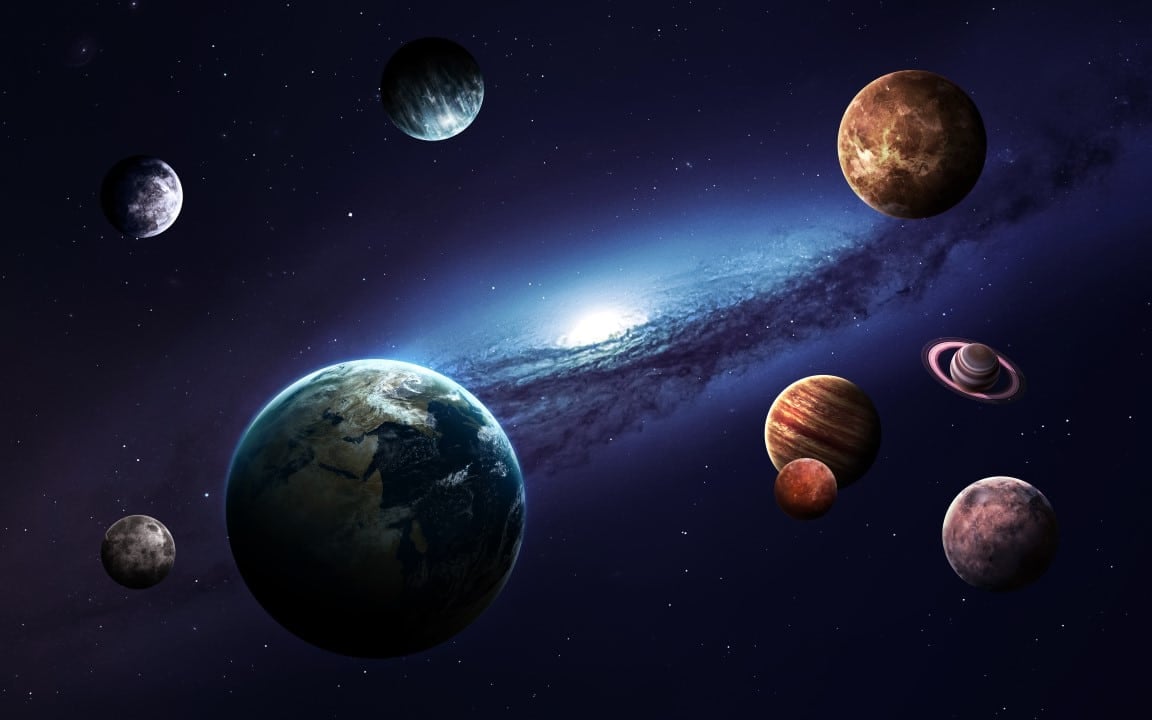
Foco in robotic missions eliminates the need for human colonies
Sending advanced machines solves the problem of human frailty in outer space. Autonomous Equipamentos function as technology ambassadors in high-risk zones. Exploring inhospitable locations becomes more efficient without worrying about oxygen supplies or drinking water.
The strategy of populating other planets comes up against severe physical barriers. The human body evolved under the protection of the magnetosphere and the Earth’s dense atmosphere for millennia. Prolonged exposure to the Martian environment causes irreversible cellular damage. The use of artificial intelligence allows vast underground areas to be mapped continuously and safely. Machines process information on-site. Elas transmit only relevant results to the control centers on Terra. The delay in interplanetary communications requires independent equipment. Robots make immediate decisions when encountering complex geological obstacles at depth.
Radioactive Decaimento secures liquid water away from stellar heat
Traditional astrobiology defines the habitable zone as the exact orbit where a star’s light keeps water in a liquid state on the surface. The model presented by Loeb breaks this spatial limitation. A study published in 2018 in partnership with researcher Manasvi Lingam details an alternative energy source. The decay of radioactive elements in the cores of celestial bodies generates constant heat. Esse geological process melts deep layers of ice. Thermal energy flows from the inside to the outside. The phenomenon creates pockets of liquid water completely isolated from the darkness and extreme cold of the surface. Microrganismos chemosynthetics could thrive in these subsurface oceans using chemical reactions instead of sunlight.
Dependence on direct sunlight is no longer a mandatory requirement for the emergence of ecosystems. Most of the universe’s rocky material roams the darkness of interstellar space. Planetas orphans ejected from their original systems maintain internal activity. Eles harbor basic biology beneath miles of frozen rock.
Túneis of Martian lava acts as radiation shields
The red planet lost its global magnetic field billions of years ago. The current atmosphere corresponds to a minimum fraction of Earth’s density. Ultraviolet radiation and solar winds relentlessly sterilize any organic molecules exposed in Martian soil. Daily temperature variations make it impossible to maintain vital fluids. The planet’s topography is home to extensive networks of caves formed by ancient volcanic eruptions. The magma flowed underground and left hollow ducts after cooling. Essas geological formations offer a stable microclimate. The thick basalt walls block cosmic radiation extremely efficiently.
- The temperature inside volcanic ducts changes little between day and night.
- Physical insulation prevents rapid sublimation of possible water ice deposits.
- The absence of sandstorms protects sensitive equipment from mechanical wear.
Exploring these natural shelters requires vehicles adapted for flight in confined spaces. Miniaturized Helicópteros equipped with chemical sensors can map the extent of underground galleries with precision. High-resolution cameras look for fossilized marks in rocks. Access to these areas revolutionizes sample collection.
Oceanos hidden on giant moons expands habitability zone
The outer solar system has strong candidates for applying this astrobiological theory. Natural Satélites orbiting Júpiter and Saturno feature ice crusts tens of kilometers thick. The gravitational force of the giant planets generates friction in the cores of these moons. The resulting heat melts the base of the ice sheet and forms dark global oceans. Organic chemistry finds an environment conducive to the development of complex chains of molecules. The interaction between salt water and the rocky mantle at the bottom of these seas releases essential nutrients. Fontes underwater hydrothermal vents provide the energy needed to sustain colonies of extremophile bacteria.
The focus on subsurface environments changes space agencies’ planning for the coming decades. Sondas orbiters search for biological signatures in the atmospheres of exoplanets through spectroscopy. Esse traditional method ignores worlds where life thrives far from the visible surface. Hidden biomass completely escapes remote sensing instruments installed on space telescopes. Identifying biosignatures requires sending landing missions with deep drilling capabilities. The development of autonomous thermal drills makes it possible to melt ice and reach liquid water on distant moons. Submarinos shoebox-sized robotics would navigate the ocean darkness in search of thermal anomalies. The data collected by these vehicles redefines the parameters of planetary habitability. Cosmic life adopts survival strategies based on geological isolation. The illuminated surface represents only a small fraction of the available habitats in the universe. The theoretical model of Loeb consolidates the idea that the terrestrial biosphere is a statistical exception. The general rule of the cosmos points to ecosystems confined in underground shelters shielded against the hostility of outer space.
Technological Adaptação requires new scanning equipment
Aerospace engineering faces the challenge of creating machines capable of operating without direct human intervention. The interior of Martian caves blocks radio signals sent by satellites. Drones need independent visual navigation systems to avoid obstacles and uneven walls. Embedded artificial intelligence processes images in real time. Ela decides the best flight path without waiting for commands. Three-dimensional mapping of these structures reveals ecological niches untouched since the formation of the solar system. Detection of specific gases within the ducts would indicate metabolic activity.
Advances in scientific instrumentation make it possible to analyze soil samples directly at the landing site with extreme precision. Miniaturized mass Espectrômetros identifies carbon isotopes associated with biological processes. Drilling into rock walls exposes minerals that have not been altered by cosmic radiation. The preservation of organic compounds depends on the thermal stability provided by underground insulation. The geological data collected by these robotic missions feeds theoretical models on the distribution of vital elements. The integration between astrophysics and planetary geology establishes new criteria for selecting exploration targets in deep space.
