
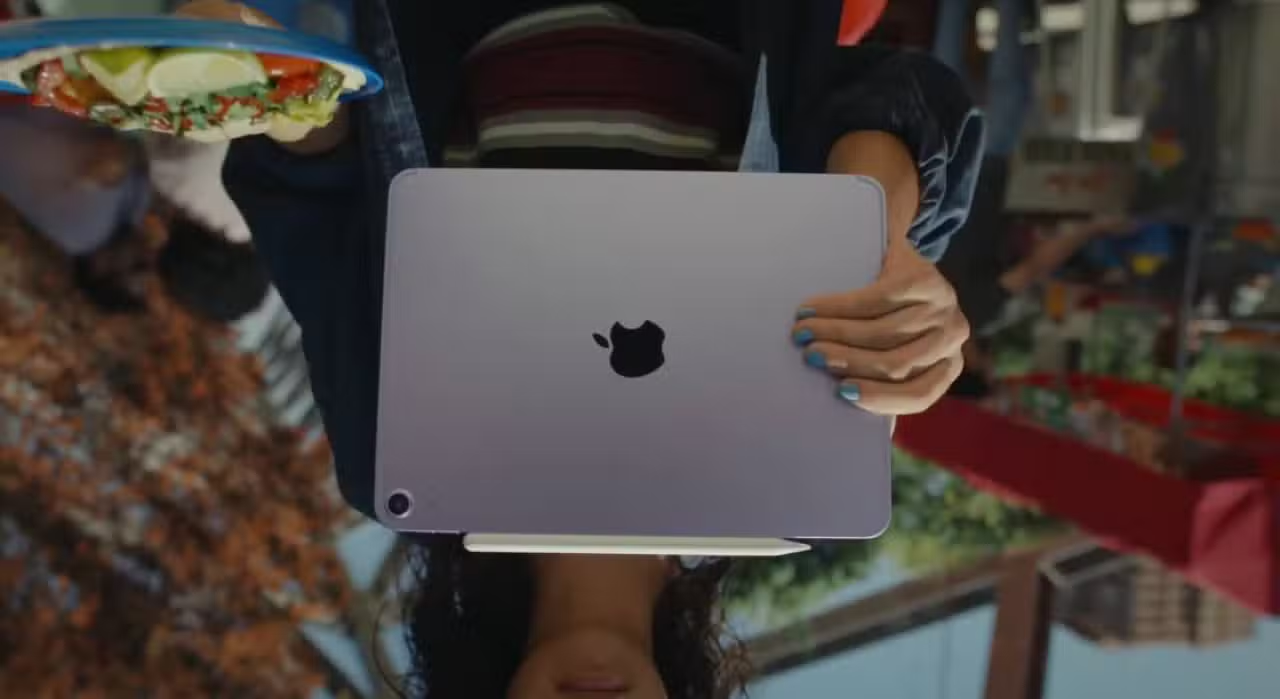
The iPad has completed more than a decade and a half of existence, consolidated as the main pillar of global portable computing. Desde the official announcement made by Steve Jobs in 2010, the device went from being just a giant iPhone to becoming a robust tool. Esse’s maturation did not occur by chance, but rather through cycles of innovation that addressed different needs of the modern consumer. The device’s trajectory reflects a constant search to eliminate the barrier between the simplicity of touch and the complexity of professional tasks.
The initial proposal focused on the gap between the smartphone and the conventional notebook. Naquele period, Apple opted for an interface entirely based on the touch screen, discarding physical keyboards or mice for basic navigation. The movement had an immediate impact on global sales. Over time, the manufacturer refined this idea, transforming the hardware into something extremely thin without sacrificing battery life. Atualmente, the model is used on fronts ranging from early childhood education to high-performance engineering design.
Ultra-thin Design and performance gains marked generations
The physical evolution of the iPad is one of the fundamental points to understand its longevity at the top of sales. Nos early years, the focus was on extreme portability, which led to the release of lines like the Air iPad. The Apple’s engineering managed to drastically reduce the frames and thickness of the metal chassis. Isso allowed the user to pack processing power equivalent to that of many desktop computers into a body that weighs just over 500 grams.
Internal power followed this physical reduction with the arrival of M series chips, the same ones used in Mac computers. Essa architecture transition allowed the tablet to perform heavy 4K video editing tasks and three-dimensional object rendering fluidly. Commercial success is tied to this ability to deliver raw performance in a format that can still be held in just one hand. The consumer technology market has come to look at tablets no longer as media toys, but as war machines for remote work.

Apple Pencil and tools aimed at the creative sector
One of the biggest watersheds in the product’s history was the launch of the Apple Pencil. The accessory transformed the retina screen into a professional drawing screen with almost imperceptible latency. Line precision and pressure sensitivity opened the door for illustrators and architects who previously depended on graphics tablets connected to computers. The integration between hardware and software has allowed the iPad to become the industry standard for digital artists.
- Precisão millimeter:Tilt sensors allow for natural shading in complex designs.
- Ecossistema apps:Programs like Procreate and Adobe Photoshop have been optimized specifically for pen use.
- Produtividade academic:Students use the accessory to take handwritten notes that are converted to digital text instantly.
- Carregamento magnetic:Newer versions of the pen attach to the side of the tablet for wireless charging.
iPad Pro sought the definitive replacement for notebooks
With the launch of the Pro line, Apple sent a clear message to the market: the iPad could replace the personal computer for most users. The introduction of screens with ProMotion technology, which offers refresh rates of 120Hz, raised the level of interface fluidity. Somado to this, the official support for mice and trackpads, through Magic Keyboard, has changed the ergonomics of use. The device now floats on a backlit keyboard, gaining a USB-C port for connecting external peripherals.
Essa hardware change was accompanied by an expansion in storage options, which today reach terabyte levels. The iPad Pro has become the preferred choice for photo editors and professionals who travel constantly. Built-in 5G connectivity ensures these users remain productive even without Wi-Fi networks nearby. The success of this strategy is visible in the number of companies that have adopted the tablet as a standard tool for their field teams.
iPadOS separated the tablet from the exclusive iPhone ecosystem
For many years, the iPad ran the same operating system as the iPhone, which limited the use of the larger screen. The creation of iPadOS was the software innovation that sealed the product’s fate as a productivity success. The new system brought advanced multitasking features such as Stage Manager and Split View visualization. Essas functions allow the user to keep several applications open simultaneously, organizing the workflow in a similar way to what occurs on a desktop.
File management has also been revamped to allow the use of external storage drives and local servers. The Safari browser started displaying desktop versions of websites, eliminating the simplified mobile view that frustrated professional browsing. With these software updates, Apple has ensured that the iPad has a powerful identity of its own. The system continues to evolve with a focus on artificial intelligence and deep integration with the rest of the brand’s ecosystem.