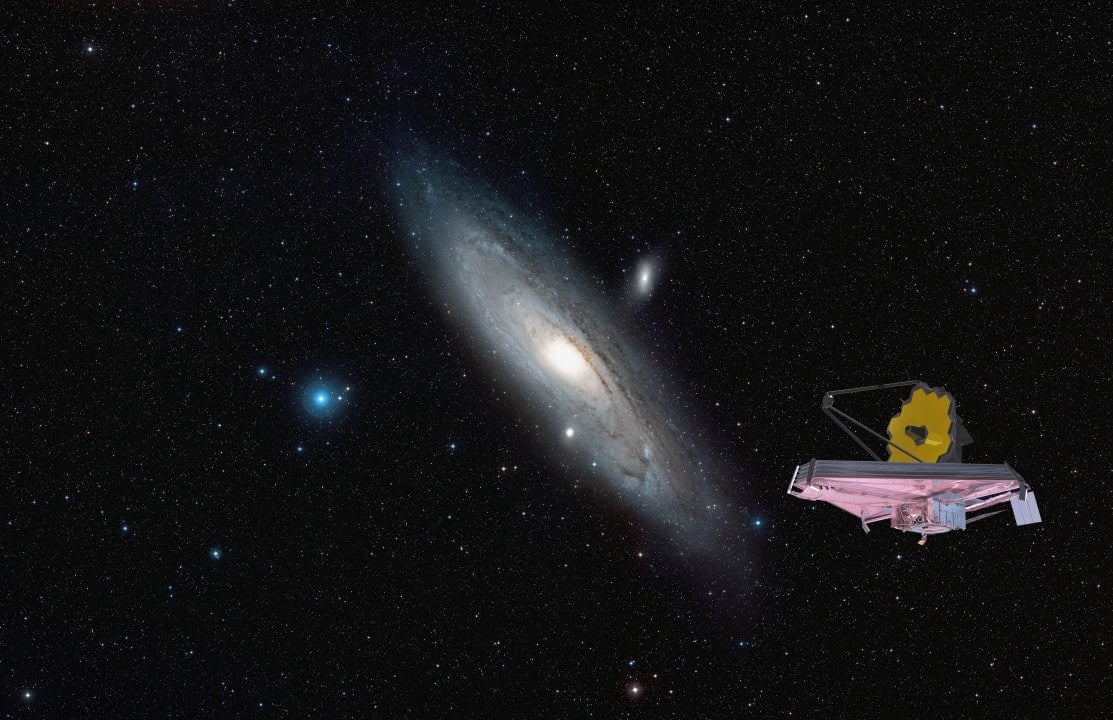
The James Webb space telescope has identified signs of a layer of gas around the rocky exoplanet TOI-561 b. The discovery points to the existence of a vast ocean of magma on the surface of the celestial body. The planet orbits its host star at an extremely short distance. Pesquisadores used high-precision instruments to capture the system’s infrared emissions. The data contradicts the initial expectation that stellar radiation would have already swept away any trace of atmosphere at the site.
Localizado approximately 280 light-years from Terra, the planetary system presents inhospitable conditions by known standards. The proximity to the central star raises surface temperatures to extreme levels. Cientistas assess that the intense heat melts the rocky crust permanently. The phenomenon creates a geological cycle where magma acts as a dynamic reservoir. The incandescent material continually absorbs and releases volatile compounds into outer space, challenging traditional models of planetary formation.
Webb detected the strongest evidence yet for an atmosphere on a rocky planet outside of our solar system! Findings suggest ultra-hot super-Earth TOI-561 b is surrounded by a thick blanket of gases above a global magma ocean. https://t.co/d6g3z4pnUr pic.twitter.com/2VdiyU8LMs
— NASA Webb Telescope (@NASAWebb) December 11, 2025
Características physics and orbitals of the celestial body
The exoplanet TOI-561 b belongs to the super-Earth category. The classification groups rocky worlds with dimensions greater than our planet, but smaller than the gas giants of Sistema Solar. The density calculated by astronomers reaches 4.3 grams per cubic centimeter. The value suggests a less compact internal composition than expected for a purely rocky sphere subjected to high pressures. The measurement reinforced the hypothesis of the presence of a gaseous envelope around the globe, altering the perception of the structure of the star.
The planet’s orbital dynamics dictate the extreme weather recorded on the surface. The celestial body completes an entire revolution around its star in just 10 hours and 33 minutes. The speed impresses experts. The host star is estimated to be 10 billion years old and has a low concentration of heavy metals. The scenario indicates that the system was formed at a very ancient time in the universe, when heavy elements were still scarce in galaxies.
Astronomical observations have consolidated a detailed profile of the exoplanet’s proportions compared to our world.
- The planet’s radius measures approximately 1.4 times the size of Terra.
- The total mass of the celestial body is twice the mass of the Earth.
- The system’s central star emits a massive amount of continuous radiation.
- The planet always maintains the same side facing the heat source.
- The intense gravitational force stops the rotational movement of the globe.
The illuminated face receives the direct impact of stellar energy without any interruption. The temperature on the day side exceeds the mark of 2700 degrees Celsius. The night side remains plunged into perpetual darkness. The thermal difference between the two hemispheres generates complex energy currents in the thin layer of gas detected by space observation equipment.
Dinâmica of the magma ocean and maintenance of the atmosphere
The survival of an atmosphere in such a hostile environment has puzzled the scientific community. Planetas with ultrashort orbits often lose their gaseous envelopes quickly due to stellar winds. The volatile material evaporates and escapes into deep space. In the case of TOI-561 b, the global magma ocean provides the answer to the mystery. Molten rock functions as a constant geological engine, recycling chemical elements in the crust.
Magma dissolves the gases inside it under certain conditions of pressure and temperature. Quando the material circulates and reaches the surface, the volatile compounds are released in the form of vapor. The process replaces the atmosphere at the same rate that stellar radiation destroys it. The continuous cycle of absorption and emission creates a rare dynamic balance. The interaction between the planet’s interior and outer space prevents the world from becoming a barren, bare rock.
Pesquisadores published the analysis results on The Astrophysical Journal Letters. The study details how the chemical composition of magma influences the type of gas expelled. Computer modeling suggests that the secondary atmosphere differs substantially from the primordial cloud that formed the planet billions of years ago. Extreme heat alters the molecular structure of elements available at the surface, creating a unique atmospheric chemistry dependent on global volcanic activity.
Tecnologia infrared in spatial data capture
Collecting the information required the use of a near-infrared spectrograph, known as NIRSpec. The equipment is part of the main structure of the James Webb space telescope. The observation campaign took place during the month of May 2024. Astronomers monitored the system for more than 37 consecutive hours. The exposure time allowed four complete orbits of the exoplanet to be recorded, ensuring a sufficient volume of data for precise statistical analyses.
The team used the secondary eclipse technique to isolate the planet’s light. The method consists of measuring the total brightness of the system when the planet is next to the star. Scientists then measure the light from just the star as the planet passes behind it. The difference between the two values reveals the exact amount of thermal energy emitted by the celestial body itself. The precision of James Webb made the measurement possible, overcoming the limitations of previous observatories.
Dois independent data processing channels confirmed the results. The rigorous analysis eliminated noise caused by variations in instruments or cosmic interference. The light spectrum obtained showed patterns that do not correspond to a solid rock surface. The thermal signature pointed directly to the presence of a gaseous layer spreading heat around the globe, dissipating part of the energy from the day side to colder regions.
Conexões with the geological history of Terra
The study of extreme worlds offers clues about our own planet’s past. Terra underwent a global magma ocean phase shortly after its formation. The impact of massive celestial bodies melted the early Earth’s crust. Understanding how TOI-561 b manages its volatile gases helps geologists understand the evolution of Earth’s early atmosphere. Physical processes obey the same universal laws, regardless of the distance between star systems.
The discovery expands the known limits for the retention of atmospheres in the universe. Modelos Previous theorists determined that worlds so close to their stars would be incapable of supporting any gaseous covering. Direct observation breaks this paradigm. Planetary science now needs to review calculations on atmospheric evaporation in ancient star systems, considering the active role of volcanism and magma oceans in the renewal of gases.
Novas observation campaigns are scheduled to map the exact distribution of heat on the exoplanet. Astronomers plan to investigate the celestial body’s complete phase curve. The procedure will measure temperature variation as the planet displays different angles of its illuminated face to Terra. Future data will detail the exact chemical composition of the gas emitted by the incandescent magma ocean, revealing the building blocks of this distant world.
