
The sky holds a rare spectacle for astronomy observers and enthusiasts in the early hours of this Thursday, April 16, 2026. A triple alignment involving Lua, Mercúrio and Marte can be seen in the east, just before sunrise. Além of the planetary encounter, the observation window includes the passage of the recently discovered comet Panstarrs and the transit of Estação Espacial Internacional (ISS).
Observation requires attention to the clock and the horizon. Because they are in a very low position in the sky, the stars are visible for a short period of time. Especialistas recommend that interested parties look for locations with a wide view of the eastern horizon, without the interference of buildings or trees, around 30 minutes before dawn. Em São Paulo, the sun rises at 6:15 am, which puts the peak of viewing at around 5:45 am.
Detalhes of the approach between Lua and planets
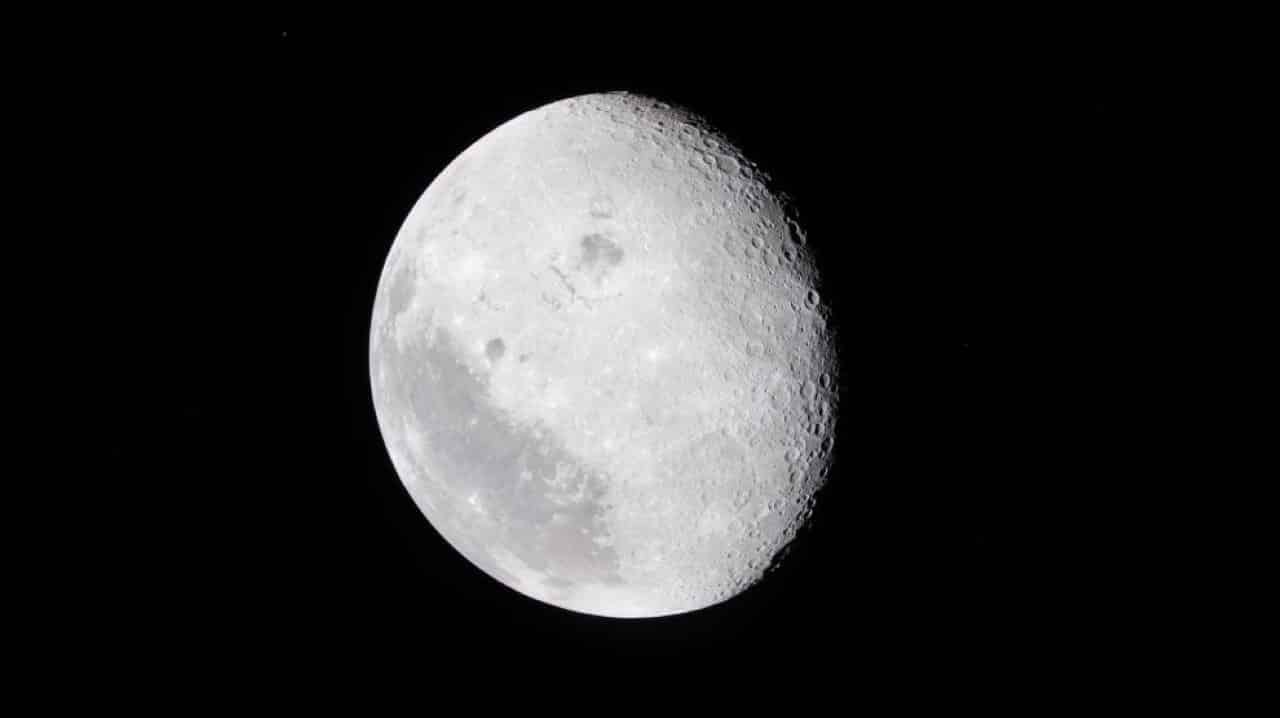
The Lua will have an extremely thin silhouette, with just 28 days of cycle (almost new waning phase). Essa characteristic makes it easier to perceive the brightness of Mercúrio and Marte, which will be positioned close to the natural satellite. Mercúrio is often difficult to locate due to its proximity to Sol, but the alignment with Lua will serve as a visual guide for observers.
Marte, with its characteristic reddish tone, completes the trio. Diferente of ordinary stars, the planets do not twinkle, which helps in identification with the naked eye. Embora the use of binoculars is not mandatory to see the planets, the equipment considerably improves the experience, allowing you to better distinguish the angular separation between celestial bodies.
Cometa Panstarrs and Estação Espacial on the horizon
Outro The highlight of the morning is comet Panstarrs, a discovery dating from the last quarter of 2025. The celestial body reaches its period of best visibility until next Saturday, April 18th. As it is in a region of dim light and low altitude, the technical recommendation is to use high-powered telescopes or binoculars. Ele should be looked for in an east-northeast direction, approximately one hour before sunrise.
Para For those who prefer to observe phenomena without equipment, Estação Espacial Internacional (ISS), also known as “Kibo” for part of its structure, will cross the sky. Traffic should last between three and six minutes, starting around 4:37 am. The object resembles a very bright star moving at a speed greater than that of a commercial plane, following a southeasterly trajectory.
- Evento: Alinhamento Lua, Mercúrio and Marte.
- Optimal Horário: 30 minutes before local dawn.
- Direção: Horizonte east (low).
- Extras: Cometa Panstarrs and Estação Espacial Internacional.
- Equipamento: Olho naked for planets; binoculars for the comet.
Condições weather for observation
The visibility of the phenomenon directly depends on regional weather conditions, which present significant variations for this Thursday. A cold front acts over part of the coast, which can generate cloudiness in states of Sudeste and Sul. Áreas with greater atmospheric stability and clear skies will have priority in the complete alignment and comet view.
In the interior of the country and in part of Nordeste, the forecast points to open weather, favoring photographic records. Meteorologistas indicate that, even in areas with sparse clouds, rapid openings can occur that allow us to see Lua and the planets. The early morning chill requires observers to be prepared with warm clothing, as exposure in open, elevated locations will be necessary to ensure line of sight to the eastern horizon.
Importância of astronomical records in 2026
Eventos that bring together multiple elements, such as planets, satellites, comets and human technology simultaneously, are rare. Comet Panstarrs specifically is a new visitor to the inner solar system, and its passage offers valuable data to space agencies about the composition of remote objects. The coincidence with the ISS transit reinforces the constant monitoring of Terra’s low orbit.
The astronomical community encourages the sharing of images on social media to help map the comet’s visibility at different latitudes. Após On April 18th, Panstarrs will begin to move away, becoming increasingly faint until it disappears from the reach of amateur equipment. The planetary alignment, in turn, breaks down the following morning, with Lua following its orbit and changing its visual configuration.
