

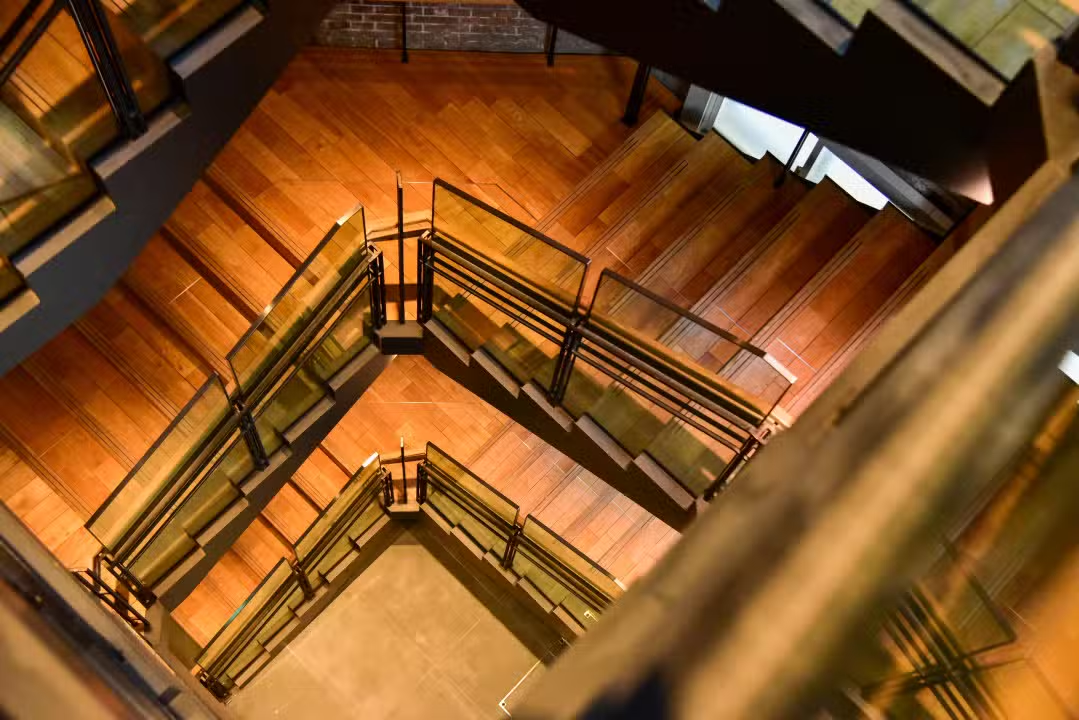
A ten-story building with restaurants on each level appears in the Kanda neighborhood in Tóquio. Daiwa House’s D-Scape Kanda Kajicho adopts external stairs and terraces to create flow between floors. The work should be inaugurated in 2026.
The project is near the south exit of Kanda station, one train stop away from Tóquio. The structure seeks to solve a common problem in vertical food buildings. Higher Andares tend to be less visible and attract fewer spontaneous customers.
Escadas and terraces form “vertical high street”
The central concept is called “vertical high street”. Duas direct stairs connect the floors. One of them integrates with terraces and glass panels. Visitantes see the inside of stores as they go up or down.
Architect Akira Koyama, from Key Operation, explains the idea. The terraces allow you to look from top to bottom. The movement on the stairs reveals atmospheres from other floors. Aromas and sounds travel between levels. The result resembles traditional alleys from Kanda, but in a vertical direction.
Cada floor measures approximately 100 square meters. The external terraces serve as living spaces. Eles doesn’t just function as outdoor seating. Cross views between people at different heights generate interaction.
Localização in Kanda reinforces project identity
Kanda mixes history and everyday life. Old Templos coexist with shopping streets and restaurants. The name of the neighborhood refers to forging and dyeing artisans. D-Scape intends to extend this vitality into the building.
Junichi Kashiwazaki, from Daiwa House, highlights the potential of the area. The place near Nihonbashi has tradition, but lacks new symbols. The building appears as an element that unites the past and future of the region.
The layered terraced facade creates visual rhythm. From trains or streets, the building attracts attention. Vidros and greenery soften the volume. The intention is for the space to become part of the memory of those who pass through the region.
Design prioritizes experience over pure efficiency
Edifícios of traditional restaurants hide internal stairs. Isso limits curiosity to higher floors. D-Scape reverses the logic. Circulation becomes the main element of architecture.
- External Escadas connects all floors seamlessly
- Terraços at each level allows cross-store visuals
- Vidros reveals movement and internal environment to passersby
- Fluxo vertical stimulates exploration without relying solely on reserves
- Common Espaços encourage interaction between retailers and customers
The name D-Scape refers to the “landscape” provided by Daiwa House. The company sees the building as a container. The content arises from the combination of establishments and patrons.
Lojas variety should make up the gastronomic mix
The project makes room for different types of cuisine. Italiano, ethnic and Japanese appear among the possibilities. Além of restaurants, the concept includes utensil stores or galleries linked to food. Diversity seeks to generate discoveries with each visit.
Daiwa House plans to work closely with the occupants. The objective goes beyond collecting rent. The company wants to help build a food scene rooted in Kanda. Constant circulation should foster positive competition between operations.
Projeto joins the trend of experiential spaces
The commercial real estate sector evolves. The focus moves away from simple useful footage to experiences that motivate permanence. D-Scape applies to the food segment what already occurs in offices and lifestyle hotels. Circulation becomes a tool of attraction and retention.
In 2026, the building should begin operating. The expectation is that it will generate movement not only internally, but also in the surrounding streets. The result can serve as a reference for other developments in Japão.