
The James Webb space telescope (JWST) captured unprecedented images of a planetary nebula located 10,000 light-years from Terra. The record focuses on the Tc 1 nebula, located in the Ara constellation, and reveals details about the origin of the “buckyballs”. Estas carbon molecules have a hollow shape that resembles a football. The discovery helps to elucidate how these chemical components form around stars that are in the process of dying.
The structures observed surpass in complexity previous detections made by other equipment. Cientistas even identified a formation that resembles an inverted question mark within the gas cloud. The phenomenon marks a significant advance in understanding how organic matter is distributed throughout the universe. Pesquisadores claim that the new photos show that science still only knew the surface of this astronomical object.
Mistério of carbon spheres and the heritage of Buckminster Fuller
Buckyballs are chemically known as buckminsterfullerene. The name pays homage to the architect Buckminster Fuller, famous for creating geodesic domes that have a geometry similar to those of these molecules. Elas were discovered in the laboratory in 1985, yielding Prêmio Nobel from Química to researchers in 1996. Contudo, the exact process of how outer space produces these perfect spheres of 60 carbon atoms remains one of the greatest enigmas in modern astronomy.
- Buckminsterfullerene is a pure form of carbon with 60 atoms.
- The molecule is extremely resistant and can survive in hostile environments.
- In space, they emit specific infrared signatures detected by Webb.
- Elas belong to the class of polycyclic aromatic hydrocarbons (PAHs).
- Estas substances are considered fundamental blocks for the emergence of life.
The Tc 1 nebula had already been monitored by NASA since 2010. Naquela On occasion, the Spitzer telescope confirmed that these molecules really existed in the vacuum of space. Spitzer ended its activities in 2020, passing the baton to James Webb. With a larger mirror and more powerful infrared sensors, the new observatory can see layers of dust and gas that were previously invisible to human eyes and old instruments.
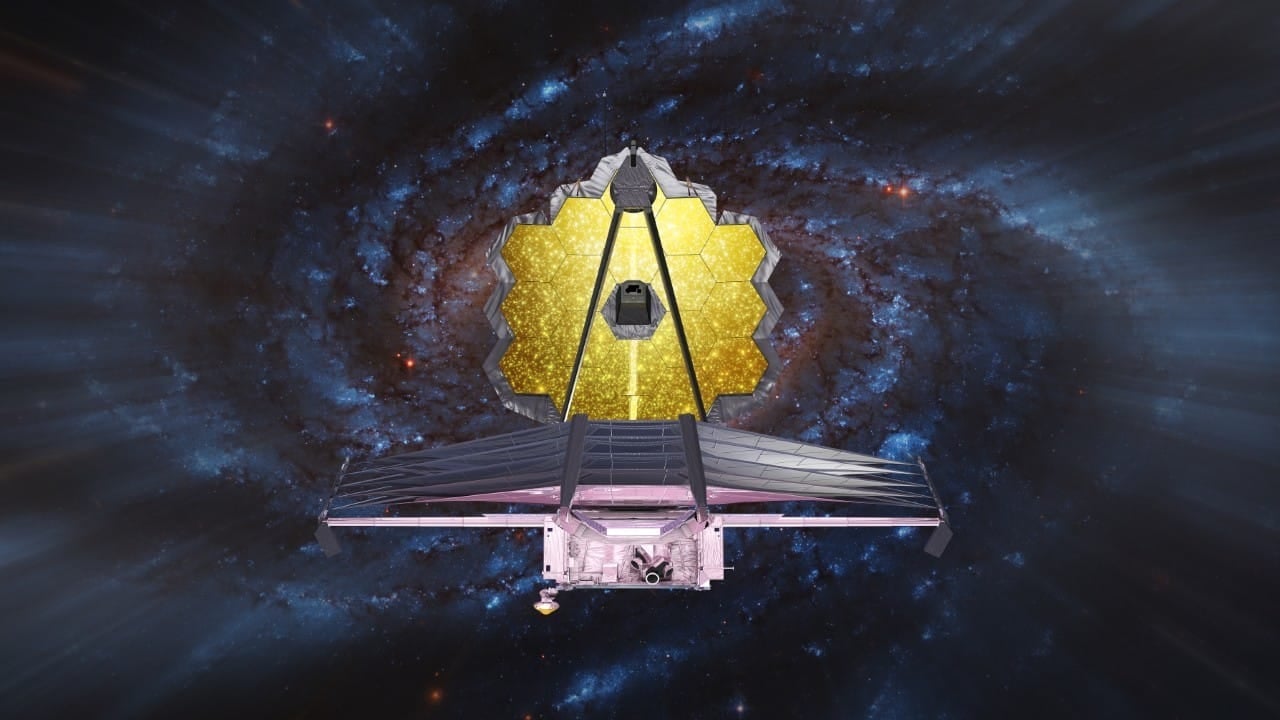
Infrared Tecnologia reveals thermal details of planetary nebula
Para generated the released image, James Webb’s mid-infrared instrument (MIRI) used nine different filters. The end result is a composition that translates invisible wavelengths into perceptible colors. Blue Tons indicates hotter gases, while reddish regions show cooler materials. Essa thermal differentiation allows astronomers to precisely map where carbon molecules are clumping together.
The team led by Professor Jan Cami, from Western University, highlighted that the image raises new questions about stellar physics. The presence of organized structures within an exploding star suggests that carbon chemistry is more dynamic than previously anticipated. James Webb continues its mission to track organic ingredients in diverse regions of our galaxy and beyond.
Importância for astrobiology and the future of space observations
Detecting complex hydrocarbons like buckyballs is vital to astrobiology. Essas molecules are basic ingredients that can, under the right conditions, compose biological structures. By understanding where they are born and how they travel through space, scientists are able to draw a map of the chemical fertility of the cosmos. The Tc 1 nebula now functions as a natural laboratory for testing theories about the evolution of matter.
The next step involves analyzing the light spectra of each substructure found in the image. Experts seek to understand whether there are other types of fullerenes or even heavier molecules hidden in the dust. The Ara constellation, where the nebula resides, will remain a priority target for the next rounds of JWST observations.
