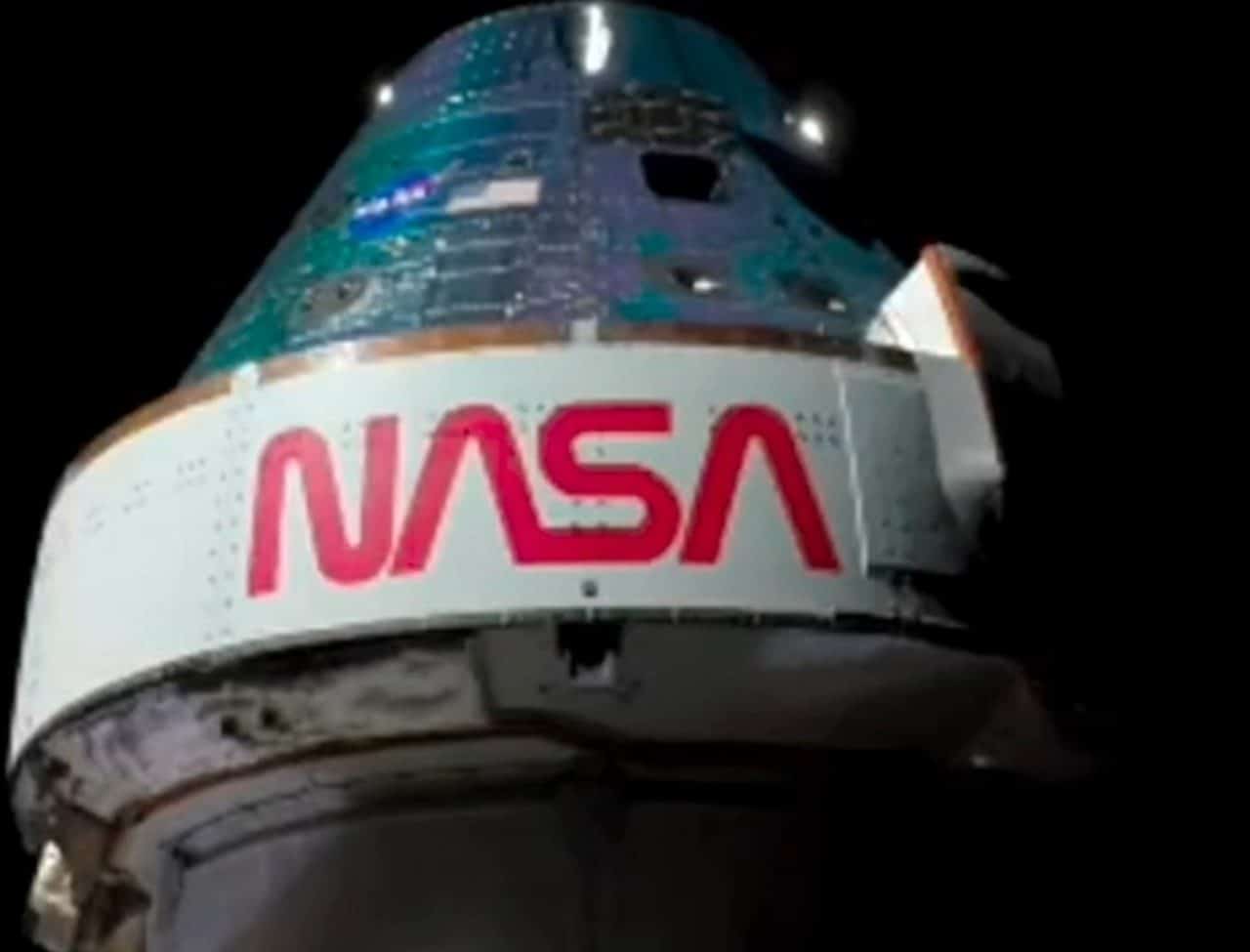
Cenas, uncommon in space exploration, gained prominence with the end of the Artemis 2 mission. Mergulhadores of Marinha of Estados Unidos, strategically positioned below the waterline, recorded the exact moment in which the Orion capsule reached the ocean. The captured material offers a profound and almost ethereal view of one of the most critical moments of the lunar flight. The photos reveal the submerged metallic structure shortly after impact with the sea surface.
The initiative is part of a rigorous monitoring protocol for Nasa to ensure the safety of future crews. Enquanto the public is accustomed to videos taken by aircraft or cameras attached to rockets, the bottom-up perspective is a technical rarity. Além of aesthetic value, visual records serve as an analysis tool for aerospace engineers. The ground team’s main focus now lies on the integrity of components that faced the extreme heat of atmospheric reentry.
Mergulhadores captures splashdown moment in rare photos
The Orion capsule rescue operation involved coordinated logistics between the space agency and naval forces. Divers were ready to intervene as soon as the command module touched the water. The images released show the capsule floating, with its lower part submerged, creating a silhouette that many experts described as mysterious. The use of underwater photography in this context is not just for historical recording, but a technical necessity for real-time observation.
The clear visibility allowed us to identify how the structure behaves immediately after the thermal and physical shock with the sea. The Orion returned from a trajectory that took it beyond the Lua, facing speeds that challenge the resistance of modern materials. Capturar the state of the vehicle while still underwater provides data that would be lost once the capsule was hoisted onto the deck of the recovery vessel.
- Posicionamento of dive teams at likely impact points.
- Uso of high-resolution cameras with waterproof housings for depth.
- Sincronia between Nasa telemetry and Marinha support buttons.
- Coleta images of the heat shield before contact with prolonged atmospheric oxygen.
Thermal Escudo of Orion is the focus of detailed analysis after damage to Artemis 1
The most observed component in these underwater photographs is, without a doubt, the capsule’s heat shield. Esse equipment is responsible for protecting astronauts from temperatures that can reach thousands of degrees during descent. In 2022, during the unmanned mission Artemis 1, the shield suffered greater wear than expected, generating concern among space program managers. For this reason, immediate visual verification on Artemis 2 became an absolute priority for the mission.
First impressions indicate that performance in the current mission was higher than previously recorded. Experts look for signs of charring or loss of material that may have occurred at specific moments during reentry. Essas underwater photos complement aerial footage captured by drones and surveillance planes. Cruzar these two angles — the sky and the sea — allow the Nasa to understand the exact timeline of the vehicle’s thermal degradation.
Dados scientific views taken from unprecedented angles under the sea
The beauty of the images evokes a sense of mystery, but the practical utility is what defines the success of the operation. The agency confirmed that the photographs make it possible to examine the vehicle in a “pure” state shortly after landing. Especialistas in ballistics and thermodynamics will review each frame over the next few weeks. The objective is to validate whether the modifications made to the shield design, following the failures of the previous mission, had the desired effect.
The Orion’s thermal protection technology is one of the most advanced ever built. If the data confirms that wear was minimal, the path to Artemis 3 will be more paved. Confidence in hardware is essential for returning humans to the lunar surface. Além of the shield, other buoyancy and sealing systems are also evaluated through the divers’ lens. Cada detail of the submerged shell tells part of the story of how the capsule survived the harsh environment of space and the final impact.
Próximos steps towards manned security validation
Nasa will now transport the Orion capsule to dry land facilities where a thorough physical inspection will be carried out. The underwater records made by Marinha will serve as a comparative basis for this process. If there are discrepancies between what was seen underwater and what was found in the laboratory, engineers will need to investigate the causes. Transparency in the dissemination of these images reinforces the commitment to public safety and the advancement of science.
The success of the recovery and the quality of the underwater images mark an advance in space mission documentation methods. Nunca Before there was such a coordinated effort to record the “post-landing” from such an immersive perspective. With Artemis 2 serving as the ultimate testbed for life support and protection systems, this visual data is a fundamental piece of the technological puzzle of modern exploration.
