

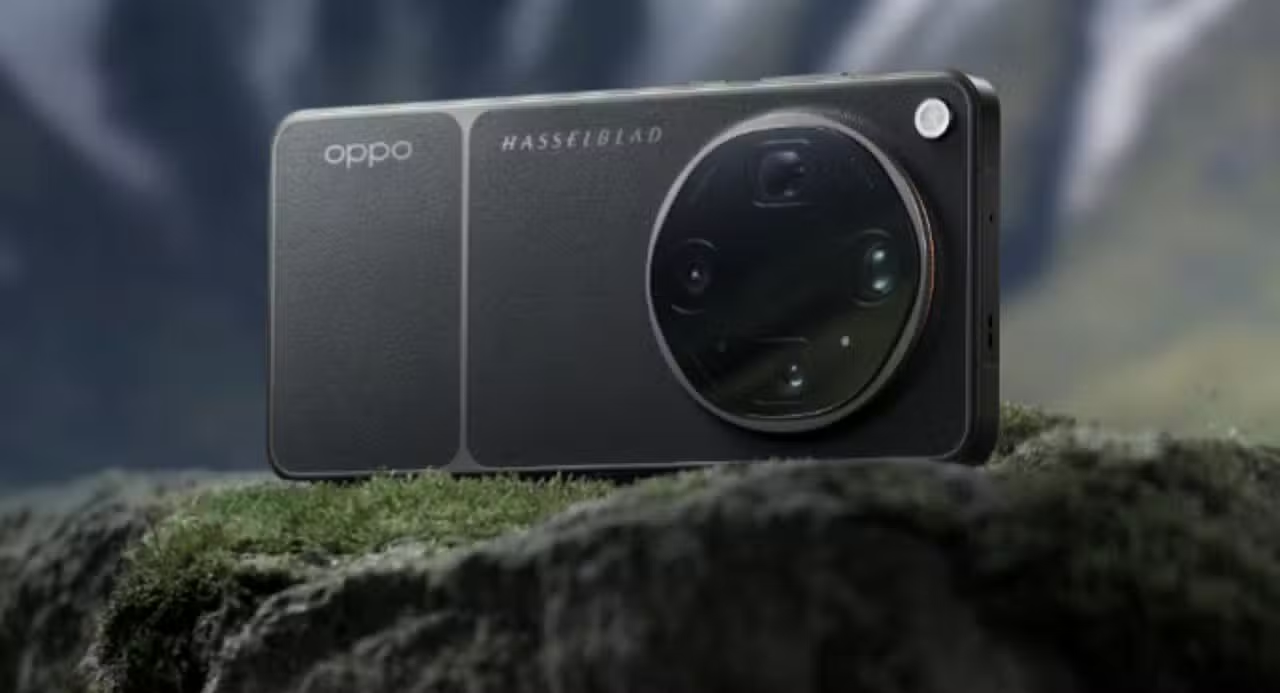
The global mobile device market receives a new reference in hardware engineering with the arrival of the latest top of the line from the Asian manufacturer. A thorough disassembly process revealed the device’s internal architecture, highlighting the complexity required to accommodate optical sensors of unprecedented dimensions. The technical procedure exposed the density of the components and confirmed the high standard specifications of the equipment.
The structural analysis demonstrates the development team’s effort to balance a robust photographic module with a very high capacity power source. The device integrates today’s most advanced processor, state-of-the-art memories and a thermal dissipation system designed to withstand extreme processing loads. The global distribution of this specific variant marks a significant change in the company’s commercial strategy for the year 2026.

Internal Engenharia prioritizes high-performance photography suite
Removing the back cover requires precision due to the strong layer of industrial adhesive used to ensure the equipment seals against water and dust. Imediatamente upon opening, the structure reveals an imposing copper coil intended for induction charging. The upper central space, however, completely dominates the visual attention of the main board. The arrangement houses four independent cameras and an additional sensor dedicated to capturing the color spectrum.
Cada optical module presents a considerable size, justifying the pronounced elevation on the external part of the chassis. Optical physics requires specific focal lengths and larger physical sensors to capture more light in dark environments. Designers needed to accommodate these parts without compromising the structural integrity of the phone. The symmetrical layout helps distribute the weight across the top of the device, ensuring a firm grip for the user.
Profissionais specialized in electronics maintenance noticed the almost total absence of empty spaces inside the chassis. The printed circuit boards were designed in irregular shapes to contour the camera modules and antenna connectors. Essa extreme compaction poses a challenge for quick repairs, but ensures the rigidity needed to protect sensitive components against accidental everyday impacts.
Autonomia extended and ultra-fast recharge system
Power supply is provided by a massive battery cell with a capacity of 7050 mAh. The inclusion of a component with this energy density in a traditional smartphone form factor requires significant advances in lithium polymer chemistry. The part takes up most of the bottom half of the phone and has dual connectors to facilitate quick input of electrical current without overloading a single circuit.
The power circuit supports a 100W input through the bottom physical port. The controller board manages power flow to prevent overheating during the initial minutes of recharging, when transfer reaches its maximum peak. The wide coil positioned over the battery allows 50W reception without the need for cables. The power management suite acts steadily to preserve long-term cell life.
The device’s energy demand is directly influenced by the high-resolution front panel. The screen uses LTPO AMOLED technology, capable of dynamically adjusting the refresh rate. The display reaches up to 144 Hz when viewing complex animations and reduces the frequency to minimum levels when reading static text. Direct communication between the screen controller and the battery optimizes daily consumption invisibly to the consumer.
Advanced Processamento for multitasking and heavy gaming
The electronic brain of the device is the Snapdragon 8 Elite Gen 5 processor, soldered into the deepest layer of the motherboard. The silicon chip contains billions of transistors responsible for carrying out complex calculations in fractions of a second. The physical proximity of the processor to the memory modules reduces latency in exchanging critical information. The component generates substantial heat under stress, requiring graphene layers and vapor chambers for efficient thermal dissipation.
The processing architecture works together with RAM memory modules in the LPDDR5X standard. The internal storage uses the UFS 4.1 interface, characterized by ultra-fast read and write rates. The combination of these three elements eliminates performance bottlenecks when editing very high-resolution videos or running three-dimensional modeling software.
- State-of-the-art Chipset for maximum energy efficiency under continuous demand.
- Fast volatile Memória focused on fluid transitions between dozens of open applications.
- High-speed solid-state Armazenamento for instant reading of large files.
- Gerenciamento advanced thermal integrated directly into the metal chassis of the device.
Storage recording speed is essential for the main cameras to function properly. Capturing multiple simultaneous frames in RAW format requires a large and stable transfer bandwidth. The memory controller operates seamlessly to prevent data loss during intense continuous outdoor photography sessions.
Asian manufacturer’s international expansion Estratégia
Historicamente, the most advanced versions of this product line remained restricted to the Chinese consumer market. The decision to distribute the model globally changes the competitive dynamics in the premium handset segment. The company seeks to attract users who are digital photography enthusiasts who traditionally opted for established brands in the West. Robust hardware serves as the main selling point in this new phase of commercial expansion.
The detailed internal construction in the disassembly procedure proves the focus on delivering real, tangible specifications. The device does not skimp on dissipation materials or structural reinforcements in critical areas of the main board. The final assembly of the equipment reflects a maturity in the company’s industrial manufacturing processes. The mobile technology market now has a strong alternative in the category of devices focused on high-fidelity image capture.