

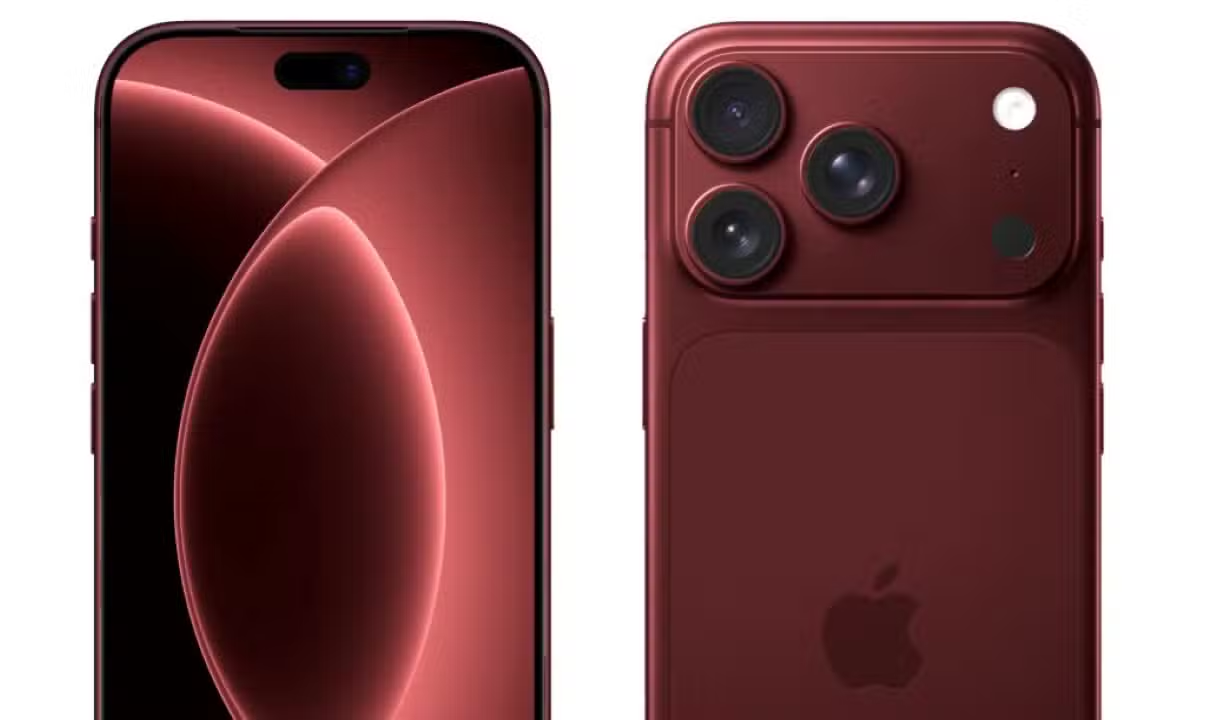
Apple has redefined the aesthetic and functional standards of its line of high-performance mobile devices. The manufacturer confirmed the arrival of the iPhone 18 Pro on the international market in September 2026. The new equipment breaks with the brand’s visual history by exposing the device’s internal components. Engenheiros hardware worked intensively on creating an unprecedented format for the premium category.
The project developed at the company’s headquarters in Cupertino required a complete redesign of the assembly line and the use of exclusive metal alloys. The structural change establishes a new level of competition in the global telecommunications sector. Consumidores seek tangible innovations in a market saturated with incremental updates. The company is betting on the transparency of the chassis and high energy capacity to attract this demanding public.
Reinforced Vidro and aerospace titanium form the new structure
Para To enable the fully transparent rear panel, the manufacturer developed a special glass alloy subjected to complex chemical treatments. The industrial process carried out in cutting-edge laboratories protects the material against natural yellowing caused by sunlight and time. The composition guarantees superior resistance against accidental falls and daily scratches. The user maintains the visual integrity of the device intact after months of continuous use in adverse conditions.
The main chassis structure uses aerospace-grade titanium. The choice provides incomparable lightness and extreme structural rigidity to the latest generation equipment. The integration between machined metal and transparent glass required the formulation of an unprecedented industrial adhesive. The chemical compound seals the device against the ingress of water and dust. The smartphone meets the most stringent protection certifications on the market without compromising the display of complex internal engineering.
The motherboard has undergone a complete redesign focused purely on visual aesthetics. The circuits and chips now feature a symmetrical alignment and blacked-out finishes to harmonize with the phone’s external design. The industrial design team had to balance the beauty of the components with the electrical efficiency necessary for the system to function. Cada piece visible through the glass has received a specific surface treatment against oxidation.
5200 mAh Bateria requires redesigned thermal system
Autonomy of use represents the biggest technical leap in this generation of mobile phones. The device houses a power cell that reaches an impressive 5200 mAh. The significant increase in volumetric capacity occurred thanks to a new internal composition architecture. The millimetric optimization of space allowed the inclusion of the high-density battery without changing the overall thickness of the smartphone.
Temperature management has become the main technical challenge with the exposure of internal components and increased energy load. The solution implemented by the engineering team involved drastic changes in the device’s heat dissipation. Structural modifications include:
- Aplicação of high-density graphene plates directly on the central processor.
- Implementação of a vapor chamber system with enlarged contact area.
- Redirecionamento of continuous thermal flow to the titanium edges of the chassis.
Essa advanced thermal structure dissipates heat generated by the main chip quickly and completely silently. The mechanism protects the rear glass panel from overheating while performing heavy tasks. The user does not feel the increase in temperature in their hands when using the equipment for long periods.
Larger Telas and 2-nanometer processor boost performance
The dimensions of the displays have undergone precise adjustments in this new iteration of the product. The standard high-performance model now offers 6.3 inches of viewable area. The largest variant reaches the 6.9-inch mark. Display engineering managed to further refine the frames around the OLED panel. Edge reduction maximizes the user’s usable viewing area. The experience becomes much more immersive when consuming videos, films and electronic games.
The most substantial change to the front interface involves the relocation of the facial recognition sensors. Biometric and brightness components now operate hidden beneath the device’s active screen. The technical modification reduced the area occupied by the traditional upper cutout by 35%. The operating system gains valuable space for displaying status icons and app notifications. Infrared light penetrates the pixel matrix without suffering optical distortions. The owner’s identity is instantly validated in any ambient lighting condition.
The core of the smartphone houses a chip manufactured using the 2 nanometer process. The component represents a historic milestone in the miniaturization of transistors in the semiconductor industry. The focus of the project is on running artificial intelligence algorithms on the device itself. The dependence on processing on cloud servers decreases drastically with this architecture. RAM memory jumped to 12 GB of total capacity. The technical specification keeps complex language models running in the background. Switching between dozens of applications and simultaneous translation tasks occurs with absolute fluidity.
Câmera with variable aperture and advanced satellite communication
The rear photographic assembly introduces a variable aperture mechanism on the main lens. The technology inherited from dedicated professional cameras allows the sensor to physically adjust the light input according to the environment. Mechanical innovation dramatically improves depth of field in portraits of people and animals. Background blur becomes authentic and natural. The sharpness of night photographs increases considerably by eliminating visual noise in dark scenes.
Todas module lenses received a new optical coating developed exclusively in the laboratory. The material mitigates unwanted reflections from direct light sources hitting the sensor. Postes street lights and vehicle headlights no longer degrade high-resolution nighttime recordings. The optical zoom system adopted an improved refraction prism in its construction. The image remains perfectly stable when filming on the move or capturing objects at long distances. The image signal processor applies artificial intelligence filters at the exact moment of the click. Distorções color and white balance are corrected even before saving the file in memory.
The communications infrastructure supports a much more robust and comprehensive satellite connection. The updated technology goes beyond simply sending text messages to emergency services. The integrated radio frequency system allows short voice calls and the sending of compressed multimedia files. Communication works perfectly in remote regions without any traditional cellular network coverage. The manufacturer has definitively removed the physical tray for carrier chips in all models. The global transition to virtual technology is complete in this generation. The Asian supply chain already calibrates assembly lines for mass production. The very high precision machinery guarantees the necessary stocks for simultaneous launch. The price in stores will reflect the high research costs of the transparent materials and internal architecture.