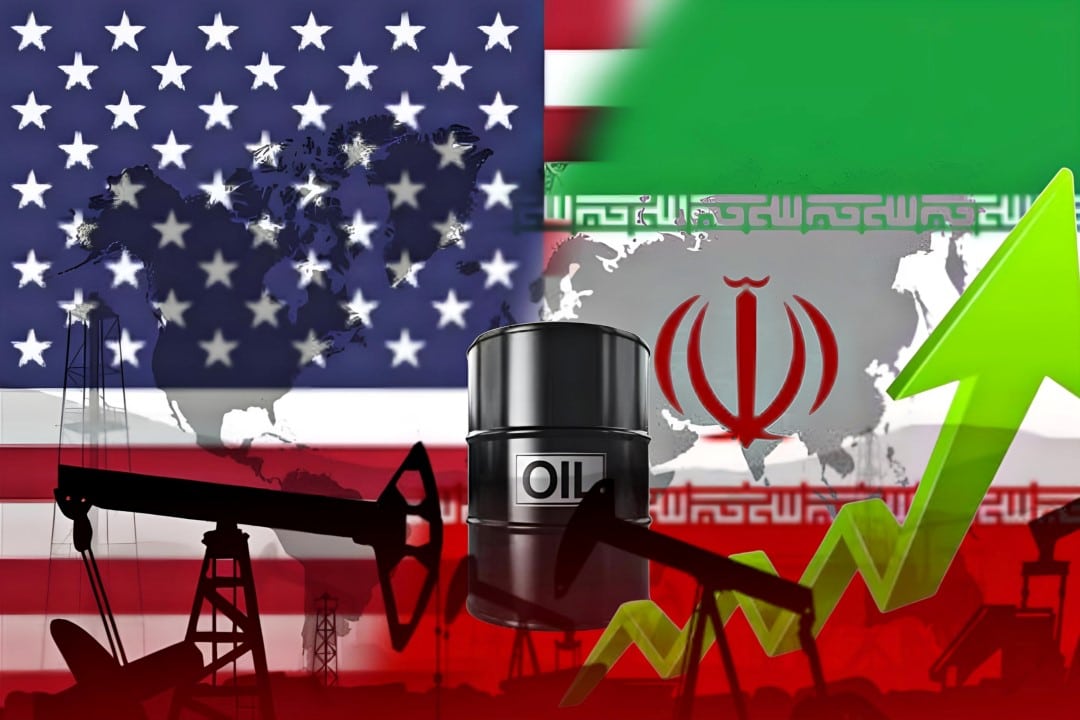
Oil prices rose this Monday. Brent, a global benchmark, gained around 2% and reached US$109.33 a barrel. The contract traded on Estados Unidos also advanced 2% to US$96.78. The move came after plans for a second round of peace talks between the US and Irã were stalled once again.
President Donald Trump reported on Saturday that Washington canceled sending a team to Paquistão. The decision followed statements by Iranian authorities about the progress of contacts with other countries in the region. Irã’s Relações Exteriores minister, Seyed Abbas Araghchi, mentioned discussions with Omã regarding safe transportation by Ormuz’s Estreito. Ele then traveled to São Petersburgo, where he met with Russian President Vladimir Putin.
Negociações paralyzed after canceling trip to Islamabad
The stoppage of direct conversations occurred over the weekend. Trump stated that a lot of time would be wasted traveling and that there was confusion in the Iranian leadership. Ele suggested that Irã could simply call if he wanted to trade.
Araghchi, in turn, indicated that important talks on bilateral and regional issues were continuing with Omã. The country neighboring the strait was highlighted as a priority by the Iranians. State news agency Irna confirmed the chancellor’s arrival to Rússia on Monday.
- Trump canceled sending messages to Islamabad
- Araghchi prioritized contacts with Omã over the strait
- Encontro in São Petersburgo included the president Putin
- Iranian Foco in safe transport to neighbors
The current impasse takes place in the midst of a conflict that has lasted around two months. The positions of the two parties remain distant on central issues. One of them involves access to Estreito from Ormuz, a crucial pathway for energy transport. The other concerns demands related to Iran’s nuclear program.
Estreito of Ormuz remains a central point of tension in global supply
Cerca of one-fifth of the world’s crude oil and liquefied natural gas normally passes through Estreito of Ormuz. The current conflict has kept the waterway under severe pressure since hostilities began. The global energy supply suffered direct impacts with the effective closure of the route.
Analistas note that the ongoing blockade could affect not only crude oil but also derivative products used in everyday life. A portfolio manager at BNP Paribas commented that the shortage affects everything from garbage bags to medicines. Ela warned of wide-ranging effects on the supply chain if the situation drags on for weeks.
Professor Goh Jing Rong, of Universidade of Gestão of Singapura, said that negotiators await concrete evidence of relief in the conflict. Fragile and reversible Acordos are not enough to change market sentiment, according to him.
Comerciantes seem less reactive to isolated news at this time. Eles look for more solid signals before adjusting positions more aggressively.
Reação on international exchanges varies by region and reflects uncertainty
Na Ásia, the main indices closed higher this Monday. Japão’s Nikkei 225 rose 1.38%. Kospi, in Coreia of Sul, advanced 2.15%. Ambas the exchanges accumulated significant gains in the last month, even with the energy dependence of Golfo Pérsico.
Na Europa, the movement was more moderate at the opening of trading sessions. Londres’s FTSE 100 fell 0.18%. The French Cac was stable, while the German Dax registered a slight increase of 0.13%. Investors closely monitor developments in Oriente Médio and assess risks to supply chains.
The conflict has already generated significant variations in global markets in recent weeks. Algumas Asian stock exchanges reached recent records despite initial pressure caused by the interruption in energy flow.
Impacto in Derivatives and Global Supply Chain Gains Expert Attention
Crude oil is not consumed directly most of the time. Markets react mainly to derivatives, such as fuels, plastics and chemical inputs. Especialistas point out that prolonged restrictions in the strait increase costs in various sectors of the economy.
The current pressure adds to other logistical restrictions observed since the beginning of the conflict. Navios face difficulties crossing the region, which reduces the available supply in the short term.
Empresas that depend on maritime transport via Oriente Médio are already reporting adjustments to routes and stocks. The increase in derivative prices could reach end consumers in different countries over the next few weeks.
Iranian Diplomacia intensifies contacts with mediators and allies
Araghchi made a quick sequence of visits in the last few days. Ele went through Islamabad, then Omã and then Rússia. At each stop, the focus included ways to ensure safe transportation that benefits neighbors and international trade.
The Iranian Foreign Minister reinforced that safe transport through the strait benefits everyone involved. The statement came as he intensified diplomatic contacts in different capitals.
The trip to São Petersburgo aims to align positions with Rússia on regional and international issues. Iranian Autoridades describe the meeting with Putin as part of close consultations between Teerã and Moscou.
Analistas assess risks of prolonging the impasse for the world economy
The closure of Estreito from Ormuz represents one of the biggest current risks to global energy supplies. Qualquer prolonged disruption could have cascading effects on inflation, transportation costs and industrial production in several regions.
Gestores of funds and economists monitor the remaining traffic volume on the route. Eles calculate scenarios where the conflict lasts for a few more weeks or months.
Alguns experts remember that oil is not the only item affected. Derivados used in packaging, pharmaceuticals and manufacturing also face supply pressure.
The market still maintains some hope that the parties will be able to resume direct dialogues soon. However, skepticism predominates among participants who demand concrete proof of progress.
Recent Histórico shows price fluctuations as per diplomatic signals
Nas In recent weeks, oil prices have alternated between highs and slight declines. Momentos’s optimism over possible talks led to temporary pullbacks. Frustrações with cancellations or hardened positions provoked rebounds.
Brent has gained more than 10% since the ceasefire extension was announced last week. The move reflects the assessment that the Estreito to Ormuz pathway remains blocked in practice.
Participantes from the market note that the effective volume of Iranian exports has fallen sharply. The combination of actions on both sides contributes to the current tension in maritime logistics.
Próximos steps depend on concrete responses from Washington and Teerã
The Iranian government maintains that discussions with mediators such as Omã and Paquistão remain ongoing. Autoridades and Teerã emphasize the importance of ensuring security for regional transport.
Do American side, recent statements indicate willingness for dialogue, but with clear demands on free flow in the strait. President Trump mentioned that Irã can contact directly if he wishes to advance negotiations.
Especialistas in international relations assesses that the involvement of third countries can help create indirect channels. However, real progress requires mutual concessions on sensitive issues.
The international community is following developments closely. Qualquer signal of full reopening of the maritime route tends to influence prices of energy and related assets.