

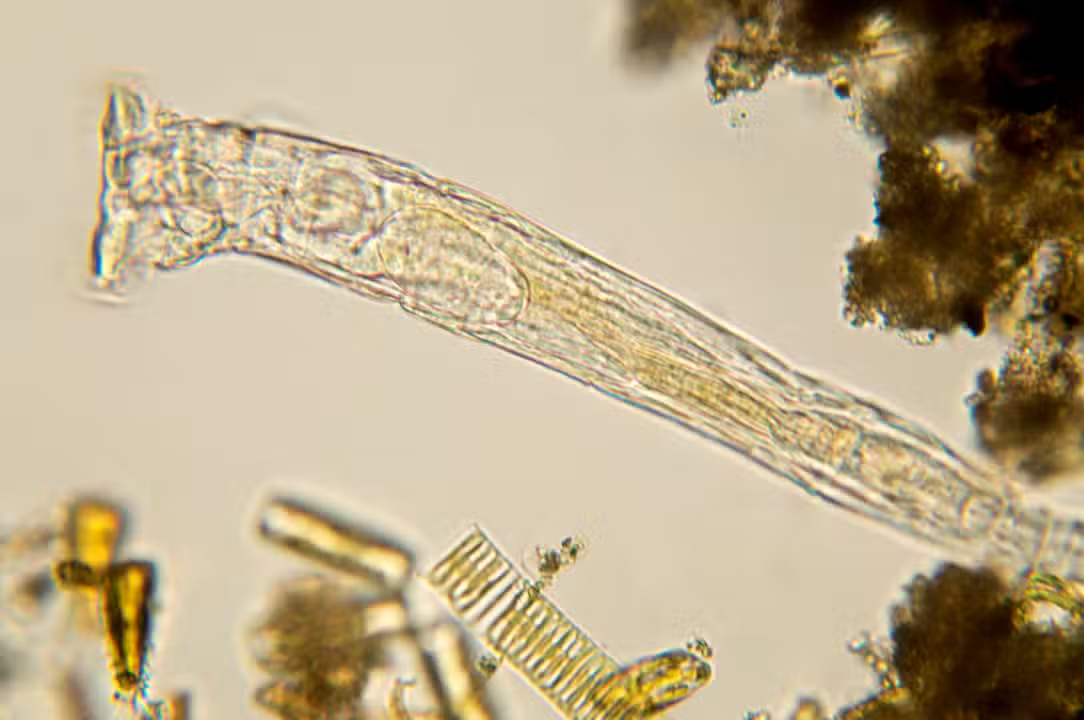
A microscopic organism known as a rotifer has been reanimated after spending 24,000 years frozen in the permafrost of Sibéria. The animal resumed biological functions and reproduced asexually in the laboratory. The discovery came from samples collected in deep layers of the Yedoma geological formation in northeastern Russia.
Pesquisadores from the soil cryology laboratory worked with material dated from Pleistoceno Superior. The glacial period ended around 11,700 years ago. The specimen belongs to a group of bdelloid rotifers, tiny multicellular animals common in freshwater and known for their resistance.
Amostra came from a depth of 3.5 meters in the river region Alazeya
Cientistas extracted the soil core 3.5 meters deep in the Alazeya river basin, northeast of Sibéria. Radiocarbon dating indicated an age between 23,960 and 24,485 years. Yedoma permafrost preserved material thanks to rich ice and organic matter.
- The location is at 69.338889°N, 154.996944°E
- Técnicas extraction system avoided contamination of upper layers
- Análise of actin genes confirmed presence of the rotifer in the metagenome
- The ground has remained frozen since syncryogenic formation
The thawing process took place under strictly controlled conditions. The rotifer resumed movements and metabolic functions. It then produced offspring through parthenogenesis, maleless reproduction typical of the species.
Criptobiose allowed survival for tens of thousands of years
The state called cryptobiosis reduces metabolism to almost zero. The animal resists extreme cold, lack of oxygen and dehydration. Pesquisadores highlight that this is the longest recorded case of frozen rotifer survival. Unicellular Organismos have previously shown similar resistance, but multicellular cases are rare.
Lead researcher Stas Malavin commented on the finding. Ele pointed to the result as concrete proof of the ability of multicellular animals to withstand long periods in suspension. Previous Experimentos with the same species indicated survival of up to a decade at -20°C. Agora the limit extends much further.
Estudo opens discussions on permafrost thaw and environmental risks
The accelerated melting of permafrost can release ancient microorganisms. Especialistas monitor possible impacts on ecosystems and human health, although there are no signs of an immediate threat in this case. The focus remains on understanding cellular mechanisms of resistance.
The research also contributes to fields such as biotechnology and astrobiology. Cientistas investigate how long life can remain viable in extreme conditions, including on other planets. Rotíferos bdeloids serve as a model for their simplicity and robustness.
Rotíferos bdelloids were already studied for stress tolerance
Esses animals survive radiation, vacuum and subzero temperatures. The discovery reinforces interest in its biochemical adaptations. Russian and international Equipes analyzes continue to map genes involved in cryptobiosis. Nenhuma evidence suggests that more complex animals, such as mammals, support similar processes.
The work was published in the magazine Current Biology. Ele adds to previous records of Ártico revived organisms but extends the documented viability time.