

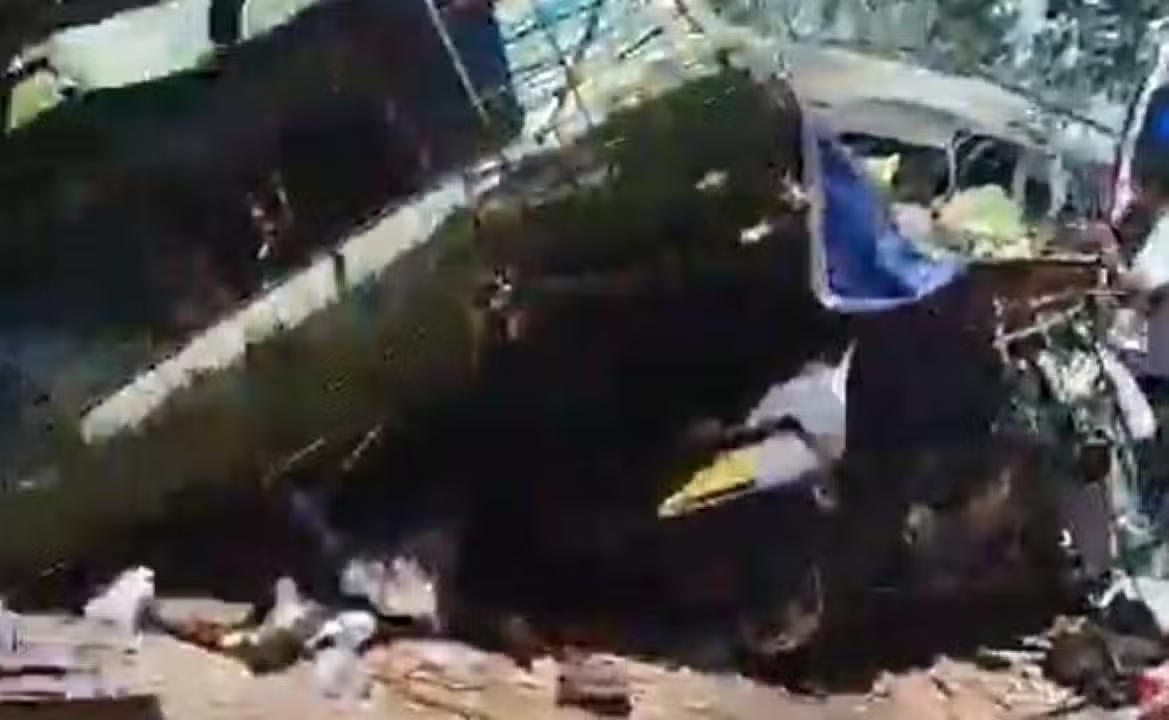
Iván Mordisco commands the most powerful splinter faction of Forças Armadas Revolucionárias from Colômbia and has established itself as the main threat to Gustavo Petro’s government. Seu group, known as Estado-Major Central, brings together around 3,200 fighters financed by drug trafficking, illegal mining and extortion. Over the weekend, his men carried out at least 31 attacks in southwestern Colombia, leaving 21 civilians dead and 56 injured in a roadside bomb.
The Colombian president has compared him to Pablo Escobar since the guerrilla abandoned peace negotiations in 2024. Mordisco uses explosives and drones as a trademark of its operations, carrying out shows of force on the eve of the country’s general elections. Seu’s real name is Néstor Gregorio and, in the eyes of Petro, he represents the continuation of the conflict that has marked Colômbia for over 60 years.
From teenager to elite commander
Mordisco joined the guerrillas when he was still a teenager and gained fame among fighters for his skill with rifles and explosives. Especialista in weapons, he became a respected sniper in the ranks of the Farc. Sua’s technical proficiency and leadership on the battlefield allowed him to advance through the group’s hierarchical ranks.
Quando as Forças Armadas Revolucionárias laid down their arms in 2016 to become a political party, Mordisco made a radical decision. Ele refused to sign the peace agreement that disarmed most of the guerrilla organization and granted amnesty to its former members. Instead, he remained in the jungle with his most loyal followers, sowing terror in rural communities.
Jorge Mantilla, a conflict researcher, described Mordisco’s position in Farc as intermediate. “He was a mid-level commander. Nunca was among the historical commanders, but his military experience and his initial opposition to the negotiations gave him significant legitimacy,” Mantilla told AFP. Sua’s refusal to lay down arms and his determination to keep the armed struggle alive have made him a central figure for dissidents.
https://twitter.com/ecuainm_oficial/status/2049091616246305116?ref_src=twsrc%5Etfw
The break with negotiations
Mordisco did not attend the 2016 peace talks held on Havana and made it clear from the beginning that he would not lay down his weapons. Seu’s former top commander, Iván Márquez, sent a leader known as Gentil Duarte to convince him to join the peace process with then-president Juan Manuel Santos.
The strategy failed. Duarte joined Mordisco instead of convincing him, and they both abandoned the pact. Para Mordisco, the agreement represented a “death” and “dispossession”. Ele believed that the treaty would only benefit the Farc leadership while leaving rank-and-file fighters unprotected and vulnerable. Sua ideological resistance positioned him as the legitimate heir to the original Marxist revolutionary project.
Como leader of Estado-Greater Central, Mordisco prevented Colômbia’s Forças Armadas Revolucionárias acronym from disappearing completely. Seus fighters consider themselves direct heirs of the group’s historic struggle and venerate its main political and military figures. Dissent has gained structural strength and financial resources over the years.
The public reappearance and breakup with Petro
In April 2023, Mordisco made his only known public appearance in a dense jungle area. Chegou aboard a luxury armored SUV to announce the start of negotiations with Petro, who had assumed the presidency months earlier with promises of dialogue. Vestia wore his characteristic dark glasses and carried an Israeli-made Tavor X95 rifle, a symbol of his military power.
Negotiations were short-lived. In 2024, Mordisco definitively broke with the Petro government. The president, in response, spared no criticism and called him a “traqueto”, a colloquial term for drug traffickers in Colômbia. “I want Iván Mordisco captured alive, not dead,” declared Petro, launching a relentless hunt with million-dollar rewards. The government offered substantial sums for information leading to the capture of the guerrilla.
Petro identifies him as responsible for strengthening dissident groups through illicit business, forced recruitment and grooming of impoverished young people on platforms such as TikTok. As Forças Armadas estimate that Mordisco’s faction has grown exponentially in weapons, resources, and fighters since the collapse of peace negotiations.
Ataques, reputation and death announced
Mordisco has gained a reputation as a ruthless commander who orders executions for treason or corruption within his ranks. Pesquisadores of Colombian violence describe him as brutal and determined in imposing discipline. In videos published online, he claims to be “on the side of the poor” and presents himself as a defender of the environment, a speech that radically contrasts with his actions.
This weekend’s coordinated attacks exemplify its operational capabilities. Drones explosives and car bombs became the hallmark of its military operations. The 31 simultaneous assaults in southwestern Colombia over the weekend, timed to coincide with the May 31 general elections, aimed to demonstrate political and military strength.
Mordisco’s death was announced on several occasions. In 2022, Iván Duque’s right-wing government officially announced his death. Semanas later, the rebel reappeared in a video that circulated among his followers, denying the government’s claims. Esse’s pattern of announced death and strategic reappearance reinforced his mystique among followers and demonstrated the ability to evade large-scale military operations.
The financing of war
Estado-Major Central of Mordisco finances its operations through multiple criminal activities. Cocaine trafficking remains the main source of income, taking advantage of the strategic location of its territories in producing regions. Mineração illegal gold and other minerals generates significant revenue. Extorsão system of rural communities, traders and small producers constitutes a territorial control and collection mechanism.
The combination of these financial flows allows Mordisco to maintain a military structure with approximately 3,200 equipped and regularly paid fighters. Diferentemente of criminal groups that prioritize profit, Mordisco invests in heavy weapons, drones, sophisticated explosives and training infrastructure. Sua faction therefore represents a substantial military challenge to the Colombian Estado, not just a traditional criminal organization.
The electoral threat
Petro considers Mordisco the main threat to the national security of a country immersed in more than six decades of conflict between guerrillas, paramilitaries, drug traffickers and Estado agents. The timing of this weekend’s attacks, just before general elections scheduled for May 31, is no coincidence. Mordisco seeks to influence Colombian political dynamics through displays of force and terror.
Seus simultaneous attacks, involving high-powered explosives on highways, coordination between multiple detachments and use of technology (drones), reveal operational sophistication. The government responds with military operations, offering rewards and street diplomacy. Petro promised to intensify efforts to capture him, raising the priority of public security.
The question remains open: will the Colombian Estado be able to neutralize Mordisco before he manages to definitively defeat the peace efforts begun decades ago? Sua’s stay in the jungle, as the ideological heir of Farc and leader of a growing armed faction, represents a partial failure of the 2016 agreement and an ongoing challenge to regional stability.