

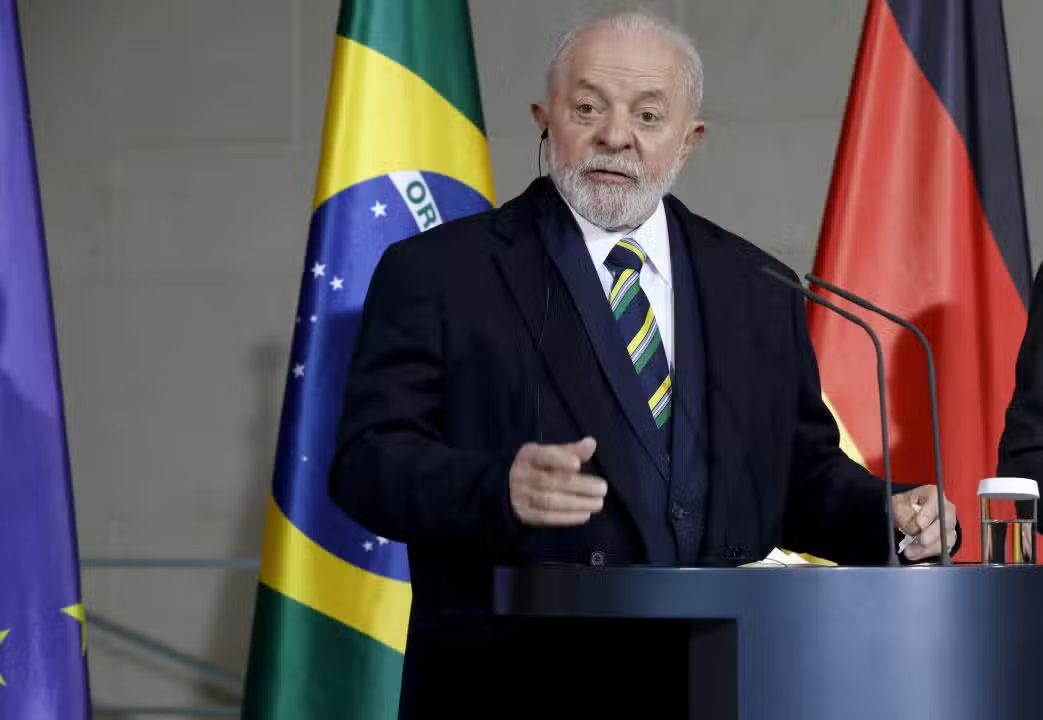
President Luiz Inácio Lula of Silva signed this Tuesday (28) the decree that formalizes the free trade agreement between Mercosul and União Europeia. The promulgation ends Brazilian internal procedures and allows the treaty to enter into force provisionally from May 1st. The measure paves the way for one of the largest free trade zones in the world, involving around 720 million people and economies totaling more than US$20 trillion.
Negociado for 27 years, the agreement gradually reduces trade tariffs and expands access for Brazilian products to the European market. On the other hand, European goods and services gain greater space in Brasil. The expectation is to increase competition and encourage investments in different economic sectors.
Decreto ready after Congresso approval
Congresso Nacional approved the text of the treaty and the exchange of notifications between Brasil and União Europeia was completed. With these steps completed, the presidential signature of the decree allows provisional application to begin in May. Full entry into force still depends on internal ratification by each member of Mercosul according to their own legislative processes.
Durante the signing speech, Lula highlighted the difficulty of the negotiations. Segundo the president, agreements imposed by developed countries on developing countries advance quickly, but when emerging nations claim rights, they encounter more obstacles. “The agreement was made with iron, sweat and blood,” he stated.
Lula also cited global trade tensions. Diante of the tariffs imposed by American President Donald Trump last year, Brasil sought new trading partners. “It’s full of people wanting to sell, people wanting to buy,” said the president, reinforcing that Brasil negotiates on equal terms as a great economic power.
Impactos in Brazilian and European trade
The gradual implementation of the agreement should directly impact Brazilian foreign trade. Importações and exports will have tariff reductions, expanding opportunities for national producers to access the European market. Setores such as agriculture, manufacturing and services are expected to feel the changes with greater competition and foreign investment.
Especialistas point out that the measure reinforces multilateralism in a context of international protectionism. The agreement offers a counterbalance to the protectionist policies of other developed countries. Para or Brasil means diversification of partners and reduction of vulnerability to unilateral commercial pressures.
The enactment comes after months of political pressure. The Brazilian presidency of Mercosul had the conclusion of the treaty as a strategic priority. The agreement was signed in January this year during the Paraguayan presidency of the bloc, consolidating negotiations that spanned governments of multiple administrations.
Resistência on Europa
Apesar advances, the agreement faces resistance within União Europeia, especially from countries and sectors linked to agriculture. França, the bloc’s largest agricultural producer, expressed concerns. The French Agricultura minister, Annie Genevard, signaled that the country could adopt unilateral measures if the agricultural and livestock sector is harmed by the treaty.
Agricultores Europeans have been protesting since the final negotiation. Temeiam that Mercosul products, particularly South American meat and grains, enter the European market massively, reducing prices and local competitiveness. Mesmo with this pressure, Parlamento Europeu advanced in approval, allowing the provisional application to begin.
Environmental Questões also generate voltage. Grupos Europeans are concerned about environmental conservation standards in South American countries, particularly related to biomes like Amazônia. União Europeia negotiated environmental clauses in the agreement, but critics question whether they are sufficient.
Implementation Cronograma
The next steps involve:
- May 1st: start of provisional application in Brasil
- Junho to December: Mercosul countries ratify internally according to their own legislative processes
- Após full ratification: full entry into force of the treaty
- Período transition: gradual application of trade rules while European ratification remains under discussion
The initial application can be done partially. Isso means that not all clauses come into force simultaneously. Conforme executive procedures progress between blocks, new commercial rules are progressively activated. No Parlamento Europeu, the full ratification process must still undergo additional votes and legislative analysis.
Provisional entry into force is a common mechanism in complex commercial treaties. Permite that countries begin to enjoy immediate benefits as legislative institutions complete formal procedures. In the case of Mercosul-União Europeia, it reduces economic delays caused by administrative bureaucracy.
political and economic Contexto
The agreement represents a Brazilian diplomatic victory in an environment of growing international protectionism. Enquanto developed powers erect tariff barriers, Brasil advances in strategic trade opening with partners of similar economic weight. The measure consolidates Lula’s position in the resumption of multilateralism as an alternative to unilateralism.
Para to União Europeia, the agreement reinforces its position as a competitive commercial block compared to Estados Unidos and China. Apesar Despite internal resistance, European leaders recognize the importance of expanding markets and ensuring a diversified supply of raw materials, food and manufactured goods.
Analistas highlight that the provisional implementation in May marks a turning point in hemispheric trade relations. If the initial impacts are positive for both sides, full ratification should proceed with less political resistance. If significant trade problems were to arise, countries like França could intensify opposition to final ratification.