

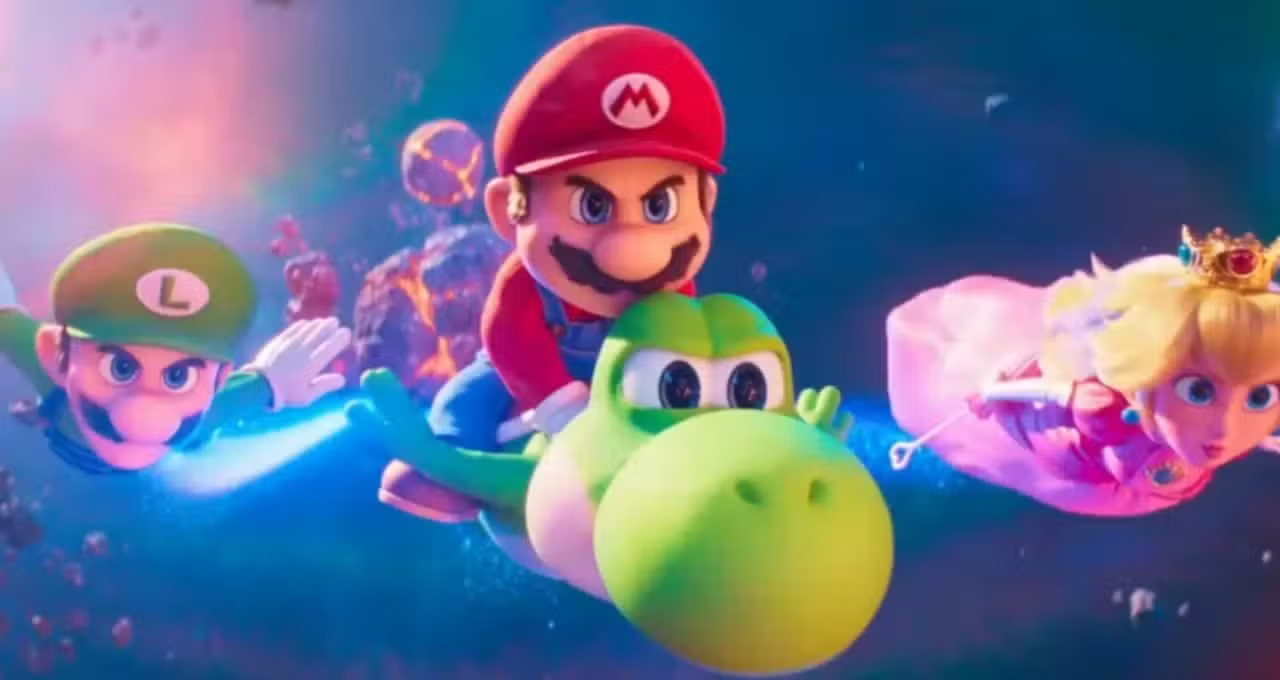
The film Super Mario Galaxy arrived in theaters generating polarized opinions among critics and spectators. Enquanto some praise the visual fidelity to the game’s universe, others question the narrative structure and character development. The division reflects common tensions in adaptations of interactive material for the big screen, where gameplay and storytelling follow different logics.
The production brought together recognized studios and had a significant budget, signaling a robust commercial commitment to the Mario universe. Críticos point out that the central difficulty lies in transposing the tactile and exploratory experience of the game into a linear film format. The challenge is not new in Hollywood, but it resurfaces with force in this specific adaptation.

What divides criticism about the narrative
Críticos point out specific aspects that justify the mixed reception:
- Ritmo uneven between action sequences and dialogue scenes
- Desenvolvimento limited cast of secondary characters
- Estrutura from act three considered predictable by some analysts
- Equilíbrio questioned between family humor and adult appeal
- Cenas exploits that work visually but don’t clearly advance the plot
Alguns reviewers highlight that the film prioritizes stunning visual landscapes over emotional depth. Outros argue that this aesthetic choice remains faithful to the playful spirit of the source material. The divergence suggests that different audiences expected different narrative priorities.
Elementos technicians and production face contradictory analysis
The photography direction earned almost unanimous praise, with critics highlighting the vibrant color palette and the representation of cosmic scenarios. Sequências of action in varied environments — from rocky planets to artificial structures — demonstrates rare visual ambition in game adaptations. Som and sound design accompanied the visual quality, with an original soundtrack that refers to the classic themes of the Nintendo franchise.
Contudo, analysts question whether investment in visual production compensated for debatable narrative choices. Alguns critics mention that the camera eventually prioritizes contemplation over dynamic movement, contradicting expectations of an action film based on a platform game. Esses notes vary depending on the critic’s previous experience with the franchise.
Recepção from the public versus specialized critics
Dados’s initial viewership numbers show moderate numbers, suggesting that video game and movie audiences have not yet completely converged around the production. Espectadores who grew up playing Mario express nostalgia for visual and sound aspects, but point out a lack of interactive elements that made the games engaging. Críticos of cinema, on the other hand, evaluate the work within the science fiction and adventure genre, using different criteria.
Redes social displays fragmented reactions. One segment celebrates the adaptation as a significant cultural event for the games industry. Outro, a more skeptical segment, sees the production as an example of the difficulties inherent in transposing game experiences into traditional formats. Essa polarization is not accidental, but a reflection of genuinely different expectations between audience groups.
Análise of context: why game adaptations face this divide
Videogames like Super Mario Galaxy offer non-linear structure that conventional films do not replicate. The player determines speed, exploration routes and time spent in specific scenarios. A film, by essence, imposes linearity and a fixed rhythm. Essa fundamental difference explains why adaptations often seem “incomplete” to fans of the source material, regardless of the technical quality achieved.
Críticos mention that the success of a game adaptation depends less on literal fidelity and more on capturing the thematic essence. Super Mario Galaxy, in this sense, faces judgment on whether it managed to preserve the game’s playful and adventurous spirit while constructing coherent cinematic narrative. Respostas divergences suggest that the production achieved partial success in this objective, pleasing some viewers and leaving others dissatisfied.
Tendência in the game film adaptation market
The critical division over Super Mario Galaxy is part of a broader trajectory. Nos In the last five years, adaptations of video game franchises have represented an increasing volume of film production. Investimento in specialized studios and high budgets reveal the industry’s confidence in the commercial potential of this segment. Contudo, critical results have remained inconsistent, with some titles achieving positive consensus while others face mixed or negative reception.
Analistas media point out that audiences are becoming more demanding with adaptations, refusing to accept direct reproductions when an interactive element is absent. Simultaneamente, filmmakers explore new visual languages to compensate for this gap. Super Mario Galaxy represents an attempt in this direction, resulting in a visually ambitious film that does not fully meet any group’s criteria.