

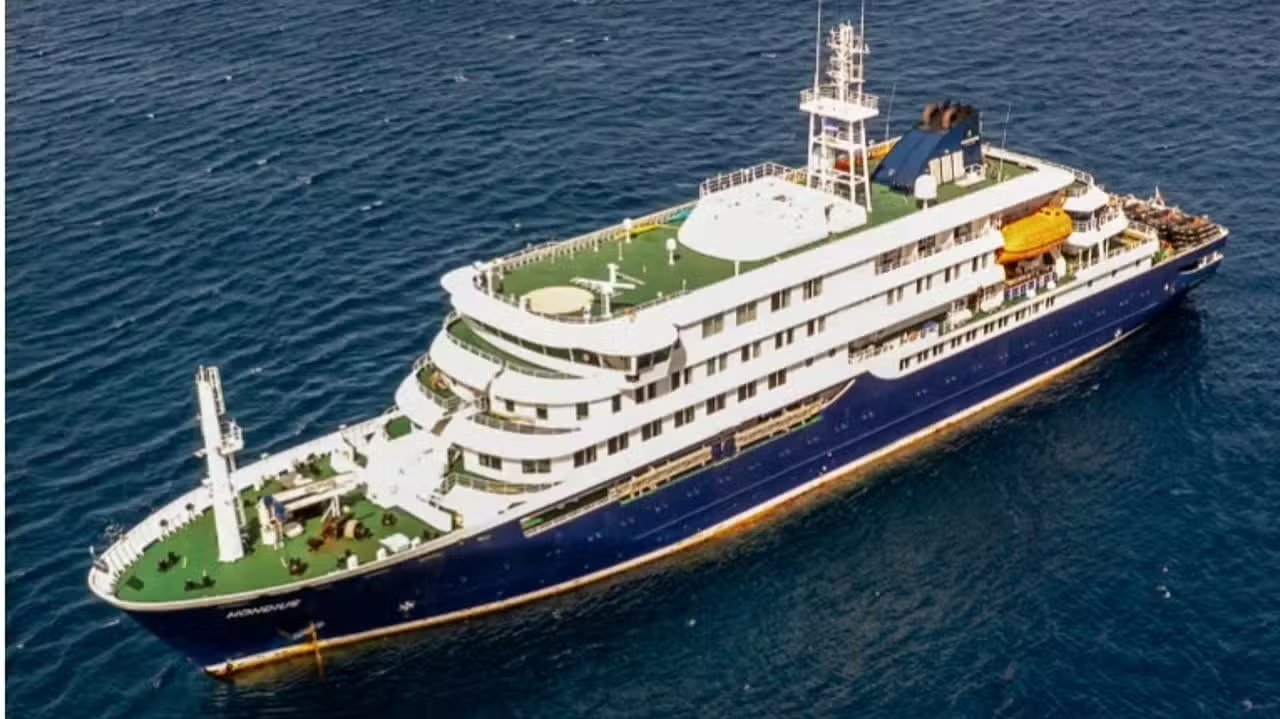
Três people have died following a suspected hantavirus outbreak aboard a cruise ship sailing Atlântico, as reported on Sunday, May 3, 2026. Organização Mundial of Saúde (WHO) confirmed one case of hantavirus infection, with another five cases considered suspicious. A 69-year-old British national was admitted to an intensive care unit at África of Sul. The vessel, MV Hondius, operated by the Dutch company Oceanwide Expeditions, was traveling between Argentina and Cabo Verde when the cases were reported.
Vítimas and initial details of the outbreak
The confirmation of the hantavirus outbreak generated alerts from international health authorities. Of the six people affected, three did not resist the disease. Entre the deceased, a couple aged 70 and 69, were identified, although their nationalities were not officially disclosed. A source close to the case, however, indicated that they were of Dutch origin. The first passenger to develop symptoms, the 70-year-old man, died on board the ship, and his body remains on the island of Santa Helena, a British territory in Atlântico Sul.
Sua’s wife, aged 69, also fell ill during the trip and was evacuated to a hospital in Joanesburgo, África of Sul, where she died. The third victim was still on the ship until Sunday night. A 69-year-old British passenger was also evacuated to Joanesburgo and is receiving intensive treatment. Anteriormente, the South African Saúde’s Ministério had reported a “severe acute respiratory illness” that resulted in two deaths and left a third person in ICU. The patient treated at Joanesburgo tested positive for hantavirus, according to the Foster Mohale spokesperson.
Ação of authorities and international coordination
Organização Mundial of Saúde (WHO) is coordinating efforts between national authorities and the ship operator. The main objective is to facilitate the safe medical evacuation of passengers with more serious symptoms. Discussões are underway to determine the isolation of two additional sick passengers in hospitals on Cabo Verde. Após this stage, the MV Hondius must go to the Ilhas Canárias, in the Espanha.
Ministério of Relações Exteriores of Reino Unido stated that he is closely monitoring reports of a possible hantavirus outbreak aboard the ship Hondius. The ministry stated that it is ready to offer support to British citizens, if necessary. The agency maintains direct contact with the cruise company and local authorities, seeking to ensure adequate assistance and monitor the development of the health situation. Essa cooperation is vital to managing a public health crisis on an international scale.
The ship MV Hondius and its itinerary
The MV Hondius is described as a polar cruise ship on the websites of several travel agencies. Ele has a capacity for approximately 170 passengers, in addition to 70 crew members. The vessel is known for offering itineraries in polar and remote regions.
- Passenger Capacidade:170 people
- Membros from the crew:70 people
- Operadora:Oceanwide Expeditions (Holanda)
- Current Itinerário:Entre Ushuaia (Argentina) and Cabo Verde
- Paradas planned:Ilhas Geórgia of Sul and Santa Helena
- Later Destino:Ilhas Canárias (Espanha)
- Recent Localização:Próximo to port Praia, Cabo Verde, on Sunday.
Oceanwide Expeditions, the Dutch company responsible for operating the ship, has not publicly commented on the incidents that occurred. Essa lack of communication adds a layer of uncertainty to the situation as health authorities work to contain the spread of the disease and ensure the safety of everyone on board and ashore. The complexity of managing an outbreak in a maritime environment requires precise and rapid coordination.
Hantavirus Características and forms of contagion
Hantavirus is a family of viruses that can cause serious illnesses in humans, including hemorrhagic fever with renal syndrome and hantavirus pulmonary syndrome. Estas conditions affect the lungs and kidneys and can lead to serious complications and, in extreme cases, death. The severity of symptoms varies, but the infection can progress quickly.
The most common way to contract hantavirus is through contact with urine, feces or saliva from infected rodents. The virus can be inhaled in aerosol particles present in the air, especially in closed and poorly ventilated environments where these animals are present. In rare situations, transmission between people can occur, although it is not the main route of contagion. Rapid identification and isolation of cases are crucial to prevent spread in confined environments such as a ship.