

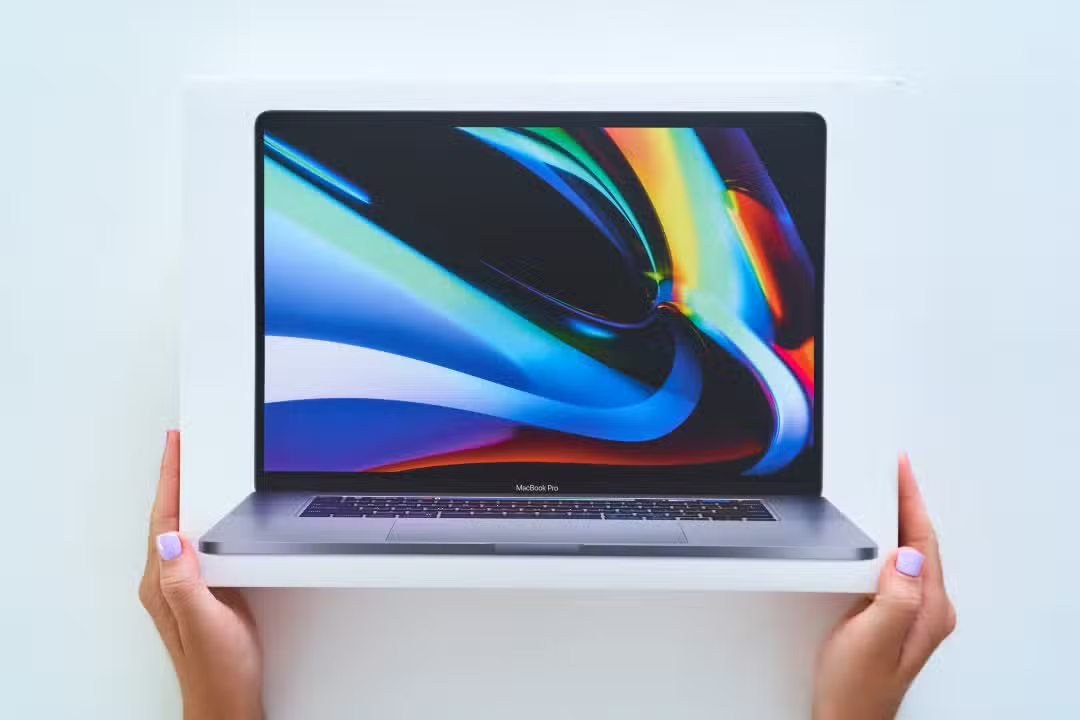
Technology giant Apple has officially confirmed that the macOS 27 operating system will work exclusively on computers equipped with Apple Silicon line processors. The update scheduled for September marks the definitive end of support for machines based on the Intel architecture. The movement consolidates a hardware transition started six years ago by the manufacturer. The change affects thousands of users around the world.
The previous version of the software, known as macOS 26 Tahoe, will maintain compatibility with older chips for a set period of time. The new guideline directly affects owners of equipment launched until the beginning of 2020. Analistas on the market were already awaiting this structural change in the company’s computer line. The end of the Intel cycle in the brand’s systems changes the dynamics of application development and forces a renewal in the technology park of many companies.
The end of an era for the brand’s computers
The process of abandoning the x86 architecture began gradually with the introduction of the M1 chip. The company established a long timeline to avoid abrupt disruptions to customers’ workflow. Iconic Computadores like the early 2020 MacBook Pro will not receive the new operating system. The same fate awaits the 2020 iMac 5K models and the powerful 2019 Mac Pro. The technical decision is based on the fundamental difference in operation between the processors.
The manufacturer focused its efforts on optimizing the energy and thermal performance provided by the ARM architecture. The Apple Silicon line chips integrate CPU, GPU and unified memory into a single component. Essa structure allows for faster communication between computer parts. Maintaining a dual operating system required massive engineering resources. Cutting support simplifies the macOS 27 source code.
Usuários of older machines will not be completely destitute in the short term. Apple has a track record of providing security updates to previous operating systems for an average of two to three years. Vulnerability fixes will continue to arrive in macOS 26 Tahoe. Novas visual functions and productivity tools will be restricted to the latest equipment. The used computer market is expected to record a drop in the resale value of models with an Intel processor in the coming weeks.
Fim from Rosetta translator and the direct impact on developers
One of the most profound changes in macOS 27 is the complete removal of Rosetta 2. The tool worked as an invisible translator within the system. The feature allowed applications originally written for Intel processors to run smoothly on the new ARM chips. Technology was key during the early years of the transition. Permanently deleting code changes the landscape for software creators.
- Softwares not optimized for ARM architecture will stop working immediately.
- The Rosetta 2 code translator will be completely removed from the operating system.
- Desenvolvedores had years of notice to adapt their programs natively.
- Gigantes like Adobe, Microsoft and Autodesk already run natively on current chips.
- Legacy Aplicativos without recent updates will irreversibly lose compatibility.
The absence of the translator means that smaller development studios will need to update their catalogs quickly. Muitos Older games and niche tools relied exclusively on Rosetta 2 to run on modern computers. Apple communicated the decision to programmers to avoid surprises. The focus now falls on energy efficiency and the raw performance that only native applications can extract from M-series processors.
Lista of equipment compatible with the new system
The list of computers approved to receive macOS 27 covers a wide range of devices released in recent years. The entry line is guaranteed with support for MacBook Air models equipped with chips from the M1 to the recent M5. Notebooks aimed at professionals, including the entire MacBook Pro family with M series processors, will also receive the free update. The transition covers desktop computers from different categories.
The iMac, reformulated with an ultra-thin design, will run the system in versions with M1, M3 and M4. The compact Mac mini maintains compatibility across all its iterations, from the original M1 to more robust configurations with the M4 Pro. High-performance work Estações were not left out of the official list. The Mac Studio and Mac Pro equipped with the M2 Ultra chip complete the supported ecosystem. The broad coverage demonstrates the rapid adoption of the new architecture by the consumer base.
Modelos prior to this list officially enters the primary software obsolescence phase. The company advises corporate customers to plan the replacement of old fleets. The life cycle of a computer in the business environment usually lasts about five years. The coincidence of dates facilitates the sales pitch for hardware renewal. The deep integration between the new system and current chips promises significant speed gains in daily tasks.
Developer Conferência focuses on artificial intelligence
Full details of macOS 27 will be revealed during WWDC26. The annual developer conference is scheduled for June 8th. The event will serve as a stage for demonstrating the new capabilities of the operating system. The main focus of the presentation will be the deep integration of artificial intelligence tools. The technology industry awaits the announcements with great anticipation.
The Siri virtual assistant will receive the biggest update in its history. The project was postponed in 2024 and now arrives with advanced natural language processing. The tool will be able to understand complex contexts and execute actions in multiple applications simultaneously. The operating system will also gain native photo editing capabilities using generative artificial intelligence. The new features require the neural processing power present exclusively in Apple Silicon chips.
Atualizações security and the future of the ecosystem
macOS 27 serves as a technological bridge to the company’s next generation of computing. The operating system sets the stage for innovations that rely heavily on local machine learning. The decision to process artificial intelligence data directly on the device, instead of using cloud servers, guarantees greater privacy for users. Essa technical approach justifies the requirement for modern and specialized hardware.
The unification of the architecture between the brand’s computers, tablets and smartphones reaches its peak with this update. macOS 27 will share even more features and code with iOS 27. The similarity makes the work of programmers easier, who can launch universal apps with few modifications. The end of the Intel era represents the closing of an important chapter in the history of personal computing. The market is now watching how competitors will respond to the manufacturer’s closed and highly optimized ecosystem.