

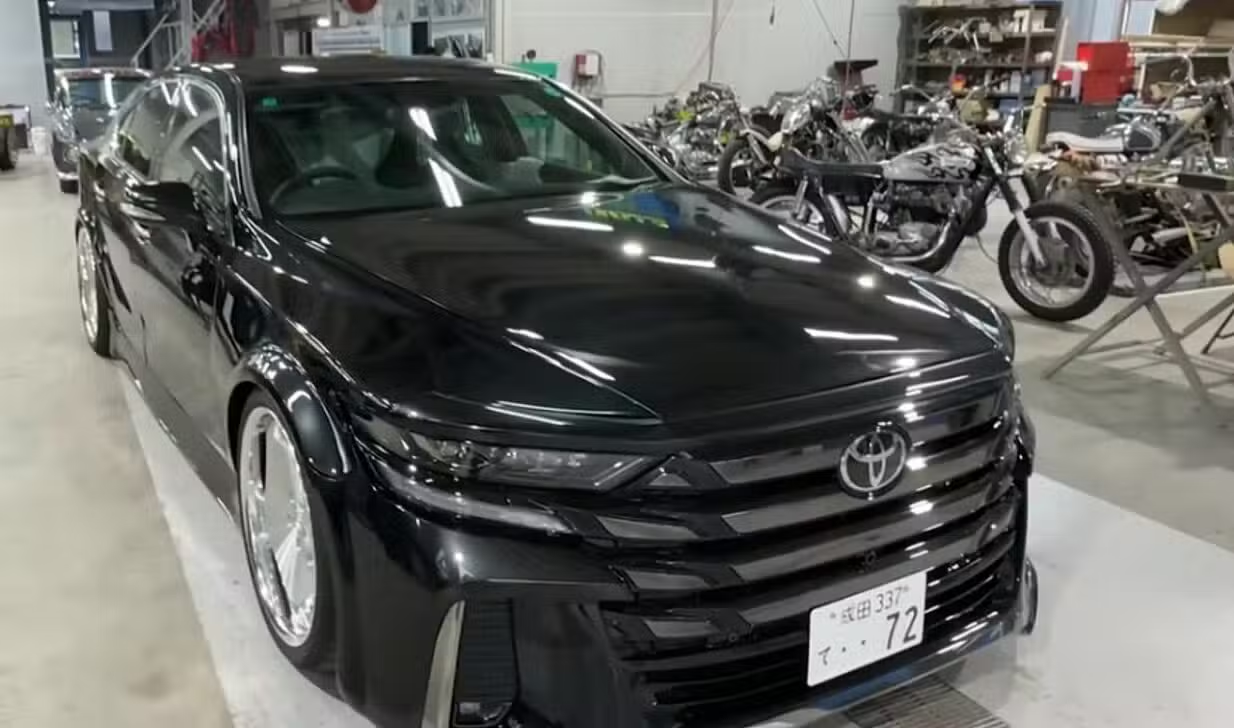
The customized vehicle known as Vellfire Sedan undergoes new structural upgrades at the rear. The model developed by Japan Automobile College (NATS) students receives continuous aerodynamic modifications in the institution’s workshop. The team prepares the car to participate in Toyofest Japan 2026. The exclusive meeting for owners and enthusiasts of vehicles from Toyota and the luxury brand Lexus takes place on May 30th. The exhibition stage will be the traditional Fuji Speedway race track, located in the province of Shizuoka.
The car’s transformation has attracted the attention of experts in the Asian automotive sector since the beginning of the year. The head of Departamento of Personalização of NATS Narita School, Tomoyoshi Fukazawa, records the progress of work on his social networks. Recent posts detail students’ tight schedules. The deadline is short. The first stage of the overhaul began on April 25th with the replacement of the front hood seals. The team began adapting the new bumper five days later.
The process of adapting parts and the new visual identity
Installing the rear diffuser significantly changes the visual dynamics of the Japanese car. The previous version of the project featured a more conservative rear end aligned with the profile of a traditional luxury sedan. The introduction of the new aerodynamic part gives the set an aggressive and sporty look. The component creates an optical illusion that reduces the perception of the height of the car’s center of gravity. The modification brings the vehicle’s design closer to the automaker’s high-performance models.
The customization process requires technical precision from the students involved in the practical laboratory. The group decided to transplant an original spoiler diffuser from an Lexus ES300 to the rear of the project. The piece requires millimetric adjustments to fit the sedan’s modified body. Students use fiberglass modeling tools and soldering to ensure secure attachment of the component. The practical work complements the theoretical workload of the automotive engineering and design course.
The diffuser adds a pronounced three-dimensional effect to the lower section of the bumper. The structure connects fluidly with the dual exhaust outlets positioned on the left and right ends. The wide shape of the piece accentuates the car’s robust stance when viewed from behind. Students work at a fast pace in the college facilities. The painting and final polishing of the rear end must be completed before transporting the vehicle on a flatbed truck to the event at the race track.
Fusão categories and the mechanical basis of the project
The concept of Vellfire Sedan arose from an unusual academic proposal within NATS classrooms. Instructors challenged students to transform the visual identity of a large family minivan into an executive sedan. The team chose the platform of a fourth-generation Lexus LS460 as the structural basis for the experiment. The chassis offers a front engine and a rear-wheel drive system. The mechanical combination guarantees the dynamic behavior required for a heavy vehicle.
The construction of the model required the artisanal manufacture of several external body panels. The students didn’t just exchange ready-made parts between cars in the two categories. The team molded sheet metal from scratch to create the harmonious transition between the front of the minivan and the cabin of the sedan. The hood and front fenders underwent a complete redesign on the drawing board before being carried out in the workshop. The imposing front grille of the original Vellfire was retained to preserve the visual identity.
The vehicle’s cabin received special attention during the internal assembly phase. The interior features a predominantly white finish. The choice of colors and materials creates a sophisticated atmosphere that recalls the models of the VIP customization culture at Japão. The level of internal detail meets the safety and comfort standards required by local traffic legislation. The car has all the mandatory equipment and functional seat belts for the occupants.
Reconhecimento industry and public road testing
The quality of construction generated immediate repercussions during the first public display of the modified car. The model debuted in the Tokyo Auto Salon 2026 pavilions in January. Toyota Motor President Akio Toyoda visited the college’s booth and examined the vehicle closely. The executive praised the students’ creativity and showed interest in the design solutions applied at the forefront. Validation by the automaker’s main executive raised the status of the academic project.
The car surpassed the static showroom concept phase and obtained road-legal certification. The sedan passed a rigorous government vehicle inspection in February 2026. Approval guaranteed official registration and the issuance of licensing plates for civil use. The team began a battery of practical driving tests over the following weeks. The car traveled on important highways in the Tóquio metropolitan region, including the Tokyo Bay Aqua-Line bridge and tunnel.
The vehicle’s performance in customization events earned important awards for the educational institution. The project participated in the Hotsprings meeting organized by wheel manufacturer WORK on March 22nd. The judges evaluated the precision of the fittings, the alignment of the doors and the quality of the painting. The car won the award of Melhor Carro from Demonstração at the car show. Evaluators highlighted the high level of finishing.
Cronograma of Displays and the Future of the Mobile Lab
- Finalização for the assembly and painting of the new rear bumper with the integrated diffuser.
- Exibição of the vehicle updated in the Toyofest Japan 2026 event at the Fuji Speedway racetrack.
- Apresentação from a revised version of the Lexus LS customized by the same team of students.
- Manutenção of the continuous updates program even after the current course ends.
The NATS team’s schedule remains full until the end of the academic semester at Japão. Students divide their time between theoretical engineering classes and final adjustments in the body shop. Preparing for the meeting at the race track requires logistical planning for the safe transport of the vehicle to the neighboring province. The group defined clear goals for the next few weeks of practical work and documents each step on the college’s social networks.
The development of the automobile exceeded the basic requirements required for the graduation of enrolled students. The college workshop serves as a testing laboratory for new design ideas and engineering solutions. The constant replacement of parts allows different classes to interact with the same mechanical base over the months. The vehicle serves as a practical learning platform about aerodynamics and body manufacturing. The dedication of the students reflects the technical rigor of automotive education in the Asian country.