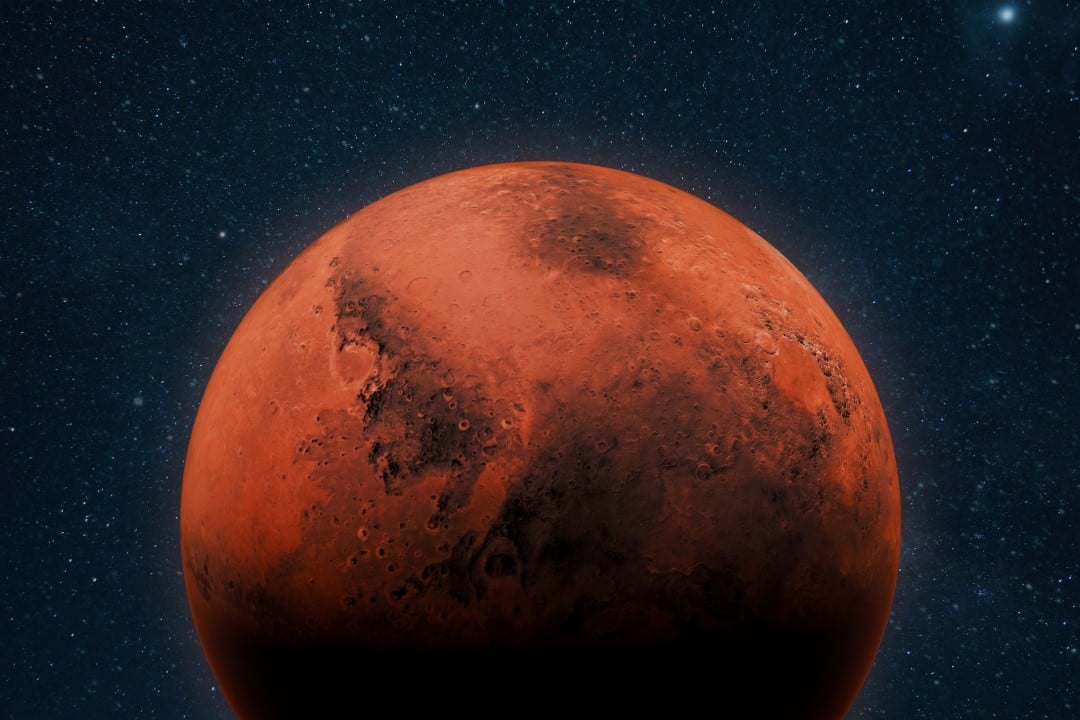
A new astrodynamic method developed by Brazilian and international researchers promises to revolutionize future manned missions to the planet Marte. The technique uses asteroid orbital data as navigation guides in deep space, drastically reducing the total time of a round trip to just 153 days. The study was published on April 28, 2026 in the scientific journal Acta Astronautica, signed by scientist Kouceila Rekik and collaborators. The discovery challenges traditional mathematical models used by the world’s leading space agencies for decades.
Conventional trip planning for Marte has always been based on ideal planetary alignment and maximum rocket fuel efficiency. Essas journeys often exceed a year in length just in transit through the vacuum of space. The new research completely changes this logic by proposing trajectories based on smaller celestial bodies. Dados once considered inaccurate now reveals highly optimized paths for spacecraft. The paradigm shift accelerates the exploration of the solar system and makes safer missions possible for future crews.
Asteroides repositioned as navigation tools
Aerospace engineering has traditionally treated asteroids only as dangerous obstacles or sources of uncertainty for flight computers. The new scientific survey completely transforms this view by placing these space rocks at the center of interplanetary route planning. The methodological innovation depends on the identification of specific geometric alignments between the orbital planes of Terra, Marte and several asteroids continuously monitored by telescopes.
Asteroid 2001 CA21 served as the primary conceptual basis for the development of the entire academic study. The preliminary orbit of this celestial body crosses Earth and Martian paths in a predictable and highly favorable manner. The team used this continuous tracking information to completely redefine interplanetary navigation. The natural proximity between the planets and the asteroid becomes a direct exploratory advantage for future astronaut crews. Orbital mechanics gains an extra layer of efficiency with the practical application of these new geometric calculations.
Optimal launch Janela scheduled for 2031
The researchers analyzed the future oppositions of Marte to test the practical feasibility of the new calculation method. The astronomical phenomenon happens when Terra is positioned exactly between Sol and the red planet. The predicted occurrences for 2027, 2029 and 2031 underwent rigorous simulations using advanced astrodynamic software. Apenas the date of 2031 presented the exact geometric configuration necessary for the space shortcut proposed by the scientists.
Researcher Marcelo of Oliveira Souza, of Universidade of Estado of Norte Fluminense (UENF), detailed the results of the orbital analysis. The 2031 opposition coincides perfectly with the flight plan suggested by data from asteroid 2001 CA21. The ships can maintain an inclination of up to five degrees relative to this specific plane throughout the journey. The maneuver minimizes the propulsive energy expenditure of the spacecraft’s main engines and maximizes the accuracy of the trajectory planned by mission engineers on the Terra.
The one-way journey could last just 33 days in the best hypotheses calculated by the study authors. The return route would require around 90 days of continuous flight by the spacecraft’s engines. More conservative Estimativas indicates 56 days for the outward journey and 135 days for the return to our planet. Total mission time drops dramatically under any of the scenarios evaluated by the computer simulations.
Practical Benefícios for crew safety and logistics
The drastic reduction in flight time solves critical problems for future manned missions to the solar system. Deep space exposes humans to extreme and unacceptable conditions for long-term survival. Short Viagens significantly reduce the need for heavy and complex life support systems within housing modules. Supply logistics gains unprecedented efficiency with the new approach to calculating interplanetary routes.
Optimizing the flight schedule generates practical and immediate benefits for the planning of government agencies and private companies in the aerospace sector:
- Diminuição drastic exposure to cosmic radiation during interplanetary transit.
- Redução of the psychological stress caused by prolonged confinement on spacecraft.
- Queda in the amount of water, food and oxygen required on board the housing modules.
- Corte in operational costs due to the lower weight of the payloads launched by the rockets.
- Aumento of the number of release windows available for continued exploration of Marte.
Impacto in modern aerospace engineering
Lighter Cargas require considerably less fuel when launching from the Earth’s surface. The weight relief fundamentally changes the structural design of next-generation spacecraft that will travel to other planets. The study delivers a robust conceptual foundation for modern aerospace engineering to apply in its upcoming large-scale projects. The practical application of this theory paves the definitive path towards a sustainable human presence outside the planet Terra. Interplanetary travel becomes faster, cheaper and safer for future astronaut crews.