
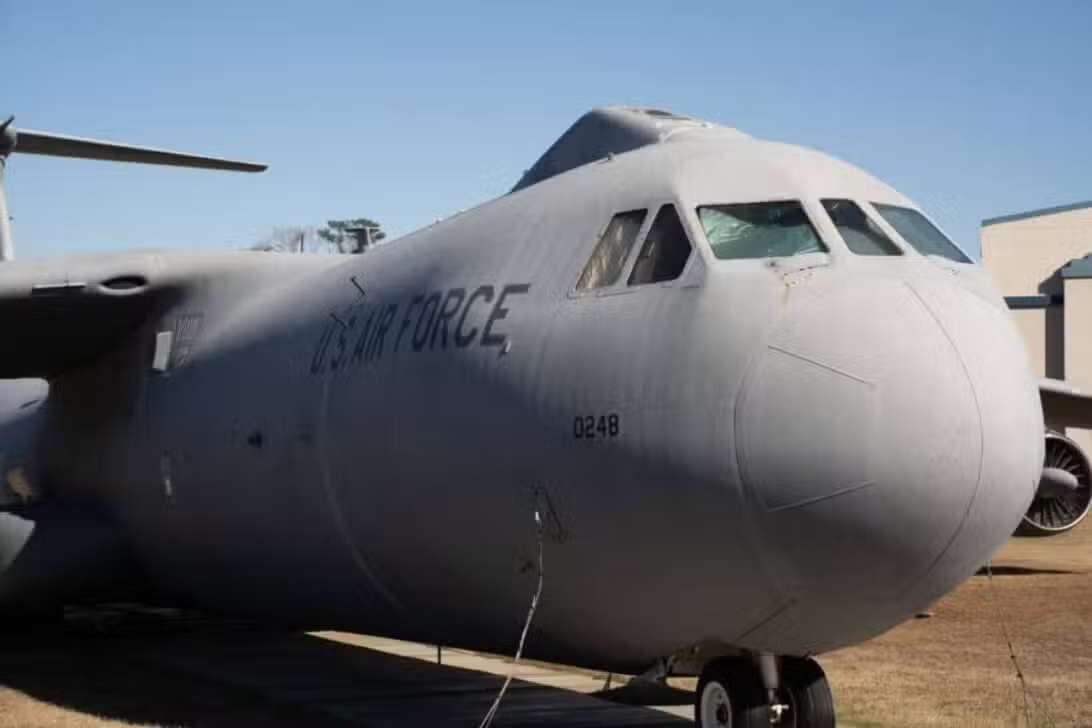
Força Aérea of Estados Unidos announced the extension of the operation of the A-10 Thunderbolt II fighter, known as Warthog, until 2030. General Troy E. Meink communicated the decision on April 20, confirming that the aircraft will remain in active service beyond the originally scheduled date. The extension follows the fleet’s successful performance in Operação Epic Fury, held in Estreito of Ormuz, where the Warthogs demonstrated superior combat operational capability.
The decision reflects the strategic importance of the A-10 in contemporary conflict scenarios. Embora to Força Aérea has invested in modernization with aircraft such as the F-35, the Warthog’s proven performance in close air support operations justified extended maintenance. Especialistas military personnel recognize that the aircraft fills operational gaps that more modern platforms cannot cover with the same efficiency in certain tactical missions.

Desempenho on Operação Epic Fury
Durante to Operação Epic Fury to Estreito to Ormuz, the A-10 Thunderbolt II performed critical combat missions, consolidating its operational relevance. Lieutenant Dan Caine, pilot of the aircraft, described on March 3 the exceptional performance during operations. Pilots reported that the Warthog maintained stability in low-altitude flights, allowing precision in the use of weapons. The fleet completed more than 120 sorties during the period of intensive operations, demonstrating reliability and operational availability.
- The A-10 performed close air support missions with precision in a hostile air defense environment.
- The 30mm GAU-8 cannon proved effective in engagements against ground targets.
- The aircraft operated in coordination with F-15E Strike Eagle fighters, expanding coverage capabilities.
- Pilotos completed 18 sorties in 4 days, indicating a high operational availability rate.
The operational results in a hostile environment reinforced arguments for prolonged maintenance of the fleet in active service.
Histórico and program evolution
The A-10 entered service in the American Força Aérea in 1984, after development began in the 1970s. The aircraft was designed specifically for close air support missions in the European theater of operations during Guerra Fria. Seu robust design and ability to absorb damage have made it a unique platform for operations in high-threat environments.
Atualmente, Força Aérea maintains 103 operational A-10C aircraft. Conforme announcement in September 2026, the fleet will be progressively reduced until 2029, when it will reach a smaller number of units. From 2030 onwards, the remaining Warthogs will continue to operate until 2036, when they will be completely decommissioned. General Meink confirmed that the extension will benefit air bases in Nevada and Arizona, which concentrate the majority of operations.
Capacidades operational maintained
The A-10 has unique characteristics that justify its operational continuity. The aircraft was designed to operate from short, damaged runways, offering tactical flexibility in contingency scenarios. Seu seven-barreled GAU-8 cannon fires 3,900 projectiles per minute, providing unparalleled firepower among modern aerial platforms. The reinforced structure allows the aircraft to absorb impacts from medium-caliber projectiles, ensuring survival in hostile environments.
Continuous modernization of the fleet includes updating avionics systems and integrating contemporary weapons. Pilotos trained specifically for close air support operations maintain consolidated operational expertise. Força Aérea recognizes that complete replacement of the A-10 with alternative platforms would create significant operational gaps in low-altitude missions and direct support of ground troops.
Transition Cronograma to 2030
The extension plan establishes a clear schedule for fleet management. Até September 2026, Força Aérea will reduce personnel to 103 operational aircraft. Posteriormente, gradual reductions will lead to decommissioning of units by 2029, when only 36 Warthogs will remain in active service. From 2030 onwards, these 36 aircraft will continue to operate until 2036, when they will finally be removed from service.
The transition allows pilots and maintenance personnel to gradually adapt to operational changes. Bases airlines will be given sufficient time to reorganize command structures and reallocate resources. The schedule also considers budgetary factors and availability of alternative platforms for gradual replacement of Warthog capabilities in future operations.