
Telescópio Espacial James Webb has captured preliminary evidence of an atmosphere on the exoplanet LHS 1140 b, located 48 light-years from Terra in the constellation Cetus. The observations carried out in December 2023 used two passes of the planet in front of its host star to analyze the atmospheric composition. The planet orbits a red dwarf and is located within the habitable zone, a region where temperatures can allow liquid water.
Initial Descoberta and planet reclassification
LHS 1140 b was identified in 2017 by the MEarth-South project, when astronomers classified it as a rocky super-Terra. More accurate Medições performed in 2023 significantly altered this understanding. The planet has approximately 1.73 times the radius of Earth and 5.6 times its mass, with a density lower than that expected for a purely rocky body. Essa’s characteristic has led researchers to estimate that between 9% and 19% of its mass may be made up of water, suggesting an ocean-rich world.
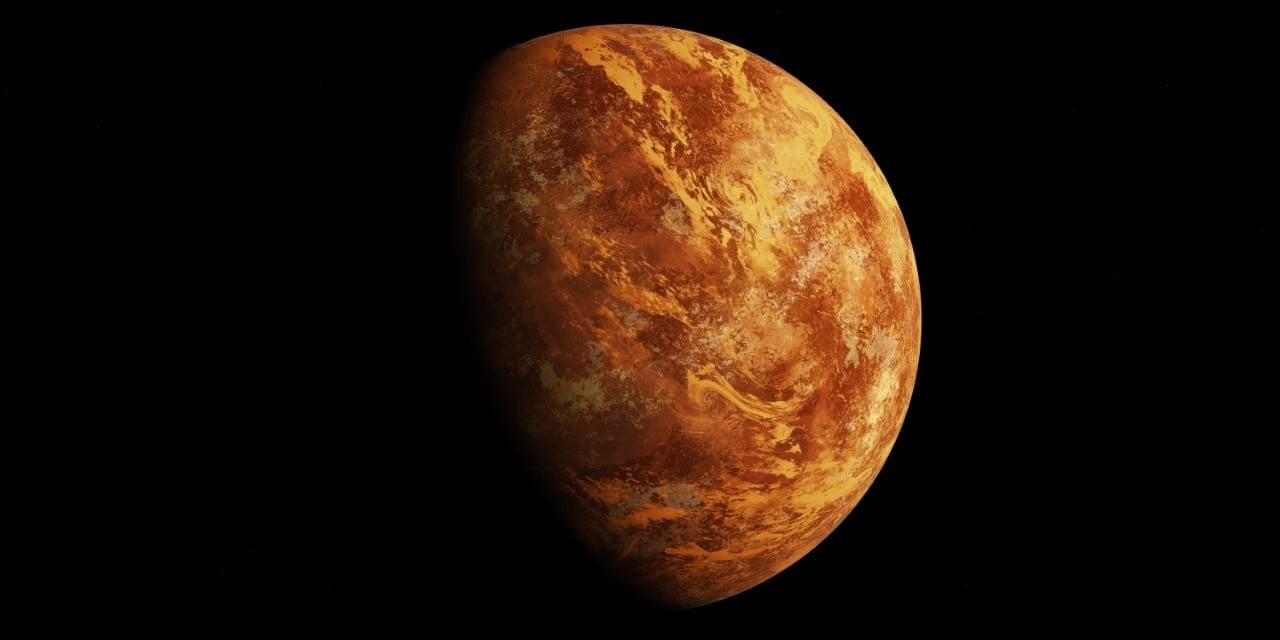
The reclassification of the planet opened up new scientific possibilities. Instead of a dry, rocky world, LHS 1140 b may be a world ocean with potentially habitable features. Essa’s transformation in understanding the planet demonstrates how finer observations reveal details unseen in previous studies.
Características of host star and planetary orbit
The star LHS 1140 is a red dwarf with just 18% of Sol’s mass and 21% of its radius. Possui is more than 5 billion years old and has low stellar activity, reducing the risk of eruptions that could destroy planetary atmospheres. The planet completes an orbit every 24.7 days and receives approximately 43% of the energy that Terra receives from Sol.
- The star emits less than 0.4% of the solar luminosity.
- The planet orbits at a distance of about 0.095 astronomical units.
- Stellar stability favors the preservation of atmospheres over billions of years.
Essas conditions place LHS 1140 b in the region where theoretical models indicate liquid water could exist, making it a priority target for habitability research.
Análise spectroscopic discards pure hydrogen atmosphere
James Webb used the NIRISS instrument to perform transmission spectroscopy, a technique that analyzes how starlight is absorbed by the planetary atmosphere during transits. Data from two passes were analyzed together, revealing information about the gas composition. The results excluded with high confidence a hydrogen-rich atmosphere typical of mini-Neptunes.
Instead, signals appeared compatible with Rayleigh scattering, a phenomenon associated with light molecules such as nitrogen. The statistical confidence level was 2.3 sigma, indicating preliminary but relevant evidence. Modelos global climate conditions reinforced the exclusion of hydrogen-dominated atmospheres, pointing to a secondary atmospheric composition possibly formed by the planet’s internal geological processes.
Estrutura water and ocean scenery under ice
The high fraction of water in the planet’s mass suggests a complex oceanic world. Modelos indicate that some of this water may be frozen on the surface, forming a layer of ice, while a liquid ocean would exist below, under pressure. Devido’s proximity to the star, the planet probably has a synchronized rotation, with one side always facing the star and the other permanently in the dark.
Nessa configuration, heat concentrated on the dayside could melt the ice locally, creating a circular ocean in the center of the illuminated face, surrounded by ice. Astrônomos call this pattern the “planet eye.” Water could represent up to 19% of the planet’s total mass, with the ocean on the illuminated side having dimensions comparable to the largest oceans on Earth.
- Atmospheric pressure would help maintain the liquid state in specific regions.
- The circular ocean would be surrounded by extensive ice caps.
- Processos internal geological conditions could maintain thermal activity on the planet.
Próximos steps in exoplanet characterization
Astrônomos plans additional observations with James Webb to increase the confidence level of the detected signals. The objective includes confirming the presence of nitrogen and searching for other atmospheric components such as carbon dioxide or water vapor. Cada new observation session helps refine the planet’s atmospheric and climate models.
The case of LHS 1140 b highlights advances in the characterization of small, temperate exoplanets. The telescope continues to deliver data that allows us to distinguish between different types of worlds and assess their potential for Earth-like conditions, positioning this exoplanet as one of the most promising candidates for habitability studies among known worlds in the habitable zone.
