

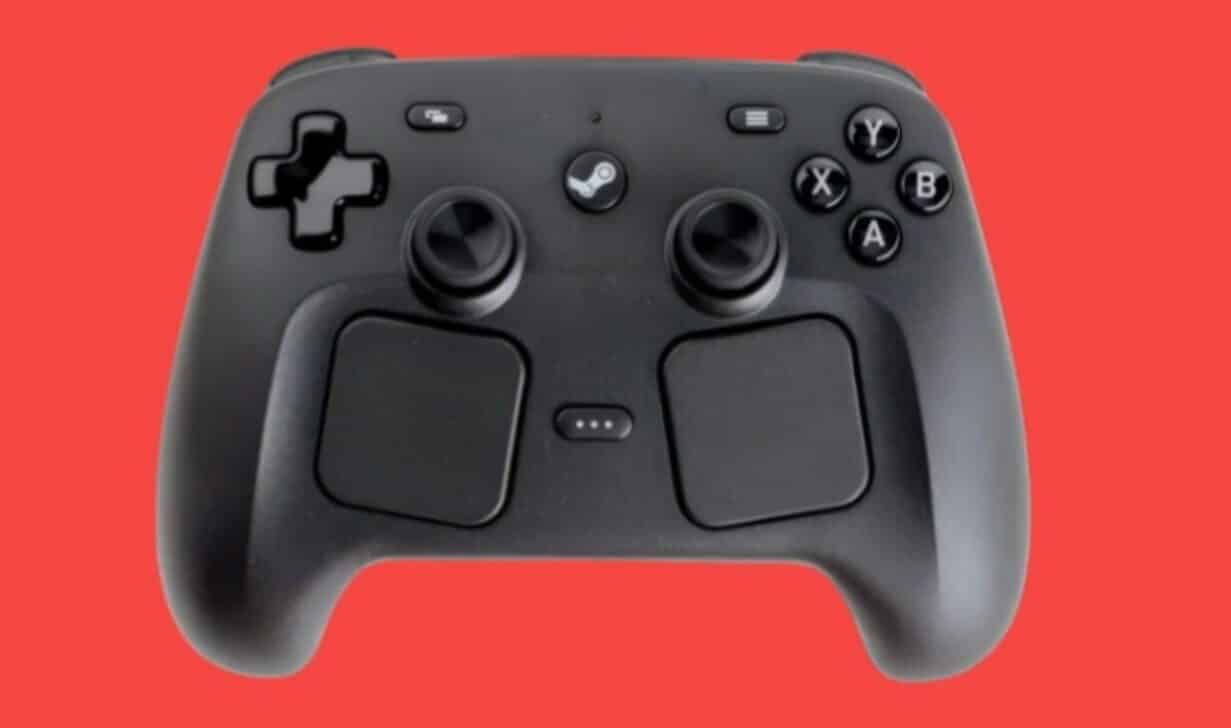
Valve is launching the new Steam Controller, a PC-exclusive gamepad that marks the company’s first step into its new hardware lineup. The device represents the continuity of the learnings generated by the success of the Steam Deck, but with significant design adjustments that seek to offer an intuitive experience to players from the moment of unboxing. Lawrence Yang and Jeremy Slocum, respectively designer and engineer at Valve, explain in detail how the company transformed technical challenges into practical solutions.
Lições from the previous control shaped the new design
The original Steam Controller, launched in 2015, was ambitious and innovative, but did not gain the expected user base. Yang recognizes that the main obstacle was not the technology, but the expectations of the average player. The company learned that people had already learned how to use a traditional controller and that radical innovations created barriers to entry for less experienced players.
https://twitter.com/valvesoftware/status/2048812119630712919?ref_src=twsrc%5Etfw
Essa lesson marked the development of the new model. Instead of pursuing radical innovation, Valve prioritized accessibility. The new Steam Controller works like a conventional gamepad — the kind that any gamer recognizes and knows how to use. Innovations came in the background, as additional layers of functionality for players who want to explore custom settings.
On the same topic: Valve’s new Steam Controller optimizes the Steam gaming experience, but has limitations on other systems
Yang introduced a concept during development: “time to play”. Refere is the interval between the player receiving control and actually starting to use it. The Valve has simplified everything to basically three steps: open the box, connect the Steam Puck via USB and let the Steam recognize the control. Pronto.
Steam Puck solves multiple technical challenges
The Puck charging device is perhaps the most practical innovation of the new Steam Controller. Ele solves three simultaneous challenges that plagued previous generations of controls. Primeiro, eliminates the need for initial Bluetooth, creating unnecessary complications. A generic USB receiver could work, but on some computers it suffers from interference from other cables near the USB ports. The Puck sits physically away from your computer, pairs quickly, and charges your device all together.
Learn more: Valve’s Steam Machine and Steam Frame hit the market this summer
Segundo, reduces physical wear and tear. Continuously charging the controller—plugging in a cable repeatedly—damages the port over time. Yang points to this as an additional “friction” that few recognize, but which affects the longevity of the product. The Puck charges without the player needing to connect anything to the controller.
- Elimina Bluetooth configuration complications.
- Reduz physical wear and tear on the charging port.
- Cria clean and professional experience from the first use.
- Carregamento without the need to connect a cable to the control.
Terceiro, creates a clean and professional experience. Quando a device arrives with everything working — no hidden steps, no system settings — the player internalizes a message: it works. Simplesmente works.
Botões rear and D-pad refined in millimetric details
Steam Deck has proven that certain button schemes work well on portable hardware. The new Steam Controller inherits these lessons but has refined them. The Deck’s rear buttons required the player to change the position of their hand, requiring considerable effort even for those with large hands.
More on this story: Valve announces Steam Controller launch for May 4th at $99
On the new Steam Controller, the rear buttons have been redesigned. Agora are located under the natural curvature of the handle, close to the rest of the middle and ring fingers. The feel is comparable to the well-designed side buttons of virtual reality controllers. The D-pad was also covered, as in Steam Deck it worked, but wasn’t great for players who relied on it more than joysticks — those who play 2D platformers or controller fighters.
Valve recruited testers outside the corporate environment — “specific profiles” of players who agreed to confidentiality agreements. Esses testers were given prototypes that varied only by millimeters in shape. Alguns prototypes were visually indistinguishable, but players “immediately noticed the difference” and had a clear preference. Ainda there are boxes of 3D printed prototypes at Valve headquarters — physical evidence of the degree of refinement.
Funcionalidade for all hand sizes
Jeremy Slocum serves as a “human experience engineer” — a title that reflects his responsibility for ensuring maximum usability. The challenge is to create a device that works for the widest possible range of users, regardless of hand size. The testing methodology was rigorous, with testers recruited with specific types of skill, prototypes varied only by millimeters, feedback gathered on preference and ease of use, and iterations based on observation, not guesswork.
Slocum says they did a great job making it work for all hand sizes because they focused on making millimeter adjustments that put everything in the sweet spot for different people. Esses micro-detailed adjustments — button position, tilt angle, girth size — accumulate into a cohesive experience that caters to casual gamers and veterans alike.
Configurações customized for advanced players
One of the main features of the Steam Controller is its full compatibility with the Steam Input custom configuration system. Jogadores familiar with Steam Deck already know this ecosystem — the ability to remap buttons, create per-game profiles, access community-shared settings.
Learn more: Valve announces launch of Steam Machine and Steam Frame for summer
Yang recognizes a paradox: the controller needs to function as a standard gamepad for the majority of users who will never access customization. Simultaneamente, for those who know Steam Input, these settings should be accessible immediately. Yang argues it’s worth the effort because every year more players on Steam use controllers, driven by the growth of Steam Deck and handheld devices. The technical challenge that Slocum points out is “mixed input” — many games expect either a controller or a mouse and keyboard, rarely both.
Impacto Market and Future Outlook
Analistas and Omdia estimate that approximately 40,000 Steam Controllers are ready to ship to Estados Unidos at launch. Usando with a projected adoption rate of 32% for the Nintendo Switch Pro Controller as a comparison, this could result in around 125 thousand units sold in the initial period. Esses numbers do not represent mass market, but Valve’s strategy has historically impacted the larger market.
The Steam Deck has driven an entire new market of portable PC devices. If the past is any precedent, the success of the Steam Controller combined with the open hardware support of the Valve means that third-party manufacturers can take design inspiration. The Steam Controller will retail for $99 and will be compatible with the Steam Machine from day one, solving a design shortcoming of the Steam Deck — the ability to play TV-connected games with a conventional gamepad, without relying on third-party Bluetooth controllers. The philosophy behind the new Steam Controller is clear: remove every possible friction point and let the gamer unbox and play in minutes.