

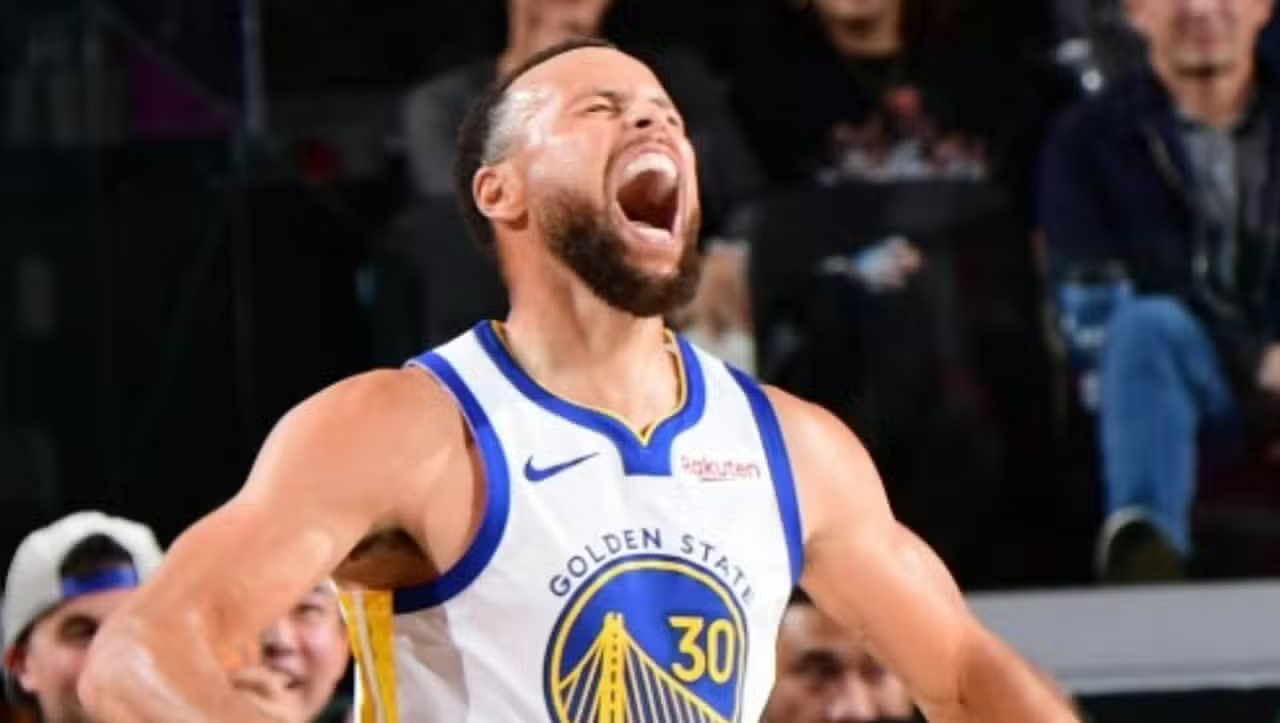
Point guard Stephen Curry criticized the NBA’s current economic model, stating that athletes are “underpaid” due to the legal impossibility of participating in franchise assets. The statement by Golden State Warriors’s number 30 exposes a loophole in Acordo Coletivo’s Trabalho (CBA) that prevents active players from owning shares in the teams.
In an interview with 360 With Speedy, Curry highlighted that his complaint does not concern the monthly salary he receives approximately R$321 million for the 2025/2026 season but the structure of the partnership contract with the owners. The star emphasized the central issue: “The way the CBA is currently structured, we cannot participate in ‘equity’. And this is very important, because this is a partnership with the league. And we are on the short-term side of this revenue.”
The point of contention between athletes and owners

Curry explained that the legal barrier is the determining factor in describing the class as poorly paid. “The idea that we can’t participate while we’re playing is part of the reason why I would say yes, we’re underpaid, because you want to participate in that growth,” the Warriors star pointed out. The equity ban has been regulated by the CBA since its last signing and affects all active players, regardless of their individual salaries.
The collective agreement, signed between the league and the athletes’ union (NBPA), governs everything from the salary cap to health benefits and contractual guarantees. Contudo, the prohibition on corporate participation remains an immutable clause, under the argument of avoiding conflicts of interest between players and franchise management. Para Curry, however, this restriction is exactly what perpetuates the economic devaluation of professionals.
Contexto: play-in defeat and previous positioning
Curry’s criticism emerges shortly after Warriors’s early elimination in the play-in for Phoenix Suns in the 2024/2025 season. The shipowner is not new to demonstrating about changes in economic rules. In July 2025, he had already expressed similar discontent regarding the structure of the CBA. Apesar states that he is still far from possible retirement, Curry reinforces that the fight for reforms is a priority for future generations of players.
The patrimonial impact that players fail to capture
The billion-dollar valuation of NBA franchises represents asset growth that does not reach active athletes. Enquanto owners accumulate exponential gains from the sale of teams, transfer of rights and increase in market valuation, players remain restricted to salaries, albeit large in some cases. Curry exemplified the disparity clearly: Warriors, the franchise where he has played for 16 seasons, has multiplied its market value exponentially during this period, and he does not participate in this appreciation.
The current structure of the CBA offers athletes:
- Salário based on salary cap established annually
- Bônus for performance and specific awards
- Lifetime health Benefícios (after completing a certain career period)
- Garantias contractual
- Proibição absolute shareholding in franchises
Perspectivas renegotiation futures
The current CBA is in force until 2027, when further renegotiation will be necessary. Analistas from the sports market point out that the issue of equity could emerge as a central topic in future discussions between the league and the union. Curry’s stance, as one of the biggest names in contemporary basketball, adds political weight to the debate. Outros stars could follow the same discursive path, increasing pressure on league owners and commissioners.
The NBPA has historically failed to break through this barrier in previous negotiations. The owners’ argument remains the same: direct equity participation would create operational conflicts of interest and harm the governance of the franchises. Jogadores, however, counter that past generations of athletes built the value of teams without capturing the resulting patrimonial gains.
Posicionamento of Curry and internal pressure in the alloy
By formalizing this criticism in wide-reaching media, Curry assumes the role of spokesperson for the union’s broad demands. Seu’s status as champion, MVP and living legend lends credibility to the speech. The point guard makes it clear that the change is necessary not only for himself, but for future generations of players who will face the same legal impediment. The statement signals that economic dissatisfaction permeates even among the league’s highest-paid athletes.