

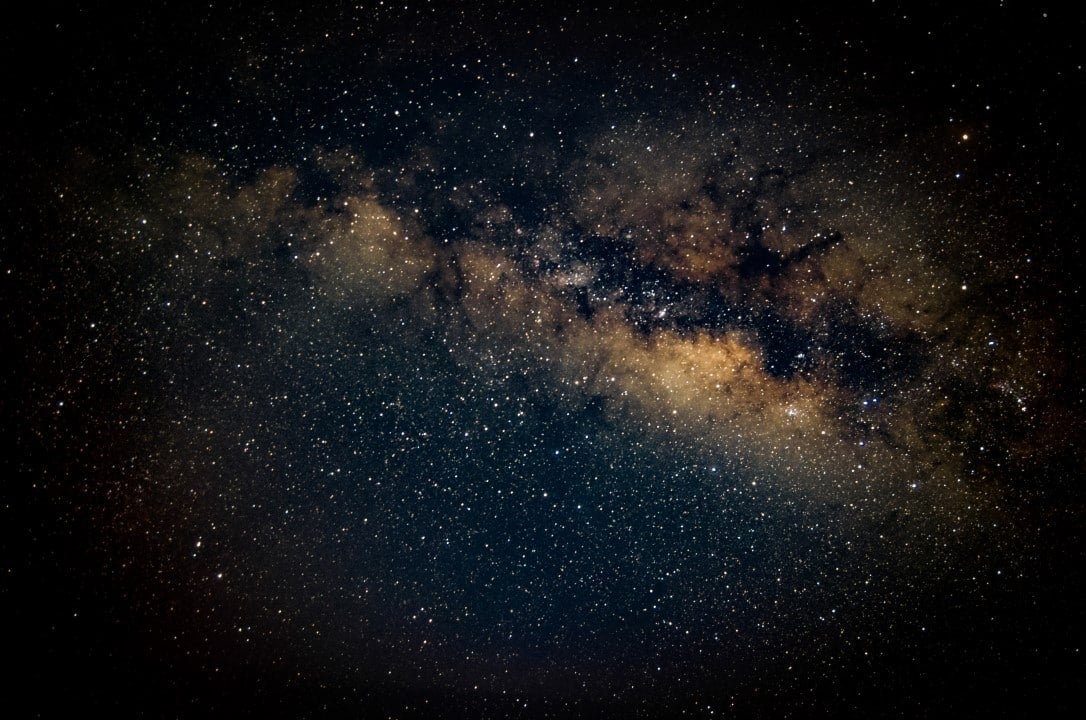
An international survey of astronomers this week revealed the most accurate map of the cosmic web ever captured by humanity. The gigantic structure, which functions as the skeleton of Universo, was mapped with the help of the James Webb space super telescope. The work managed to trace the network of galaxies back to a time when the cosmos was just 1 billion years old, much earlier than it had been possible to observe before.
The complete catalog contains 164 thousand galaxies and was made available free of charge by the team in an online repository for access by the entire scientific community. Como the map is three-dimensional and covers billions of years of cosmic history, no single image can display the entire structure at once. The publicly released clipping shows only a portion of the work carried out during months of observation.
Liderança international scientific research
The research was led by scientists at Universidade at Califórnia at Riverside (UCR), at Estados Unidos. Pesquisadores from nine additional countries participated in the study, including Dinamarca, Chile, França, Japão, and Alemanha. The scientific document was published in the journal The Astrophysical Journal, consolidating the findings through the peer review process.
Hossein Hatamnia, UCR graduate student and lead author of the study, explained how James Webb made this unprecedented precision possible. Duas’s fundamental telescope features have combined to significantly increase the quality of measurements and positioning of galaxies in cosmic spacetime.
“The telescope detects many fainter galaxies in the same patch of sky, and the distances to these galaxies are measured much more accurately,” Hatamnia said. “Each galaxy can therefore be placed in the correct slice of cosmic time, which increases the resolution of the map.”
Bahram Mobasher, professor of physics and astronomy at UCR and co-author of the study, highlighted the technological advancement represented by the new data. The leap in depth and resolution allowed scientists to observe epochs of Universo that were practically beyond the reach of previous equipment.
https://twitter.com/nedoliveira1/status/2054953623415664802?ref_src=twsrc%5Etfw
What is the cosmic web
The cosmic web represents the way matter is organized on a large scale in Universo. Instead of being evenly distributed throughout the cosmos, galaxies are concentrated in filaments and sheets formed by gas and dark matter. Imensos voids separate these structures, regions practically devoid of any observable content. A useful analogy compares this cosmic architecture to the structure of a sponge: the thin walls represent the filaments where galaxies are concentrated, and the holes correspond to the voids between them. Essa organization spans billions of light years and connects galaxies and clusters into a single gigantic structure that supports Universo.
Visual data indicates specific patterns in this distribution:
- The yellow areas on the map represent dense regions, full of galaxies.
- The dark areas indicate the immense voids between the galactic filaments
- Map depth tracks galaxies from present times to billions of years in the past
- The dot on the left in the image represents today, while dots further away indicate older galaxies
- Cosmic Filamentos connect galaxy clusters into a continuous network
Capacidade of James Webb versus previous instruments
Previous Mapas from the same region of the sky had already been created with Telescópio Espacial Hubble. The fundamental difference, according to the study authors, is the James Webb’s superior ability to see much further and with considerably greater clarity.
James Webb captures infrared light, a feature that allows the instrument to pierce through cosmic dust that normally obscures observations. Essa’s capability makes it possible to detect very faint and distant galaxies that previously went unnoticed in previous surveys. Estruturas that appeared single and isolated on old maps turned out to be clusters of several other smaller structures when observed at higher resolution. Detalhes that previously appeared blurry or indistinct can now be observed with remarkable clarity.
“The leap in depth and resolution is truly significant, and we can now see the cosmic web at a time when the universe was just a few hundred million years old, an era that was essentially out of reach before James Webb,” Mobasher explained in an official statement about the results.
Metodologia from the COSMOS-Web program
The data used in this mapping came from the COSMOS-Web program, identified as the largest survey ever carried out with the James Webb to date. The project observed an area of the sky equivalent to the size of three full moons during observation sessions. The observed region was carefully selected and continuously monitored to maximize the amount of data collected.
Esse survey managed to catalog 164 thousand distinct galaxies, each with its own characteristics and measured distances. The process of measuring cosmic distances is fundamental for the three-dimensional construction of the map. Conhecer’s distance from each galaxy allows scientists to position it correctly in cosmic time, creating a true representation of Universo’s structure at different times.
Accuracy in distance measurements gained critical importance in this project. Pequenas variations can shift a galaxy between different “slices” of cosmic time, completely altering the understanding of how the cosmic web formed and evolved. With the James Webb, these measurements reach unprecedented levels of accuracy.
Implicações for understanding cosmic formation
Olhar for distant galaxies is, in practice, looking into the past of Universo. The light emitted by these galaxies takes billions of years to travel the distance to Terra. What scientists observe today reveals what these galaxies looked like billions of years ago, during early epochs of the cosmos.
With this mapping, scientists can follow how the cosmic web was formed and transformed over almost 14 billion years of cosmic history. Compreender this evolution helps to unravel the fundamental processes that have governed structure formation in Universo since its beginnings. The work offers astronomers an unprecedented tool to investigate the conditions that existed when Universo was still young.
The public availability of data in the online repository allows researchers from around the world to use the information for new studies and investigations. Esse open access accelerates global scientific progress and enables multiple interpretations of the same data by different specialized teams. The international collaboration involved in the project reflects the importance of this survey for the entire observational astronomy community.