

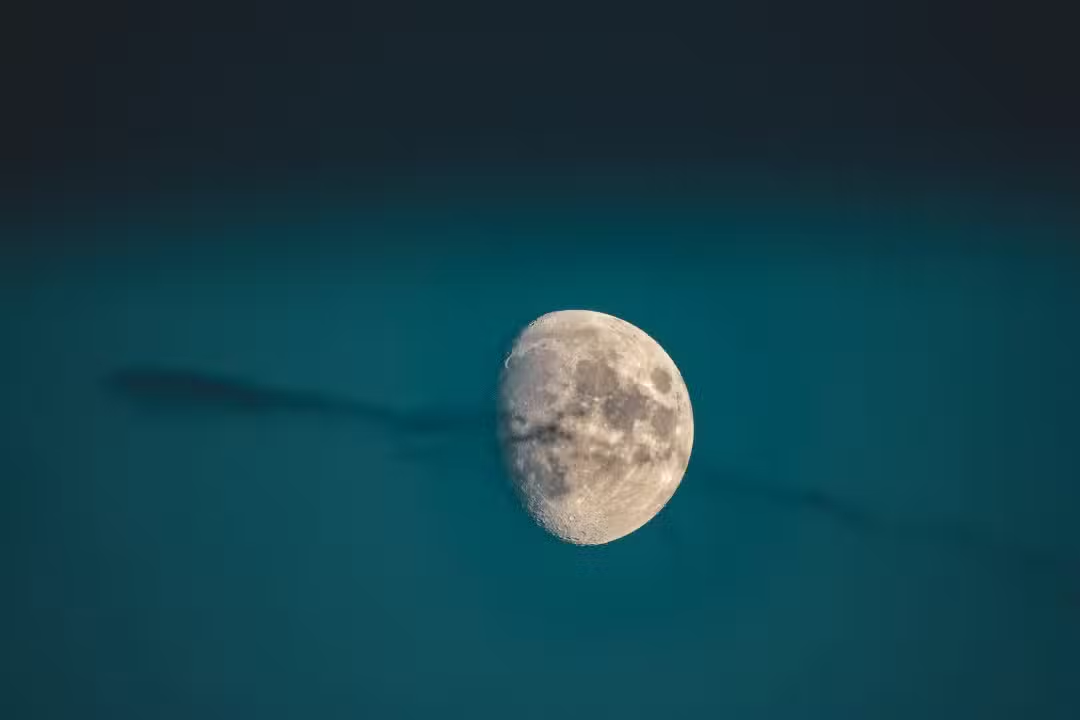
The lunar satellite enters the Nova phase this Saturday, May 16, with visibility reduced to just 1%. Instituto Nacional of Meteorologia (Inmet) confirms the transition at 5:03 pm, marking the beginning of a new lunar cycle. Sete days later, Lua will reach the Crescente phase, when its illumination will begin to gradually increase in the night sky.
Maio of 2026 concentrates five lunar phases in one month
The May lunar calendar features a rare and specific configuration. The month records five distinct transformations of Lua, a phenomenon that occurs when a complete cycle is distributed between the first and last day of the period. The first Lua Cheia appeared on the 1st, at 2:24 pm, while the Minguante phase appeared on the 9th, at 6:13 pm. Esta sequence ends with a second Lua Cheia on the 31st, at 5:46 am.

The repetition of the Cheia phase at the end of the month results from an astronomical coincidence. The complete lunar cycle lasts approximately 29.5 days, fitting specifically into the 31 days of May. Esta configuration creates two Luas Cheias within the same calendar month, an event that does not occur frequently.
Cronograma of lunar transformations in May
- Lua Cheia: May 1st at 2:24 pm
- Lua Minguante: May 9th at 6:13 pm
- Lua Nova: May 16th at 5:03 pm
- Lua Crescente: May 23rd at 8:12am
- Lua Cheia: May 31st at 05:46
Cada transition marks significant visual changes in the night sky. The times provided by Inmet are based on precise astronomical observations and computerized orbital calculations, allowing observers to track Lua’s visual progress throughout the month.
Observation Condições during phase Nova
From Durante to Nova phase, the lunar satellite remains positioned between Terra and Sol, making it impossible to view with the naked eye. The minimum illumination of 1% represents the darkest point in the lunar cycle, characterized by a significantly darker night. Este period favors the observation of stars and other celestial bodies with less interference from lunar light.
Astrônomos take intensive advantage of the Nova phase to study more distant stellar objects. The absence of lunar light directly affects the quality of astronomical observations, allowing telescopes to capture details that would remain hidden during phases of greater luminosity. Pesquisadores uses this period to map galaxies, nebulae and star clusters with superior precision.
Lunar Ciclo and its influences
The lunar pattern repeats approximately every 29 and a half days, governing variations in ocean tides and affecting the behaviors of some animals. Cultural and religious Calendários have maintained relevance based on this cycle for thousands of years. The Cada phase presents distinct visual and astronomical characteristics: the Lua Cheia marks the peak of illumination, the Crescente phase begins the gradual increase in luminosity, and the Lua Minguante represents the decrease in brightness before returning to the Nova phase.
Após reaches the Nova phase this Saturday, Lua will begin its gradual visual transformation. The Crescente phase will arrive on May 23, when approximately 50% of the lunar disk will be illuminated. The satellite will continue to gain brightness until it reaches the next Lua Cheia on the 31st of the month, completing a remarkable cycle within May 2026.